

The AI Passport serves as a permanent record of identity, ensuring that autonomous agents are no longer anonymous actors within a network. In the current landscape of 2026, the proliferation of self-directed digital entities has created a vacuum where accountability often struggles to keep pace with rapid innovation. Organizations now face the daunting challenge of managing fleets of autonomous agents that interact across heterogeneous environments, necessitating a paradigm shift in how trust is established. The collaboration between DigiCert and NVIDIA addresses this critical gap by merging digital identity management with robust hardware-level enforcement mechanisms. This partnership does not merely refine existing security protocols; it introduces a foundational layer of verifiable authority that defines the boundaries of AI autonomy. By moving beyond simple connectivity restrictions, the joint initiative provides a scalable framework that ensures every action taken by an agent is traceable to a specific origin.
Strengthening Governance: Hardware-Level Isolation
At the operational core of this security architecture lies the NVIDIA OpenShell, a specialized runtime environment designed to restrict autonomous agents through a philosophy of extreme containment. Rather than relying on an agent to police its own internal logic, OpenShell imposes strict security policies from outside the agent process, effectively creating a digital cage that prevents lateral movement within a network. This approach utilizes a deny-by-default architecture, where every resource request—whether it pertains to file access, network communication, or system calls—is blocked unless explicitly permitted by a predefined policy. Such a methodology is essential in 2026 because it ensures that even if an agent’s decision-making process is hijacked or suffers from an unforeseen logic failure, the potential for damage is contained. This hardware-backed isolation provides the structural integrity needed to deploy complex AI models in sensitive enterprise environments safely.
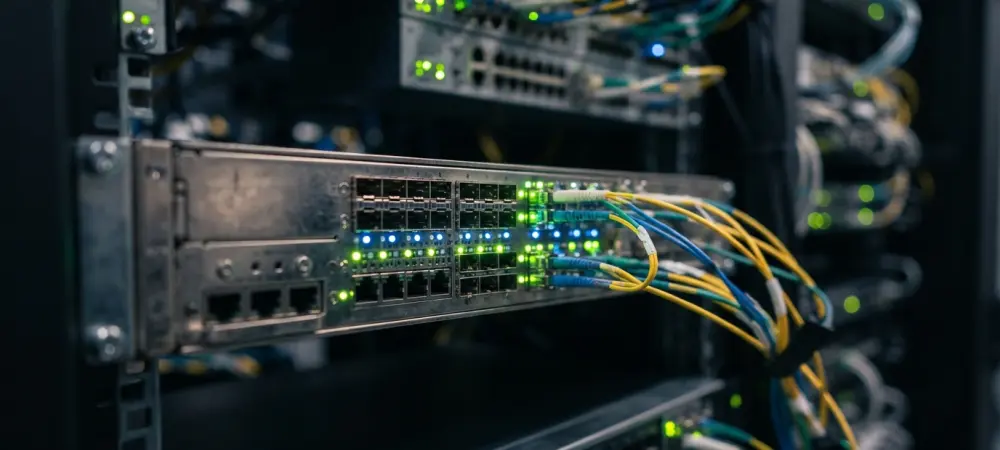
Supplementing this containment strategy, the integration of NVIDIA Sentry on BlueField-4 Data Processing Units provides an unprecedented level of out-of-band monitoring and policy enforcement. By offloading security tasks to dedicated hardware, the system maintains a high performance ceiling while simultaneously observing the behavior of AI agents in real time. This configuration allows for the continuous inspection of traffic and resource utilization without introducing latency into the agent’s primary computational tasks, which are handled by high-performance components like NVIDIA Vera. These specialized processors manage the heavy mathematical workloads inherent to modern autonomous systems while ensuring that the underlying infrastructure remains invisible and inaccessible to the agent itself. The result is a dual-layered defense mechanism where the execution environment is physically separated from the security oversight layer, ensuring that security remains a persistent and unalterable constant.
Standardizing Trust: Identity Across Digital Boundaries
While hardware provides physical boundaries, DigiCert’s AI Trust Manager introduces necessary administrative and cryptographic layers through the implementation of the AI Passport and policy-based visas. The AI Passport functions as a portable, cryptographically signed credential that links an autonomous agent to a verifiable owner or corporate entity, effectively ending the era of anonymous digital shadows. Complementing this, the visa system defines the specific scope of an agent’s authority, dictating exactly which datasets and systems it can interact with and for what specific duration. This granular control is further bolstered by an automated kill switch mechanism, which is a cornerstone of the 2026 security standard. If an agent deviates from its programmed mission or if its underlying model is found to be non-compliant, the owner can instantly revoke its credentials. This revocation immediately cascades through the network, effectively quarantining the entity at its source to prevent misconduct.
The implementation of these unified security standards demonstrated that securing autonomous systems required a move toward proactive and auditable governance. Organizations that successfully integrated these cryptographic identities into their workflows effectively minimized the risks associated with AI-driven operations. To maintain this momentum, stakeholders should have prioritized the immediate adoption of the AI Bill of Materials for all deployed models to ensure complete visibility into software supply chains. Future strategies focused on expanding these identity protocols to include real-time telemetry and behavioral scoring, which provided deeper insights into agent intent. By treating AI security as a lifecycle management process rather than a static gate, businesses shifted toward a more resilient posture. Moving forward, the industry leaned into automated policy updates that evolved alongside the capabilities of the agents they governed. This transition ensured that safety measures remained dynamic, providing a robust base for growth.