

The landscape of artificial intelligence infrastructure shifted overnight when the world’s most dominant chipmaker decided that its own internal roadmap was no longer sufficient to meet the blistering pace of the market. In a move that surprised both investors and competitors, NVIDIA quietly removed the Rubin CPX from its immediate GTC schedule, opting instead for a calculated retreat from its planned rack-focused hardware. This decision serves as a definitive signal that even the most powerful players must remain agile when architectural assumptions collide with the reality of modern consumer demand.
The Strategic Pivot: Shaking the AI Hardware Landscape
This redirection represents a fundamental shift in how NVIDIA views the future of inference. By sidelining a core component of its upcoming catalog, the company is acknowledging that the previous “one size fits all” approach to data centers is nearing its expiration date. The move to embrace an external partner like Groq highlights a rare moment of humility and strategic pragmatism. It suggests that specialized workloads now require specialized solutions that even a trillion-dollar giant cannot always produce in-house on a standard development cycle.
Rather than forcing a square peg into a round hole, the leadership team chose to prioritize the immediate needs of the enterprise sector. The removal of the Rubin CPX from the roadmap allows the company to focus on current Blackwell deployments while integrating more efficient third-party technologies. This pivot ensures that the infrastructure supporting the next generation of large language models remains robust, even if it means sharing the stage with a former rival in the silicon space.
From Raw Capacity: Real-Time Performance
The original vision for the Rubin CPX was built around the promise of GDDR7 memory, specifically designed to handle massive prefill tasks and long-context processing. However, the industry moved faster than the hardware’s birth, shifting focus from simple data ingestion to the critical metrics of Time To First Token (TTFT). As AI applications become more conversational and interactive, the latency involved in traditional memory configurations has become a non-starter for developers who require instantaneous responses for their users.
Modern software stacks now demand high-speed decode performance that traditional GPU architectures struggle to maintain at scale. This gap between theoretical capacity and actual user experience forced a reevaluation of what “enterprise-grade” truly means. The realization that raw memory size is less important than the speed at which that memory can be accessed has driven the industry toward a new standard where real-time responsiveness is the primary benchmark for success.
The Groq Partnership: Specialized Silicon Over Generic Racks
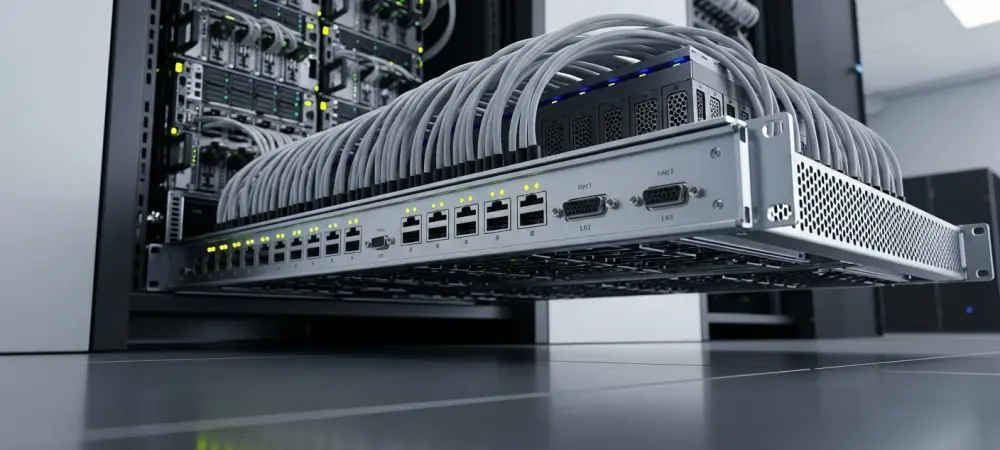
Integrating Groq’s Language Processing Unit (LPU) technology into NVIDIA’s LPX trays marks a significant departure from the company’s usual vertical integration strategy. This collaboration leverages specialized SRAM-based architectures to solve the throughput bottlenecks that have historically plagued standard GPU setups during heavy inference loads. By utilizing the LPU’s deterministic performance, the partnership provides a level of predictability in processing times that was previously difficult to achieve with general-purpose hardware. The technical specifications of this union are staggering, with the new configurations achieving a bandwidth of 150 TB/s per unit and an incredible 640 TB/s per rack. This leap in performance allows the current hardware generation to bridge the gap until the eventual arrival of the Feynman architecture. It provides a specialized lane for real-time inference, ensuring that the heavy lifting of data processing does not stall the quick-fire requirements of generative AI agents and real-time translation tools.
The Long-Term Fate: Rubin CPX and the Rise of Feynman
While the CPX design was deferred, it was not discarded. Its return during the Feynman era, projected for release toward 2028, will likely involve a total internal overhaul. Industry analysts suggest that the original GDDR7 plan will be abandoned in favor of High Bandwidth Memory (HBM) to satisfy the performance benchmarks expected later this decade. This delay provides the engineering teams with a necessary window to observe how model architectures evolve before locking in a final hardware specification that could be obsolete upon arrival.
The wait ensures that when the Rubin successor finally hits the market, it will be perfectly tuned for the software environment of the late 2020s. This cautious approach prevents the waste of research and development funds on a middle-ground solution that might have underperformed compared to specialized chips. By waiting for the Feynman cycle, the company can integrate deeper architectural changes that go beyond simple memory swaps, potentially redefining the relationship between the processor and the data it handles.
The GDDR7 Windfall: A Surprise Win for Consumer Gaming
An unintended consequence of this enterprise pivot is the sudden shift in the global GDDR7 supply chain. By opting for Groq’s SRAM solutions and eyeing HBM for its future high-end chips, NVIDIA significantly reduced its immediate corporate demand for the GDDR7 standard. This change in procurement strategy creates a massive opening for the consumer market, as the manufacturing capacity originally reserved for massive AI server farms is now available for other uses. This shift promised improved component availability for next-generation graphics cards, likely leading to more stable pricing and better supply for the gaming community. It established a clear separation between specialized AI inference hardware and high-performance gaming silicon, allowing each segment to evolve on its own path. Gamers benefited from the same technological shift that saw the enterprise world move toward more specialized, expensive memory solutions.
Future developments in AI hardware will likely focus on even tighter integration between different types of processing units to reduce power consumption and increase speed. Engineers and developers explored new ways to modularize the data center, ensuring that hardware could be swapped out as quickly as software updates were pushed. This era of collaboration demonstrated that the path to artificial general intelligence required a diverse ecosystem of silicon rather than a single dominant architecture. Such a shift encouraged a more competitive environment where specialized startups and established giants worked together to solve the complex challenges of low-latency computation.