

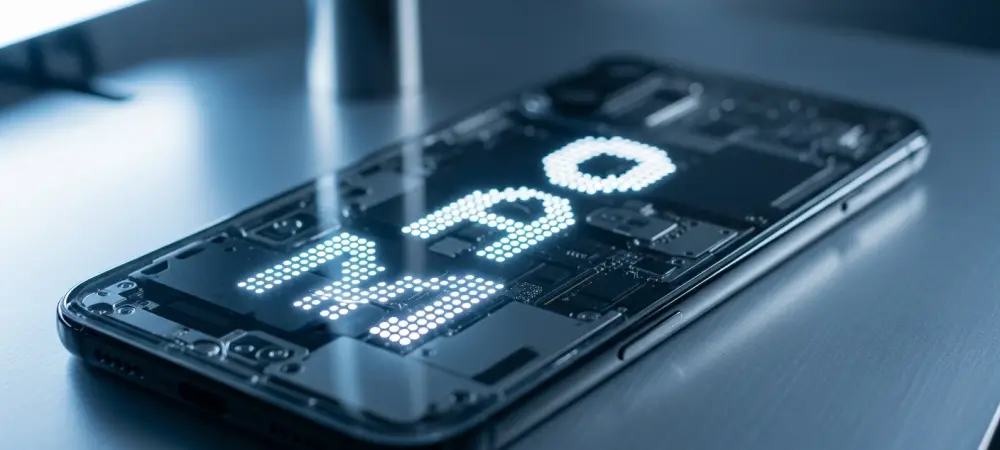
The smartphone market has recently shifted from a race for raw power to a competition over who can provide the most refined, tactile experience at a price that does not require a second mortgage. Nothing has historically thrived in this niche, but the Phone (4a) Pro marks a departure from its budget-friendly roots by introducing a “Pro” tier into the mid-range segment. This device is not merely a lateral move; it is a calculated attempt to redefine what users should expect from a five-hundred-dollar investment.
Redefining the “Pro” Label in Mid-Range Smartphones
The “Pro” moniker is often used as a marketing gimmick to justify a higher price tag, yet Nothing justifies this branding by significantly widening the gap between the standard 4a and this enhanced variant. While the basic model focuses on core functionality, the Pro version integrates high-end engineering previously reserved for flagship devices. This strategy addresses a growing demographic of users who desire premium aesthetics and specialized features without the overhead of a thousand-dollar processor.
By contrasting this iteration with earlier models, it becomes clear that Nothing is no longer just experimenting with transparency. The company is now stabilizing its identity. The Phone (4a) Pro stands as a bridge between the approachable mid-range market and the enthusiast-level hardware space, providing a unique alternative to the often repetitive design cycles of major competitors.
Advanced Engineering and Design Architecture
The Glyph Matrix: A 137-LED Visual Evolution
The signature lighting system has evolved from a simple aesthetic flourish into a sophisticated communication tool. By upgrading to a 137-LED dot matrix, the Glyph interface now supports complex, fluid animations that feel more like a secondary display than a notification light. One of the most practical advancements is the ability to use the matrix as a low-resolution selfie preview for the rear cameras, allowing users to frame shots perfectly without flipping the phone.
Structural Integrity and Premium Materiality
Durability often takes a backseat in mid-range devices, yet Nothing has transitioned from a plastic-heavy construction to a full metal unibody. This shift provides a much-needed rigidity that feels substantial in the hand. Remarkably, the engineering team managed to keep the profile under 8mm, proving that a thin chassis does not have to sacrifice structural integrity. This metal framework also aids in thermal management, a critical factor for sustained performance.
High-Performance Display and Visual Fidelity
Visual immersion is prioritized through a massive 6.83-inch display that challenges the dimensions of traditional flagships. The implementation of a 144Hz refresh rate ensures that navigating the interface feels exceptionally smooth, reducing motion blur during fast-paced gaming or scrolling. Furthermore, the superior peak brightness allows for high visibility even under direct sunlight, a common failure point for many devices in this price bracket.
Innovations in Expressive Hardware and User Interfaces
The industry is currently witnessing a trend toward “quiet” technology, where functional lighting replaces the constant pings of a standard screen. Nothing’s transparent design language serves as the vanguard for this movement. By exposing the internal components, the hardware itself becomes a part of the user interface, encouraging a more intentional relationship with the device. This approach contrasts sharply with the “black box” design of most modern handsets, making the Phone (4a) Pro feel more like a piece of bespoke gear than a mass-produced commodity.
Practical Implementation and Real-World Utility
In practice, the device shines in sectors like content creation where the rear-camera preview and consistent lighting are invaluable. Beyond aesthetics, the Glyph-based timer tracking allows users to monitor countdowns without being sucked back into the “scroll hole” of social media. This focus on minimalist productivity is a direct response to digital fatigue, positioning the phone as a tool for those who want to stay informed without being constantly distracted.
Addressing Technical Constraints and Market Obstacles
Despite the polished presentation, maintaining a slim profile while managing the heat generated by the 144Hz display and LED array remains a technical hurdle. There are occasional software bottlenecks where the expanded LED matrix requires more optimization to ensure animations remain stutter-free. Furthermore, at the $500 price point, Nothing faces stiff competition from older flagship models that may offer superior processing power, though they lack the Pro’s unique character and modern features.
The Evolution of Nothing’s Design Philosophy
Looking ahead, the success of this “Pro” tier suggests that consumers are willing to trade top-tier chips for better build materials and unique interactions. The potential for more complex dot-matrix interactions—perhaps even simple text scrolling on the rear—is the likely next step for this technology. As transparent hardware integration becomes more refined, it will likely force competitors to move away from generic glass slabs and toward more expressive, personality-driven hardware designs.
Final Assessment of the Nothing Phone (4a) Pro
The Phone (4a) Pro successfully bridged the gap between enthusiast hardware and mid-range accessibility. By combining a 144Hz display with a premium metal unibody, Nothing created a value proposition that felt more expensive than its $500 price tag suggested. The transition to the 137-LED Glyph Matrix proved that functional design could still be playful, providing a legitimate alternative for users tired of the status quo. Moving forward, the industry should look to this model as a blueprint for how to innovate within strict budgetary constraints, prioritizing user experience and material quality over iterative spec bumps. This release solidified the idea that “Pro” features can, and should, exist for the broader public.