

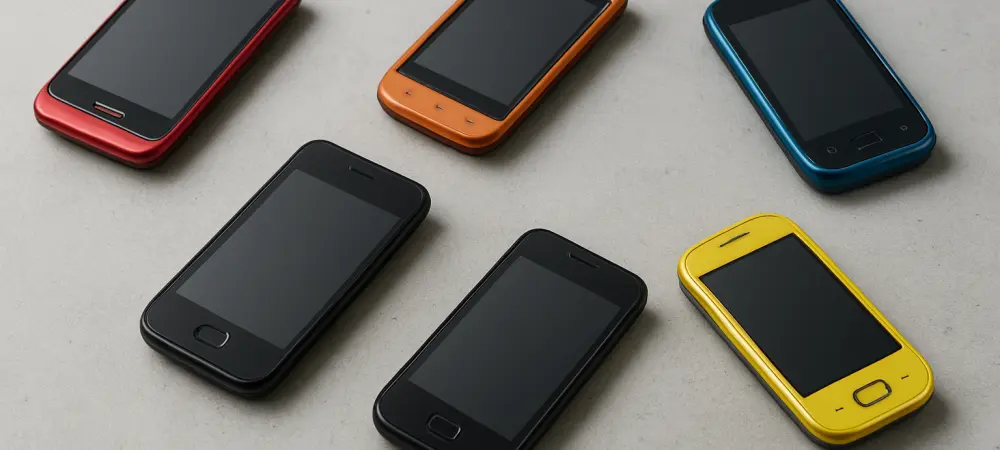
Mozilla designed Firefox OS to democratize mobile access through lightweight web standards, but the project could not survive the rapid price drop of entry-level Android devices. This failure illustrates a broader trend in the telecommunications industry where technical ingenuity often collides with the harsh realities of market consolidation and consumer preference. Throughout the early stages of the mobile revolution, dozens of platforms attempted to carve out a niche, each offering a distinct philosophy on how users should interact with their devices. From the professional rigidity of enterprise-focused systems to the experimental fluidity of gesture-based interfaces, the landscape was a vibrant testing ground for innovation. However, the emergence of a duopoly controlled by Apple and Google fundamentally shifted the requirements for success, moving the goalposts from simple hardware functionality to the management of massive, interdependent software ecosystems.
The Pioneers of Mobile Productivity
Foundations: The Symbian and Palm Era
The early years of the mobile industry were defined by the dominance of Symbian OS, a platform that originated from the foundations of handheld computing and blossomed into a global powerhouse. As the primary software driving Nokia’s massive hardware portfolio, Symbian was the first to prove that a mobile phone could be more than a communication device; it was a programmable computer in the palm of the hand. With features like preemptive multitasking and a robust framework for third-party applications, Symbian powered iconic devices like the N95, which integrated GPS, high-quality cameras, and web browsing long before these features were standard. However, the system’s architecture was inherently tied to an era of physical input, relying on D-pads and keyboards. When the shift to high-resolution capacitive touchscreens occurred, Symbian’s aging codebase struggled to provide the fluid, responsive experience consumers demanded, leading to its gradual decline as modern alternatives emerged.
The Professional Standard: BlackBerry’s Rise and Fall
Parallel to the consumer success of early Nokia devices, BlackBerry OS established itself as the indispensable tool for the corporate and government sectors. Developed by Research In Motion, the platform was built around a secure, centralized infrastructure that prioritized encrypted messaging and push email, features that were revolutionary at the time. The tactile QWERTY keyboard became a symbol of professional status, and the BlackBerry Messenger service created a closed social network that predated modern messaging apps by years. Despite this firm grip on the enterprise market, the leadership failed to recognize the “consumerization” of IT, where employees began bringing their personal devices to work. As the original iPhone and subsequent Android devices improved their security protocols and expanded their application libraries, BlackBerry’s focus on a utilitarian, keyboard-centric interface became a liability. By the time the company attempted to modernize with the touch-focused BlackBerry 10, the developer ecosystem had already consolidated around its rivals.
Visionary Interfaces and Lost Potential
Revolutionary Design: The Story of WebOS
Among the many platforms that succumbed to the dominance of the current duopoly, webOS is often remembered with the most affection by design enthusiasts for its visionary approach to user interaction. Developed by Palm as a successor to its legacy operating system, webOS introduced the concept of “cards” for multitasking, allowing users to swipe through active applications with a natural gesture that felt significantly more intuitive than anything offered by its competitors. The platform also featured a unified notification system and a clean, minimalist aesthetic that emphasized ease of use over technical complexity. When Hewlett-Packard acquired Palm, there was a brief moment of hope that the platform would find a second life across a broad range of hardware. Unfortunately, a combination of underwhelming tablet hardware, internal corporate restructuring, and a lack of marketing support effectively stifled the platform’s momentum. Although it vanished from the smartphone market, its design language was so influential that elements of its gesture-based navigation can still be seen in every major mobile OS today.
The High-Performance Dream: MeeGo and the Nokia N9
MeeGo OS represented an ambitious attempt by Nokia, Intel, and the Linux Foundation to create a truly open-source, high-performance mobile ecosystem that could rival the vertical integration of Apple. The Nokia N9, the only commercial smartphone to ship with the software, featured a sleek, button-less design that relied entirely on a “swipe” gesture to navigate the interface. This interaction model was praised for its speed and elegance, and the platform’s Linux roots made it a favorite among developers who valued flexibility. However, internal political shifts at Nokia led to a sudden strategic pivot toward Microsoft’s ecosystem, leaving MeeGo without the institutional support it needed to survive. The N9 was launched to critical acclaim but was essentially abandoned by its manufacturer from the start, serving as a tragic example of how corporate indecision can derail technological excellence.
The Corporate Challengers
The Windows Experiment: Live Tiles and Metro UI
Microsoft entered the modern smartphone era with Windows Phone OS, a platform that sought to offer a distinct “third way” between the grid-based interface of iOS and the customization-heavy nature of Android. The defining feature of the platform was the Metro UI, which utilized “Live Tiles” to surface real-time information directly on the home screen without requiring the user to open individual applications. This approach was designed to reduce the time people spent staring at their screens, focusing instead on glanceable information. Microsoft leveraged its massive resources to ensure that the operating system ran smoothly even on low-end hardware, making it a viable competitor in emerging markets. Despite these efforts and the eventual acquisition of Nokia’s handset division, the platform could not overcome the “app gap,” as major developers were unwilling to invest in a third ecosystem with a smaller market share.
Samsung’s Internal Drive: Bada and Tizen
As a company that historically dominated the hardware market, Samsung sought to reduce its reliance on Google’s Android by developing its own proprietary software platforms, starting with Bada OS. Designed for entry-level and mid-range devices, Bada was an attempt to bring smartphone features to a wider audience at a lower price point. While the Samsung Wave series saw some initial success, the platform struggled to attract a global developer community, which was increasingly focused on the higher returns offered by more established ecosystems. Recognizing these limitations, Samsung merged Bada into a new project called Tizen, a collaboration aimed at creating a versatile OS for everything from phones to appliances. While Tizen never gained significant traction in the global smartphone market, it found a successful home in Samsung’s smart televisions and early wearable devices. However, even in the specialized world of smartwatches, the pressure for better third-party app support eventually forced a return to Google’s software, illustrating the sheer gravity of established ecosystems.
Open Standards and Market Realities
Democratizing Access: Firefox OS and the Web
The ideological drive behind Firefox OS was to create a mobile experience that was not controlled by any single corporation, but rather built on the open standards of the World Wide Web. By using HTML5 and JavaScript to power the entire user interface and all applications, Mozilla hoped to create a lightweight system that could run on extremely modest hardware. This strategy was specifically aimed at bridging the digital divide in developing nations, where the cost of a high-end smartphone was often prohibitive. The platform gained some initial support from telecommunications carriers who were eager for an alternative to the Google-Apple duopoly. However, the technical challenge of building high-performance applications within a web browser proved difficult, and the rapid commoditization of Android hardware soon made it possible for consumers to buy full-featured smartphones for the same price as a Firefox OS device. As the price gap closed, the incentive for users to choose a more limited, web-based platform evaporated, leading to the project’s cancellation in the middle of the last decade.
The Shift: Survival in the Ecosystem Era
The common thread among all these failed platforms is the realization that technical superiority and innovative design are no longer sufficient to guarantee success in the mobile industry. The competition shifted from a battle of features to a battle of ecosystems, where the value of a device is determined by the number of services and applications it can reliably support. Developers are the lifeblood of any modern platform, and their tendency to gravitate toward the largest user bases creates a self-reinforcing cycle that is nearly impossible for new entrants to break. Additionally, the transition from physical buttons to fluid, gesture-based touchscreens acted as a filter that eliminated legacy architectures that could not adapt. While many of these systems offered features that were arguably better than what was available on Android or iOS at the time, they lacked the strategic timing and massive institutional momentum required to survive. The consolidation we see today is the result of a brutal natural selection process that prioritized scale and software diversity over experimental variety and niche specialization.
Lessons for the Next Frontier
The historical trajectory of mobile operating systems demonstrated that a platform’s survival depended more on its ability to foster a massive developer community than on its inherent technical features. While Symbian, BlackBerry, and webOS each brought revolutionary concepts to the table, they were ultimately unable to compete with the sheer scale and economic gravity of the Android and iOS ecosystems. These failures paved the way for the current era of stability, but they also limited the diversity of user experiences available to the public. In hindsight, the collapse of these systems was a necessary consolidation that allowed the industry to focus on deep integration and refined performance rather than fragmented innovation.
As the technology landscape moves toward the next phase of interaction, whether through augmented reality, spatial computing, or pervasive artificial intelligence, the lessons from the “OS wars” remain highly relevant. Future platforms must prioritize developer incentives from the outset and ensure that their core architectures are flexible enough to accommodate shifts in hardware paradigms. Companies looking to challenge the status quo should focus on creating interoperable standards rather than closed systems, as the history of Firefox OS and MeeGo suggests that isolation is a precursor to obsolescence. The legacy of these nine lost systems continues to shape the features we use daily, serving as a reminder that today’s dominant standards were built on the foundations of many ambitious, yet ultimately unsuccessful, ideas. Past innovations will likely continue to resurface in new forms, proving that while platforms may die, good design is never truly lost.