

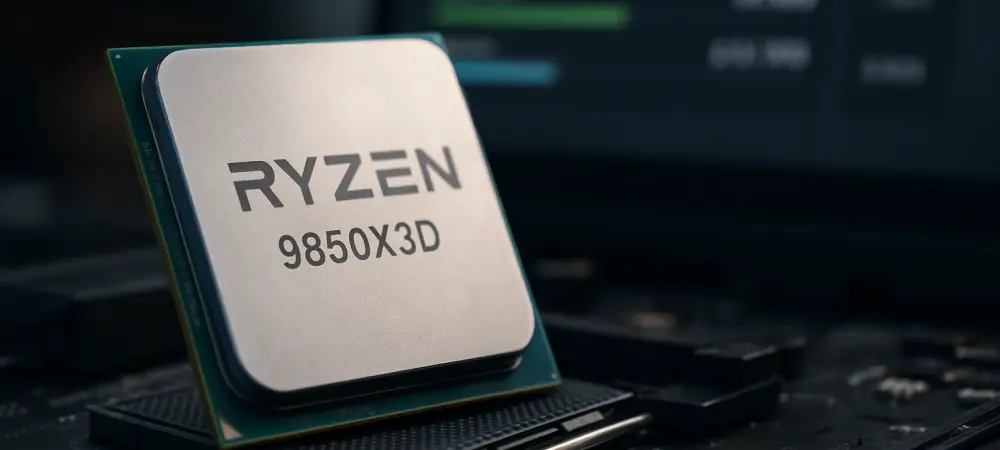
A Glimpse into AMD’s Next-Generation Gaming Powerhouse
The world of PC hardware has been set abuzz by the unexpected appearance of a previously unknown AMD processor, the Ryzen 7 9850X3D, in leaked Geekbench 6 results. This discovery offers the first concrete, albeit preliminary, look at a potential new addition to AMD’s “Granite Ridge” desktop CPU family, specifically one featuring the company’s acclaimed 3D V-Cache technology. For enthusiasts and gamers eagerly awaiting the next leap in performance, these benchmarks provide a tantalizing preview of what’s to come. This article will dissect the leaked specifications, analyze the inconsistent performance data, and place these findings in the broader context of the CPU market, all while emphasizing the necessary caution that must accompany such early information.
The Legacy of 3D V-Cache and Setting the Stage for Granite Ridge
To understand the excitement surrounding the 9850X3D, one must appreciate the revolutionary impact of AMD’s 3D V-Cache technology. First introduced with the Ryzen 7 5800X3D, this innovative chip-stacking technique allowed AMD to fuse an enormous amount of L3 cache directly onto the processor, drastically reducing latency and boosting performance in gaming and other cache-sensitive applications. The subsequent Ryzen 7000 X3D series cemented this technology’s reputation, establishing these CPUs as the definitive choice for gamers seeking maximum frame rates. This history of gaming dominance has created high expectations for the next-generation Granite Ridge lineup, making any leak, especially for a new X3D model, a significant event.
Dissecting the Preliminary Performance Data
Core Specifications an 8 Core Chip with a Mountain of Cache
The Geekbench database entries provide a clear, if unofficial, profile of the Ryzen 7 9850X3D. The processor is identified as an 8-core, 16-thread model, a configuration that has proven to be a sweet spot for high-end gaming. It reportedly features a 4.7 GHz base clock, but the main attraction is its massive 96 MiB of L3 cache, a hallmark of the X3D series. The most intriguing detail from one of the tests is a maximum turbo clock of 5.6 GHz, a hefty 400 MHz higher than the rumored specifications for the upcoming Ryzen 7 9800X3D. These specs suggest AMD is aiming to combine its cache advantage with aggressive clock speeds to deliver a new level of gaming performance.
A Tale of Two Tests and Unpacking the Performance Discrepancy
The leaked benchmarks present a confusing picture due to wildly different results from two separate test systems. The first, running on a Colorful motherboard, achieved an impressive single-core score of 3,439 and a multi-core score of 17,530, powered by the aforementioned 5.6 GHz boost. However, a second test on a Maxsun motherboard yielded significantly lower scores, which analysts attribute to the CPU failing to reach its maximum boost frequencies. This inconsistency is typical of pre-release hardware tests and highlights the danger of drawing firm conclusions. While the higher score places the 9850X3D in close competition with other rumored chips, the variance shows that its true potential is still an open question.
Critical Context Why These Early Numbers Dont Tell the Whole Story
It is crucial to approach these benchmarks with a healthy dose of skepticism, as they are hampered by several limiting factors. Both test systems utilized slow DDR5 memory running at just 4,800 MT/s, a configuration that would severely bottleneck a high-performance CPU and is not representative of a typical enthusiast build. Furthermore, unreleased processors are almost always tested on early, unoptimized firmware and drivers, which can lead to instability and subpar performance. These caveats mean the leaked scores are likely a floor, not a ceiling, for the 9850X3D’s capabilities, and its final performance could be substantially different.
Future Horizons and What the 9850X3D Means for the CPU Market
The emergence of the Ryzen 7 9850X3D raises important questions about AMD’s product strategy for the Granite Ridge generation. It is currently unclear whether this chip is a higher-binned, premium version of the rumored 9800X3D or an entirely different product. If its 400 MHz clock speed advantage holds true, it could signal AMD’s intent to create a new flagship gaming CPU that commands a premium price. This move would intensify competition at the top end of the market, forcing rivals to respond and giving consumers more distinct performance tiers to choose from. Until AMD makes an official announcement, the exact positioning and purpose of the 9850X3D will remain a subject of intense speculation.
Navigating the Hype Key Insights and Consumer Guidance
The key takeaway from this leak is that while a new, potentially powerful 8-core X3D processor is on the horizon, its real-world performance is far from settled. The preliminary benchmarks are promising but ultimately unreliable due to immature platforms and memory bottlenecks. For consumers and system builders, the most prudent course of action is patience. Basing purchasing decisions on unverified leaks is a risky proposition. The best practice is to wait for official product announcements from AMD, followed by comprehensive third-party reviews that use optimized platforms and enthusiast-grade components to reveal the CPU’s true capabilities.
Final Thoughts the Wait for Official Confirmation Begins
The discovery of the Ryzen 7 9850X3D in benchmark logs successfully ignited anticipation within the PC gaming community. It served as a powerful reminder that AMD was continuing to push the envelope with its 3D V-Cache technology, refusing to rest on its laurels. While the leaked data was a mosaic of promising specs and inconsistent results, it confirmed that the battle for CPU gaming supremacy was about to enter an exciting new chapter. As enthusiasts dissected every bit of information, the industry looked to AMD for the official word that would finally separate speculation from reality.