

The rigid architectural constraints that once dictated the placement of every network outlet have finally met their match in the sprawling, data-hungry landscape of the current decade. For over thirty years, the 100-meter limit of copper cabling served as the unbreakable law of telecommunications, a boundary defined by the physical limits of signal attenuation and timing. This distance was perfectly adequate for a world of stationary cubicles and desk-bound workstations, but the rapid proliferation of high-definition security cameras, intelligent building sensors, and outdoor wireless access points has pushed hardware far beyond the traditional perimeter. As facilities evolve into hyper-connected ecosystems, the necessity of reaching remote gates, rooftop solar arrays, and expansive warehouse floors has rendered the century-old standard a bottleneck for innovation. Designers and facility managers now find themselves at a crossroads where they must decide between the massive expense of adding remote telecommunications rooms or adopting advanced cabling solutions that safely extend data and power well into the three-hundred-meter range.
The Evolution: Meeting the Demands of a Connected Perimeter
The rise of the Internet of Things has fundamentally altered the spatial requirements of modern network topology, moving the focus from internal offices to the very edges of property boundaries. In contemporary facility management, it is no longer uncommon to find critical devices located in parking structures, remote storage yards, or atop tall poles for 360-degree surveillance coverage. These installations frequently exceed the 100-meter threshold, creating a logistical nightmare for teams accustomed to traditional structured cabling limitations. To bridge these gaps, organizations have historically relied on fiber optic links or intermediate active equipment, but these alternatives introduce significant costs and maintenance complexities. The current push toward extended-distance copper solutions allows for the direct delivery of both high-speed data and Power over Ethernet to these outlying zones, streamlining the overall infrastructure while reducing the number of failure points that typically occur when daisy-chaining multiple pieces of hardware.
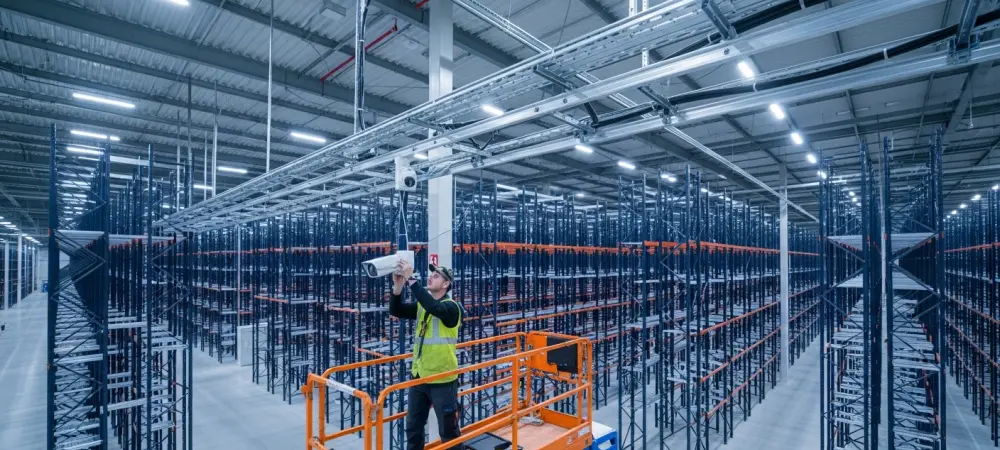
Architectural reality often dictates that ideal network design must yield to the physical limitations of existing structures, particularly in aging buildings or expansive industrial complexes. When a facility manager needs to install a new security camera at the far end of a loading dock, the cost of constructing a new climate-controlled telecommunications closet just to serve a single device is often prohibitive. This financial burden includes not only the physical construction and specialized cooling systems but also the ongoing operational expenses related to power consumption and equipment monitoring. Consequently, the industry has seen a massive shift toward high-performance cabling designed to maintain signal integrity at lengths up to 200 or even 300 meters. This technological leap enables a centralized management model where all active equipment stays within a secured, primary data center, while the physical layer extends outward like a nervous system to reach every corner of the modern campus without the need for redundant intermediate infrastructure.
Thermal Dynamics: Managing Signal Integrity in Harsh Environments
Distance is only one half of the equation when pushing copper cabling beyond its traditional boundaries, as environmental heat plays an equally destructive role in network performance. When cables are routed through rooftop conduits or ceiling plenums in non-climate-controlled warehouses, internal temperatures can soar, leading to a phenomenon known as insertion loss. Standard category cables are often rated for performance at room temperature, but as the heat rises, the physical properties of the copper and the surrounding insulation change, causing the electrical signal to degrade much faster than anticipated. Many cables marketed for extended distances may function perfectly in a laboratory setting but fail catastrophically once they are subjected to the real-world thermal stressors of a summer afternoon. This degradation often manifests as intermittent connectivity or a total loss of high-speed data throughput, which can be particularly difficult for IT teams to diagnose when the failures only occur during peak temperature hours. The technical failures caused by heat at extended distances have profound implications for life-safety systems and mission-critical infrastructure. For instance, an emergency blue-light kiosk or a high-resolution facial recognition camera at a remote gate must maintain a constant, stable connection to ensure public safety. If a network link is on the edge of its performance envelope due to extreme distance, even a slight increase in ambient temperature can push the system into a failure state, rendering the security device useless exactly when it might be needed most. Treating extended-distance cabling as a simple commodity rather than a specialized, engineered component is a dangerous oversight that ignores the physics of data transmission. Professionals in the field are now prioritizing cables with higher temperature ratings and advanced shielding materials that are specifically qualified to handle the dual challenges of long-distance runs and high-heat environments, ensuring that the physical layer remains resilient regardless of the weather.
Strategic Planning: The Methodology of Engineered Connectivity
To successfully navigate the move beyond the 100-meter standard, the industry has adopted a rigorous strategy known as engineered link design. This approach moves away from the “one-size-fits-all” mentality and instead focuses on meticulous pre-planning and documentation for every cable run that deviates from traditional standards. Before any wire is pulled, facility professionals must conduct a thorough audit of the specific Ethernet speeds and Power over Ethernet wattage required by the end device. Because signal attenuation increases with distance, a cable that supports gigabit speeds at 100 meters might only support 100 Mbps at 200 meters. By identifying these limitations early, designers can match the hardware to the cable’s actual performance capabilities, preventing the frustration of installing expensive devices that cannot communicate at their intended capacity. Furthermore, clear labeling and detailed mapping become essential to ensure that future technicians understand they are working with non-standard links.
Reliability in these extended infrastructures also hinges on the availability of performance data that reflects worst-case scenarios rather than ideal conditions. It is no longer acceptable to rely on generic specifications; instead, designers are seeking out manufacturers who provide verified test results for signal-to-noise ratios at specific distances and elevated temperatures. This transparency allows engineers to build a “buffer” into their designs, ensuring that the network remains stable even if environmental conditions fluctuate or if the hardware experiences minor power surges. Compatibility is another critical factor, as extended-distance cabling must work seamlessly with a wide variety of network switches and cameras from different manufacturers. This level of verification ensures that the infrastructure remains flexible and future-proof, allowing the organization to upgrade its end-point devices from 2026 to 2028 and beyond without having to rip out and replace the underlying physical cabling that was so carefully installed.
Actionable Integration: Establishing Long-Term Network Reliability
The transition to extended-distance infrastructure required a fundamental shift in how network designers approached cable certification and site environmental surveys. It was essential for teams to move beyond simple “pass/fail” testing on handheld scanners and instead analyze the specific margins of performance for every link over the 100-meter mark. This proactive stance ensured that cables were not merely functional at the moment of installation but possessed the headroom to handle the inevitable fluctuations in signal quality. Furthermore, the industry established a new baseline for professional accountability where the installer assumed the role of a system engineer, meticulously matching the cable’s physical properties to the specific thermal and electrical demands of the site. This shift in responsibility successfully bridged the gap between theoretical laboratory limits and the harsh, unpredictable realities of large-scale facility management, creating a more robust and scalable foundation for all future technology deployments.
Moving forward, the successful implementation of these long-reach solutions relied heavily on the integration of advanced shielding techniques and specialized jacket materials. Designers found that utilizing shielded twisted pair (STP) configurations significantly reduced electromagnetic interference, which was often amplified over longer runs in industrial settings. They also prioritized the use of high-gauge copper conductors to minimize DC resistance, thereby improving the efficiency of power delivery for high-draw PoE devices like motorized pan-tilt-zoom cameras. By focusing on these specific technical attributes, organizations were able to eliminate the need for costly mid-span repeaters and additional electrical outlets in remote locations. The final result of this strategic evolution was a network that was both simpler to manage and more resilient to environmental stress, proving that the 100-meter standard was a starting point rather than a permanent ceiling for modern connectivity.