

Dominic Jainy is a seasoned veteran in the high-stakes world of digital infrastructure, currently navigating the explosive growth of the neocloud sector. With a background that bridges the gap between massive hardware deployments and the financial intricacies of multi-billion dollar capital expenditure, he offers a unique perspective on the physical and fiscal realities of the AI boom. As the industry moves toward gigawatt-scale campuses, his insights reveal how companies are racing to secure the power and silicon necessary to fuel the next generation of computing.
Developing a 1.2GW data center campus in Pennsylvania involves massive logistical hurdles. What specific infrastructure milestones must be met to achieve “lights up” status by late 2027, and how do you manage the technical risks of adding 300MW of capacity every year through the end of the decade?
To hit that critical “lights up” milestone by late 2027, the primary focus is on establishing the foundational utility high-voltage connections and the core building shells that can support our initial phase of 250MW to 350MW. We view the Pennsylvania project as a marathon of precision engineering where we aren’t just building a shell, but a modular ecosystem capable of scaling at a relentless pace. By planning for a steady injection of 300MW each year until we reach the full 1.2GW capacity, we mitigate technical risk through standardized deployment workflows that treat each block of power as a repeatable unit. This cadence allows our teams to refine cooling and power distribution systems in real-time, ensuring that the sheer scale of the project doesn’t overwhelm the local grid or our internal commissioning teams. The logistical dance involves securing long-lead equipment years in advance, which is why we are already ramping up construction activities to meet the commitments we have made to our anchor tenants.
Raising capital expenditure targets to $25 billion requires a complex financing strategy. How do five-year agreements with high-credit partners like Meta or Microsoft influence your ability to secure attractive debt terms, and what trade-offs exist when balancing cash reserves against new equity investments to fund this growth?
Securing a five-year agreement with a high-credit partner like Meta, valued at up to $27 billion, acts as a powerful signal to the credit markets, essentially de-risking our revenue profile for the foreseeable future. This stability allows us to approach lenders for additional debt on much more favorable terms than a typical startup, as our cash flows are effectively guaranteed by some of the largest companies in the world. However, balancing our $9.3 billion in cash and equivalents against the need for new equity—such as the $2 billion investment we secured from Nvidia—is a delicate act of maintaining liquidity without over-diluting our shareholders. We’ve already secured more than 90 percent of our initial $16 billion to $20 billion capex through cash and existing contracts, but pushing toward that $25 billion ceiling requires us to tap into corporate-level debt markets. The trade-off is always between speed and cost; we chose to accelerate our 2027 investments into the current year to ensure we stay ahead of the demand curve, even if it means managing a more complex debt-to-equity ratio.
With at least four customers currently competing for every available GPU, how do you handle allocation across various chip generations without alienating clients? Additionally, what metrics do you use to determine if rising component costs are driven by temporary inflation or a permanent shift in the supply chain?
The current market environment is unprecedented, with four or more customers vying for every single GPU we bring online, creating a situation where we are effectively sold out across all chip types, both old and new. We manage this demand by prioritizing long-term strategic partnerships and high-utilization workloads, ensuring that our allocation strategy supports the broader growth of the AI ecosystem rather than just the highest bidder. Regarding costs, we look closely at component inflation, which recently impacted our spend by a low single-digit percentage; we differentiate between temporary spikes and permanent shifts by analyzing our forward-looking procurement contracts. Because we secured a significant portion of our 2026 hardware back in 2025 at previous price levels, we have a clear baseline to judge whether current price increases are driven by short-term supply bottlenecks or a fundamental change in manufacturing costs. Our confidence remains high because the price increases we see are largely driven by the sheer intensity of contracted demand rather than an unmanageable rise in our own cost basis.
Scaling contracted power from 2GW to 3.5GW in a short window creates immense operational pressure. What does the site selection process look like when targeting gigawatt-scale capacity, and what specific power grid requirements or environmental criteria must a location meet to support such intensive, high-density infrastructure?
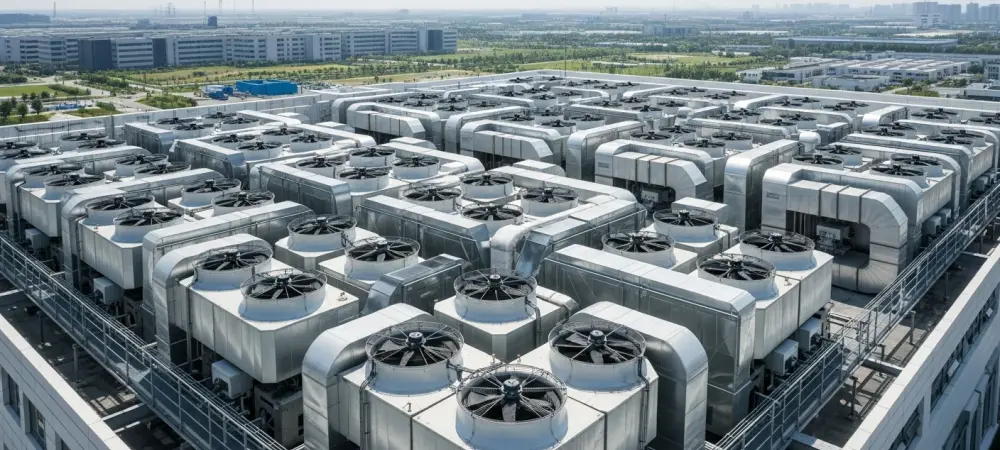
When we look for sites capable of supporting gigawatt-scale capacity, the primary filter is the immediate and long-term availability of heavy-duty power infrastructure, which is why our contracted capacity now accounts for over 75 percent of our total power. We need locations that offer not just a massive initial hookup, but a clear path to expansion, as seen in our jump from 2GW at the end of last year to 3.5GW today. Pennsylvania offers a unique combination of grid reliability and the physical space required for high-density cooling systems that can handle the thermal output of modern AI clusters. Beyond just the electricity, we evaluate environmental factors like ambient temperature for free-cooling potential and proximity to fiber backbones to ensure low-latency connectivity for our “neocloud” services. This rigorous selection process is the only way to ensure that the massive investments we are making today won’t be throttled by infrastructure limitations five years down the line.
Revenue growth exceeding 600 percent year-over-year often strains internal operations. How are you adjusting your workforce and deployment workflows to maintain a 40 percent EBITDA margin, and what step-by-step measures are in place to ensure that 2027 capacity investments translate into immediate revenue by early next year?
Managing a 684 percent year-over-year revenue increase—climbing from $50.9 million to $399 million—requires us to automate every possible facet of our deployment workflow to keep overhead from eroding our 40 percent adjusted EBITDA margin. We are focused on a “deploy-to-revenue” pipeline where construction milestones are synchronized with customer onboarding; for example, the investments we are making now for 2027 capacity are specifically designed to go live and generate revenue in the first half of next year. We utilize upfront payments from customers, which drove our operating cash flow to $2.3 billion this quarter, to fund the immediate labor and hardware costs of these expansions. By securing customer commitments, such as the Meta deal, well before the concrete is even poured, we ensure that every dollar of capex has a pre-determined path to becoming high-margin revenue. This disciplined approach allows us to scale our workforce strategically, hiring for specialized infrastructure roles that directly support the annualized revenue run rate of $7 billion to $9 billion we are targeting.
What is your forecast for the neocloud sector?
I believe we are entering an era where the traditional distinction between cloud providers and infrastructure owners will vanish, as the neocloud sector matures into the primary engine of the global AI economy. In the next few years, we will see a shift where “sovereign” power and hardware ownership become the ultimate competitive advantages, allowing specialized providers to outperform general-purpose clouds on both performance and cost. We are moving toward a landscape where gigawatt-scale campuses are the standard unit of measurement, and companies that can successfully bridge the gap between deep-pocketed financing and rapid physical deployment will dominate. Ultimately, the winners will be those who treated infrastructure not just as a support function, but as the core product itself, and I expect to see the total contracted power for the sector double again before the decade is out.