

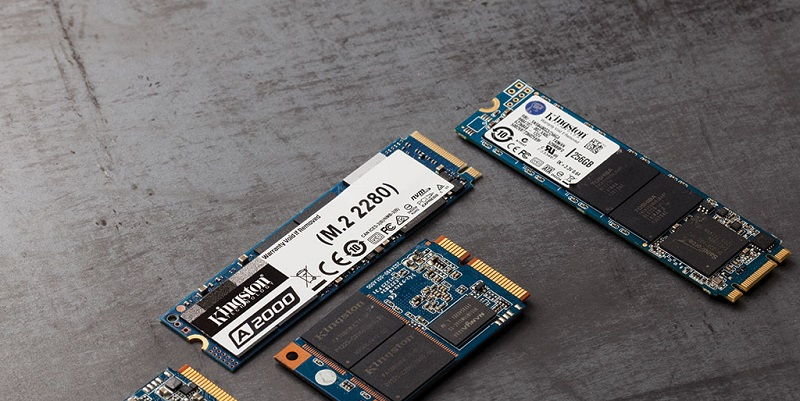
In recent developments, the technology industry has witnessed the unveiling of new solid-state drives (SSDs) and memory modules designed to provide larger memory volumes. However, despite their potential, the fast adoption of these innovative solutions is hindered by infrastructure limitations and challenging market conditions.
Delayed implementation of new technologies
Enterprise customers eagerly anticipate the integration of these new technologies into their products. Unfortunately, it could be nearly a year before they begin to experience the benefits firsthand. Industry experts express concerns over the financial instability during these times and advise against putting something into production that could yield initially poor results.
The promise of high storage capacity
The new SSDs offer storage capacities that outstrip any currently available options. For instance, these advanced drives boast an astonishing 256 terabytes (TB) of storage capacity. However, enterprises will have to exercise patience as taking full advantage of such massive capacity is not immediately feasible.
Limitations of interfaces
One significant challenge lies in storing vast amounts of data behind slower interfaces. While the PCIe 5.0 interface itself is not slow, it does have an upper limit on the amount of data that can pass through at any given time. This limitation necessitates further advancements in interface technology to fully unlock the potential of these high-capacity SSDs.
Western Digital’s Ultrastar DC SN655 SSD
Amidst these developments, Western Digital has released its Ultrastar DC SN655 NVMe SSD. This groundbreaking solid-state drive functions on a PCIe 4.0, U.2/U.3 interface and is available in capacities of up to 15.36 TB. This release creates ripples of excitement in the market, showcasing the progress being made towards the adoption of these innovative technologies.
Delayed advancements in Compute Express Link (CXL) memory modules
Alongside the SSDs, advancements in Compute Express Link (CXL) memory modules — utilizing a PCIe interface — are also experiencing delays in their arrival to the market. These modules, a crucial component for specific workloads, offer increased memory capacity and bandwidth. However, their implementation will have to wait until the necessary infrastructure is in place.
Micron’s CZ120 module
In light of the delay in CXL memory modules, Micron has introduced the CZ120 module. This module is available in capacities of 128 GB and 256 GB and is designed to meet the needs of workloads requiring significant memory capacity and bandwidth. Micron’s CZ120 module serves as a bridge, providing enterprises a solution to accommodate their immediate needs while waiting for the fully realized potential of CXL memory modules.
Anticipated volume of CXL memory modules
While there is undoubtedly keen interest in CXL memory modules, their widespread adoption and availability in significant volumes is expected to occur next year. This projected timeline allows for the development of a robust ecosystem and the resolution of any remaining infrastructure and compatibility barriers, paving the way for seamless integration and optimal performance.
As the technology landscape continues to evolve, the unveiling of new SSDs and memory modules excitingly ushers in the prospect of larger memory volumes. Nevertheless, challenges in infrastructure and market conditions impede the fast adoption of these technologies. Enterprises are eagerly awaiting the realization of these advancements, recognizing the transformative impact they can have on performance and efficiency once fully integrated. Despite the delay, the future holds promise as industry leaders strive to overcome obstacles, ensuring the swift and successful deployment of these innovative solutions.