

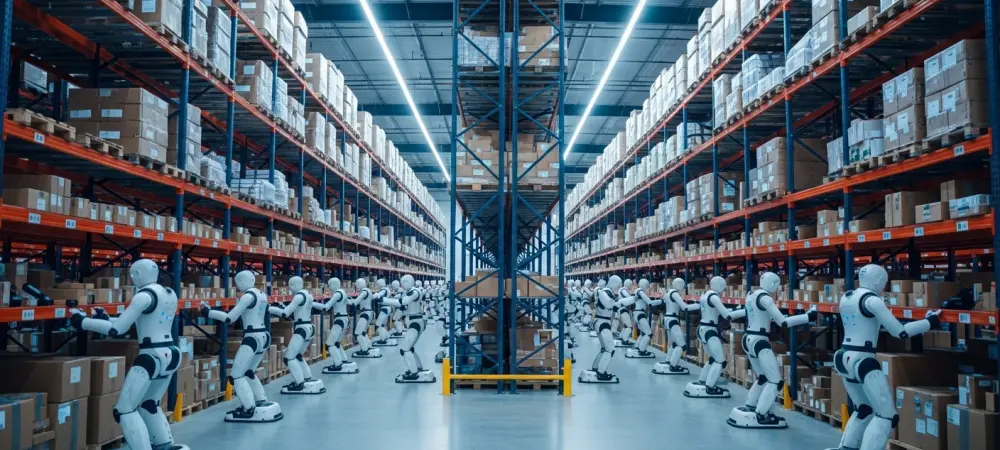
A recent high-profile dialogue between technology magnate Elon Musk and financial titan Larry Fink offered a startling glimpse into a not-so-distant future where the very foundations of labor, scarcity, and human purpose could be rendered obsolete by billions of humanoid robots. During a discussion at the World Economic Forum, Musk presented a comprehensive and audacious roadmap for a world fundamentally reshaped by artificial intelligence and automation. This vision, centered on Tesla’s Optimus robot, suggests that an era of unprecedented global abundance is no longer a matter of speculative fiction but an impending economic and social reality that demands immediate consideration from global leaders. The core of this proposition is transformative: sever the link between human work and prosperity, unlocking a future where material needs are universally met by a tireless, automated workforce.
What if the Need to Work Simply Disappeared
The central tenet of Musk’s forecast is the eventual obsolescence of mandatory labor, a concept he suggests could materialize within a decade. In this envisioned future, humanoid robots would saturate every sector of the economy, from complex manufacturing and logistics to deeply personal services like eldercare and household management. The sheer scale of this deployment—billions of robots outnumbering humans—would create an economic engine capable of generating goods and services on a scale that eliminates scarcity. This shift challenges the centuries-old paradigm that ties human survival and advancement to employment.
This potential reality forces a profound reevaluation of societal structures and individual identity. Without the necessity of a job to provide for oneself, human activity would be redefined. Musk posits that work would become an optional pursuit, driven by passion and creativity rather than economic need. Such a transition would necessitate new social and financial models to manage the distribution of this newfound abundance, prompting questions about how societies would organize themselves and how individuals would find meaning in a post-work world.
Beyond Science Fiction to Today’s Realities
This robotic revolution is not merely a theoretical exercise but a proposed solution to some of the most urgent crises facing the modern world. Musk directly connects the development of humanoid robots to declining global birth rates, which are projected to create severe labor shortages in numerous developed nations. An automated workforce could fill these critical gaps, sustaining economic productivity and ensuring the continuity of essential services that are currently threatened by demographic shifts.
Furthermore, the growing eldercare crisis represents a significant societal and economic burden. As populations age, the demand for caregivers far outstrips the available human supply, placing immense strain on families and healthcare systems. Musk presented Optimus as a practical solution, capable of providing companionship and assistance to the elderly, thereby addressing a pressing humanitarian need. It is this grounding in tangible, present-day problems that has captured the attention of the world’s financial leaders, from Davos to Wall Street, who now see humanoid robotics not just as a technological marvel but as a potentially lucrative and stabilizing force in the global economy.
The Anatomy of an Automated World
At the heart of this vision is a staggering prediction: a global population of humanoid robots numbering in the billions, far exceeding the human populace. This massive automated workforce would function as the primary engine of a new economy based on abundance. The fundamental economic equation would shift from one based on human labor and capital to one defined by the productivity per robot multiplied by the total number of robots. In such a system, the concept of scarcity for goods and services would effectively vanish.
Tesla’s Optimus robot is positioned as the vanguard of this automated future. Musk outlined an ambitious roadmap for the general-purpose humanoid, with its initial deployment in Tesla’s own factories already underway and a target for mass-market consumer sales by next year. A key element of this plan is accessibility, with a projected price point between $20,000 and $30,000 per unit, making it more affordable than a typical car. This pricing strategy is designed to ensure widespread adoption, with Musk confidently stating, “Everyone on Earth is going to have one and are going to want one.” The financial implications are immense, with some projections suggesting the success of Optimus could elevate Tesla’s valuation into the trillions.
A Dialogue on Humanity and Capital
During his discussion, Musk offered a definitive statement on the end of scarcity, proclaiming, “You won’t be able to even think of something to ask the robot for at a certain point.” This bold assertion prompted a critical line of questioning from BlackRock CEO Larry Fink, who challenged the role of human purpose and the viability of existing financial models in a society liberated from the need to work. Fink’s inquiry highlighted the deep philosophical and economic questions that arise when the fundamental drivers of human activity are removed.
In response, Musk described a future where humanity is free to pursue optional work, creative endeavors, and intellectual exploration. The economy itself, he suggested, could be optimized by advanced artificial intelligence, with resource allocation based not on traditional monetary value but on maximizing collective well-being, a concept he metaphorically termed “neurotransmitter tonnage.” This exchange underscored the tension between ambitious technological predictions and the practical realities of human nature and economic systems. While Musk’s timeline remains a subject of debate—with experts expressing skepticism about claims such as robots performing surgery by 2029—the dialogue itself signals a serious engagement with these transformative ideas at the highest levels of finance and industry.
The Roadmap and Its Roadblocks
The technological foundation for this robotic future is being built upon Tesla’s existing expertise in artificial intelligence and hardware manufacturing. The development of Optimus is accelerated by the company’s advanced AI programs and its powerful Dojo supercomputer, creating a synergy between its autonomous vehicle technology and its robotics initiatives. Musk has outlined a clear progression, with the AI evolving from self-driving applications to the more complex demands of a general-purpose humanoid robot, fueled by his prediction that AI will surpass human intelligence within the year. However, this ambitious vision is not without significant obstacles. The global race for supremacy in robotics is intensifying, with nations like China launching state-backed initiatives to fast-track the development and mass production of humanoid robots, potentially creating fierce competition for Tesla. Moreover, the logistical challenges of manufacturing billions of advanced machines are monumental, with potential supply chain bottlenecks for critical components like actuators and batteries. Perhaps the most significant hurdle is the colossal energy requirement needed to power a global fleet of robots and the AI infrastructure that supports them. Musk’s proposed solution—a massive expansion of solar power—underscores the scale of the infrastructure transformation that would be necessary to support this automated future.
The conversation that unfolded at Davos laid bare a vision of the future that was both compelling and controversial. It framed the advent of humanoid robotics not as a distant possibility but as an imminent paradigm shift with the potential to solve demographic crises and create universal abundance. The roadmap presented by Musk, though ambitious, was grounded in a tangible technological strategy, even as it faced scrutiny over its aggressive timelines and the immense logistical hurdles it must overcome. Ultimately, the dialogue between technology and finance on that stage marked a pivotal moment, signaling that the questions surrounding a post-work, robot-driven society had moved from the realm of theory into the center of global economic discourse.