

The modern computer enthusiast no longer views the power supply as a simple metal box that sits quietly in the basement of a chassis, but rather as the high-stakes guardian of a multi-thousand-dollar investment. As graphics processors continue their aggressive trajectory toward higher thermal design power and more complex transient spikes, the margin for error in electrical delivery has narrowed to a razor-thin edge. This evolution has transformed the PSU from a passive component into a sophisticated management system capable of real-time decision-making. The MSI MPG Ai1600TS arrives at this pivotal moment, promising not just the brute force of 1600W, but the intelligence required to protect the most ambitious builds from the internal and external risks of modern computing.
A New Era of Power Delivery: Beyond Just Raw Wattage
The days of treating a power supply as a “set and forget” component are rapidly fading as the electrical requirements of flagship hardware become increasingly nuanced. While a 1600W capacity was once considered overkill for anyone outside of extreme overclocking circles or professional rendering farms, it has become a pragmatic ceiling for enthusiasts who want to ensure their systems never break a sweat. This headroom is vital because modern components do not draw power in a flat line; they demand massive, instantaneous bursts of energy that can trip the over-current protections of lesser units. The MPG Ai1600TS provides a foundational stability that allows the rest of the system to perform without the looming threat of unexpected shutdowns during heavy workloads.
Beyond the raw numbers, the shift in the industry focuses on how that power is managed and monitored. A high-wattage unit must now act as a smart intermediary between the wall outlet and the delicate silicon of a GPU. This involves more than just converting alternating current to direct current; it requires a level of communication between the PSU and the operating system that was previously non-existent. By treating power as a data-driven resource, MSI is addressing the growing complexity of PC architecture, where the synergy between hardware components is just as important as the individual specifications of each part.
The Rising Stakes: PCIe 5.1 and ATX 3.1 Standards
The introduction of high-wattage 16-pin connectors was a necessary evolution for the industry, but it arrived with a steep learning curve and significant public concern regarding thermal reliability. As the market moves deeper into the era of ultra-high-TDP hardware, such as the next generation of flagship graphics cards, the refinement of these standards has become a non-negotiable requirement for high-end builds. The MPG Ai1600TS is designed specifically to meet the rigorous demands of the ATX 3.1 and PCIe 5.1 specifications, which offer much tighter electrical tolerances and improved mechanical reliability compared to their predecessors. These standards are the industry’s answer to the “12VHPWR” era, providing a safer and more robust framework for delivering up to 600W through a single cable.
The transition to the 12V-2×6 interface within these standards represents a fundamental redesign aimed at preventing the common causes of connector failure, such as improper seating or excessive bending. This revised standard ensures that the power pins make full contact before the sensing pins allow the full electrical load to flow, effectively acting as a hardware-level safety check. For a user investing in the pinnacle of current or upcoming GPU technology, having a PSU that natively supports these refined standards is the most effective way to mitigate the risk of catastrophic hardware damage. It marks a shift toward a more disciplined approach to power delivery where safety is engineered into the very physical structure of the connectors.
Engineering Excellence: Technical Foundations
Under the hood, the Ai1600TS is built with server-grade components that differentiate it from standard consumer-grade units. It utilizes Silicon Carbide (SiC) interleaved PFC MOSFETs, a material choice that significantly reduces switching losses and improves overall thermal efficiency. This high-end internal architecture allows the unit to maintain an 80 PLUS Titanium efficiency rating, meaning that even when it is pulling massive amounts of power from the wall, very little of that energy is wasted as heat. The use of 100% Japanese 105°C-rated capacitors further solidifies its position as a long-term investment, designed to withstand the rigors of continuous high-load operation for years to come.
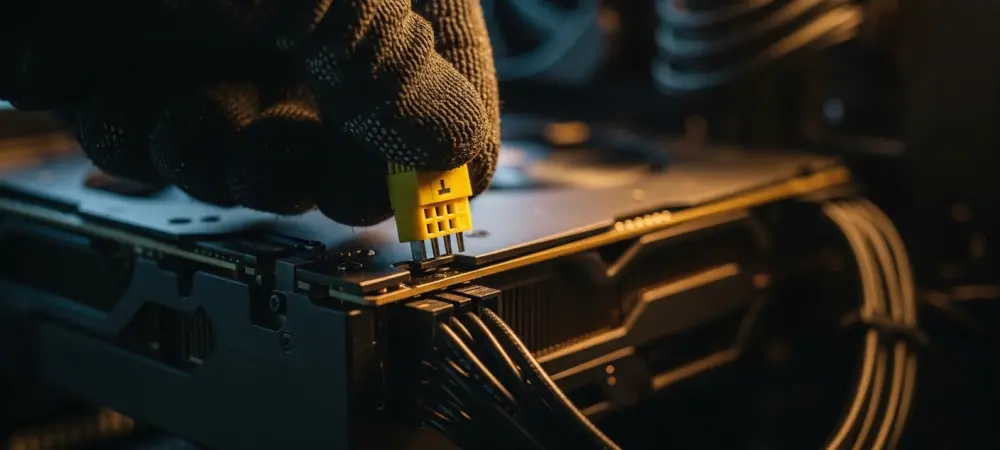
The physical design of the unit also incorporates several innovations that simplify the building process while enhancing safety. One of the most practical additions is the “Dual-Color 12V-2×6 Connector” system, which uses a bright yellow internal plastic to provide a clear visual cue during installation. If any yellow is visible after the cable is plugged into the GPU, the user knows immediately that the connection is not fully seated, preventing the arcing and overheating issues that plagued older designs. Furthermore, the inclusion of embossed jacket cables offers a level of flexibility that traditional braided cables cannot match, allowing for cleaner cable management and reducing the mechanical tension placed on the GPU’s power socket.
Silent Cooling: Industrial Protection Circuits
Managing the heat generated by a 1600W unit requires a cooling solution that is both powerful and discreet. The Ai1600TS employs a 135mm Fluid Dynamic Bearing (FDB) fan that is specifically tuned for longevity and low acoustic output. Under light to moderate loads, the fan can remain entirely stationary, providing a silent experience for daily tasks. When the system is pushed to its limits, the fan ramps up smoothly, prioritizing thermal stability without creating a distracting amount of noise. This balance of performance and silence is a hallmark of high-end PSU design, ensuring that the power supply does not become the loudest component in a high-performance rig.
Safety is further bolstered by a comprehensive suite of industrial-grade protection circuits that act as the final line of defense against electrical anomalies. These include protections against over-current, over-voltage, over-temperature, and short circuits, all managed by a digital microcontroller. The unit also features an internal buzzer system that provides audible alerts if the fan fails or if abnormal power conditions are detected. This multi-layered approach to protection ensures that even in the event of a component failure elsewhere in the system, the PSU will act quickly to isolate the problem and prevent it from cascading through the rest of the expensive hardware.
GPU Safeguard+: A Paradigm Shift in Hardware Protection
The most innovative feature of the Ai1600TS is the GPU Safeguard+ technology, which represents a proactive shift in how power supplies handle potential failures. Rather than being a “dumb” component that simply cuts power when a limit is exceeded, this system actively monitors the health of the 16-pin interface in real-time. By utilizing its internal digital MCU, the PSU can detect early signs of current imbalances that often precede a connector meltdown. This early detection system gives the user a warning through an audible buzzer and a software notification, allowing for intervention before any physical damage occurs to the GPU or the cable.
In a remarkable step for consumer hardware integration, the Ai1600TS can actually communicate with the system’s software to mitigate risks on the fly. If the unit detects a persistent anomaly at the connector, it can trigger a protocol that instructs the GPU to reduce its power limit—potentially dropping a 575W load down to 430W automatically. This three-minute “grace period” is designed to keep the system running just long enough for the user to save their progress and shut down safely. This move from a hard, sudden crash to a managed power reduction is a significant improvement in user experience, turning a potential disaster into a manageable maintenance event.
Practical Implementation: Real-Time Telemetry
The integration of the Software Sync port allows the Ai1600TS to provide a level of transparency that was once the exclusive domain of professional electrical testing labs. By connecting the PSU to the motherboard via a USB header, users can access granular telemetry data through MSI Center or third-party tools like HWiNFO. This allows for the real-time monitoring of every individual pin on the 12V-2×6 interface, giving enthusiasts the ability to see exactly how much current is flowing to their GPU. This data is invaluable for diagnosing stability issues or simply ensuring that a high-end build is operating within its optimal parameters.
For those planning to build around the most demanding hardware available, the Ai1600TS serves as a future-proof foundation that simplifies complex requirements. The inclusion of dual native 12V-2×6 connectors means that even ultra-high-end configurations can be powered with clean, single-cable solutions rather than a mess of adapters and splitters. When setting up such a system, it is advisable for builders to leverage the software integration to calibrate their fan settings and protection thresholds. This level of customization ensures that the power supply is perfectly matched to the specific needs of the rig, providing both peak performance and the peace of mind that comes with knowing the system’s lifeblood is being monitored by an intelligent guardian.
The adoption of such advanced power technology required a fundamental shift in how PC builders approached system stability and longevity. Moving forward, the focus must remain on the integration of smart sensors and proactive safety protocols as standard features across all high-wattage units. Builders should prioritize power supplies that offer this level of digital oversight, as the cost of a high-end PSU is a fraction of the price of the components it protects. Looking ahead, the industry will likely see even deeper integration between power delivery and system-wide thermal management, making the PSU an even more central figure in the health of the modern PC. Investing in a unit like this today ensures that the hardware of tomorrow will have a safe and efficient foundation on which to operate.