

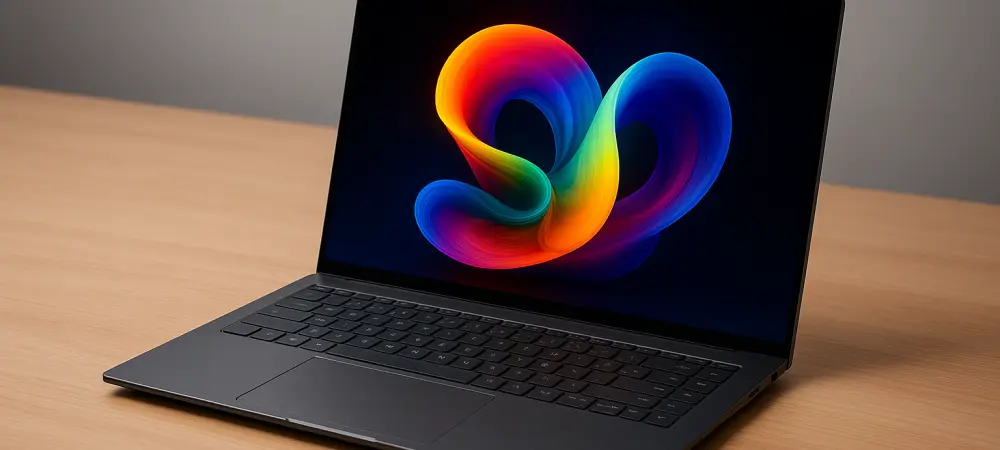
Dominic Jainy stands at the forefront of the artificial intelligence revolution, bringing years of expertise in machine learning and blockchain to the table. As an IT professional who has witnessed the rapid evolution of local compute, he offers a unique perspective on how hardware is finally catching up to the demands of complex neural networks. This discussion centers on the latest leap in mobile workstations, specifically the integration of NVIDIA’s RTX Spark hardware into consumer machines like the MSI Prestige N16 Flip AI+. We explore the implications of hitting the petaflop performance milestone locally, the utility of massive unified memory pools, and how high-refresh Tandem OLED displays are redefining the creative professional’s workflow in a world increasingly driven by on-device intelligence.
How does the shift to NVIDIA RTX Spark hardware, which allows for up to 1 Petaflop of local FP4 AI performance, redefine the workflow for professionals who previously relied on the cloud?
The ability to hit 1 Petaflop of FP4 performance on a local machine like the Prestige N16 Flip AI+ is a seismic shift for anyone working in heavy AI development or 3D rendering. By utilizing NVIDIA’s RTX Spark architecture, creators can now bypass the frustrating latency and high subscription costs associated with cloud servers. You can feel the difference when local large language models respond almost instantly, or when complex video effects render without the stuttering typically found in less capable hardware. This level of power ensures that sensitive data stays on the device, providing a level of privacy and control that was simply unreachable for mobile professionals until now. It transforms the laptop from a mere portal to the cloud into a self-contained powerhouse.
What makes the combination of 20 Arm cores and the Blackwell GPU architecture so significant for the next generation of mobile computing?
The synergy between the 20-core Arm SoC and the 6,144-CUDA-core Blackwell GPU represents a total reimagining of how we balance efficiency and raw power. This architecture allows the laptop to handle diverse workloads, from background system tasks on the high-efficiency Arm cores to intensive ray tracing and DLSS-driven gaming on the GPU. When you are pushing a device to its limits, the Blackwell architecture’s ability to manage 5,120 or 6,144 CUDA cores depending on the configuration ensures that performance doesn’t drop during peak demand. It’s a sophisticated ecosystem where the hardware finally feels invisible, letting the user focus entirely on the fluidity of their creative process. The sensation of zero lag while navigating a complex 3D environment is something every enthusiast will appreciate.
With configurations supporting up to 128 GB of LPDDR5X unified memory, how does this address the bottlenecks typically found in high-end multitasking and AI training?
Moving to 128 GB of LPDDR5X unified memory is a game-changer because it eliminates the physical and digital walls between the CPU and GPU memory pools. In traditional setups, moving data back and forth creates a bottleneck that slows down everything from 3D rendering to high-speed multitasking. Now, with this massive unified pool, users can load enormous datasets or complex 3D scenes that would have previously crashed a standard system with only 16 or 32 GB of RAM. The sheer speed of LPDDR5X means that whether you are jumping between AI creation and professional video editing, the system remains incredibly responsive and snappy. It removes that “memory full” anxiety that has plagued power users for years.
How does the inclusion of a UHD+ Tandem OLED touchscreen and a 2-in-1 form factor redefine what a premium laptop looks like?
The Prestige N16 Flip AI+ breaks the mold by combining a convertible 2-in-1 design with a breathtaking UHD+ Tandem OLED panel that hits a 3840 x 2400 resolution. Seeing the deep blacks and vibrant colors at a 120 Hz refresh rate creates a sensory experience that makes professional color grading and HDR work a genuine pleasure. The flexibility to flip the screen into a tablet mode while still having the power of a flagship RTX Spark chip underneath means you don’t have to choose between versatility and performance. It is a tactile, visual powerhouse that weighs only 1.9 kg, making it surprisingly easy to carry between the studio and client meetings. Having that much visual fidelity on a touchscreen allows for a more intimate and precise editing experience.
Given the high power draw of these flagship components, how do the connectivity suite and battery life hold up for a professional on the move?
MSI has been quite strategic by packing a 99.9 Whr battery into this chassis, which is the maximum allowed for air travel and provides the endurance needed for a long workday. To support a modern professional’s needs, the device includes the latest WiFi 7 and Bluetooth 5.4, ensuring that wireless data transfers are as fast as the internal hardware. The inclusion of dual USB4 Type C ports and HDMI 2.1 means you can easily hook up to high-resolution external monitors or fast storage arrays without compromise. Even with the $3,299 starting price, the combination of a durable chassis and a full suite of ports like the SD card reader makes it a complete mobile office. It really feels like they didn’t cut any corners to keep the weight under two kilograms.
What is your forecast for the evolution of the AI-integrated laptop market?
We are entering an era where the distinction between a “laptop” and a “local AI workstation” will completely vanish as hardware like the RTX Spark becomes the baseline. From 2026 to 2028, I expect to see the unified memory standard scale even further, likely reaching 256 GB as local models grow in complexity and size. We will also see a massive push toward more energy-efficient NPU and GPU integrations that allow for this 1 Petaflop performance to be sustained for longer periods without thermal throttling. Ultimately, the focus will shift from how much raw power the machine has to how intelligently the hardware can anticipate user needs. These machines will evolve from tools into true partners in the creative and analytical process.