

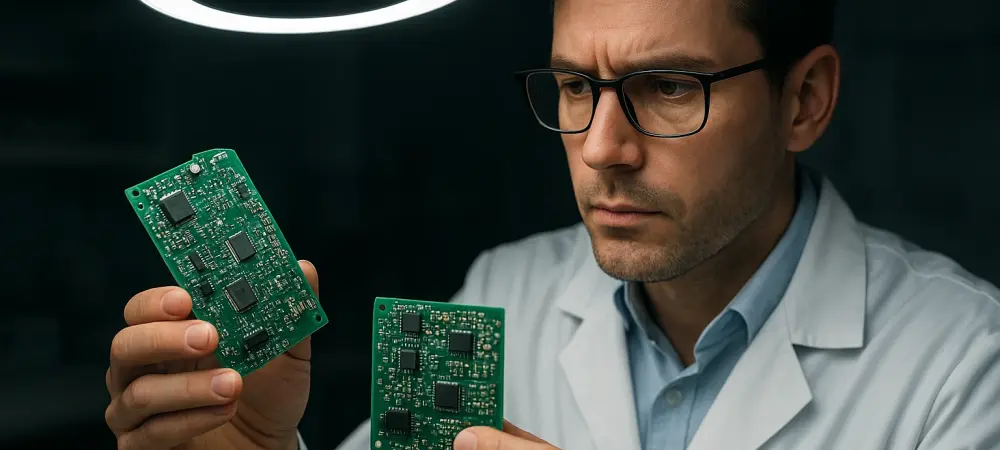
The transformation of specialized graphics hardware into the primary catalyst for global scientific discovery represents one of the most significant shifts in the history of modern computing technology.
From Pixels to Particles: The Unlikely Evolution of Parallel Computing
Industry observers note that the GPU evolved from a niche tool for video games into a fundamental pillar of innovation. The transition allowed hardware once meant for entertainment to become the primary driver of complex research. Recent National Medal of Science honors for leaders like Jensen Huang signal that the government now recognizes hardware as a scientific frontier. This recognition highlights how parallel processing dismantled barriers that were previously impossible to overcome.
The Architectural Pivot That Redefined Discovery
Technical experts suggest that shifting toward massively parallel processing enabled researchers to execute thousands of mathematical operations simultaneously. This architectural pivot fundamentally changed how scientists approach large datasets.
The move from sequential processing provided the speed necessary for real-time simulations. Consequently, the transition dismantled traditional computational limits and allowed for the exploration of entirely new scientific models.
Beyond Gaming: The Birth of Massively Parallel Computation
Developers emphasize that the success of platforms like CUDA turned proprietary hardware into a universal language for discovery. This software layer enabled the GPU to handle general-purpose tasks with unprecedented efficiency.
While traditional high-performance computing groups were initially skeptical of consumer-grade chips, these processors proved to be exceptionally reliable. Researchers now view parallel architecture as an essential requirement for rigorous inquiry.
Fueling the Artificial Intelligence Renaissance
AI researchers argue that hardware scaling and deep learning share a symbiotic bond where chip speeds dictate training progress. This relationship has directly accelerated breakthroughs in genomic sequencing and climate modeling. However, some analysts warn of a “compute-dependency” where progress is tethered to the supply chains of dominant chipmakers. This dependency suggests that hardware access is now a defining factor in scientific success.
The Genesis Mission and the New Era of Public-Private Synergy
The $2.4 billion private-sector pledge toward the Genesis Mission marks a shift toward corporate-funded national infrastructure. Experts see this as a collaborative model that supplements traditional government grants.
Industry leaders at firms like AMD and Google provide compute credits to public researchers to bridge the resource gap. These private AI tools have effectively become the new basic infrastructure for modern scientific advancement.
Geopolitical Stakes in the Global Silicon Race
Strategic advisors compare computational power to 20th-century oil reserves, labeling it a core measure of national sovereignty. The concentration of manufacturing power influences the ethical direction of global scientific standards.
While GPUs currently lead the field, specialists speculate that specialized silicon like NPUs will eventually challenge their dominance. The race for hardware continues to shape the future of international technological competition.
Navigating the High-Performance Landscape: Strategies for the AI Era
Computing consultants recommend that institutions optimize existing resources through efficient software stacking and distributed tasks. Maximizing the output of clusters is essential for maintaining a competitive research pace.
Efficiency experts also stress the importance of balancing high energy costs and cooling needs in modern data centers. Adapting infrastructure to handle these physical requirements is now as critical as the research itself.
The Silicon Backbone of Tomorrow’s Innovation
The technology sector evolved from a provider of simple gadgets into the world’s scientific central nervous system. This transition redefined the relationship between hardware manufacturers and laboratory researchers across the globe. Investments made from 2026 to 2028 confirmed that the era of GPU-driven science was a prologue to a more integrated future. The boundary between hardware architecture and scientific hypothesis effectively vanished.