

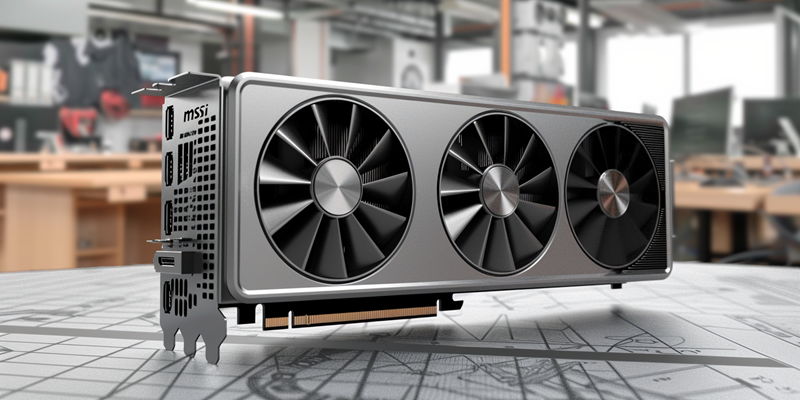
MSI has boldly targeted the Chinese gaming sector with the launch of the exclusive GeForce RTX 4090D Ventus 3X graphics card. This powerhouse is the epitome of graphics prowess with its cutting-edge AD102-250 GPU core, underpinned by an astonishing 14,592 CUDA cores. This GPU is a behemoth in the realm of gaming and professional graphics tasks, ensuring seamless performance at even the highest levels of demand.
With 24 GB of high-speed GDDR6X memory, the RTX 4090D Ventus 3X is calibrated for peak performance, offering gamers and professionals alike the ability to indulge in ultra-high-definition 4K gaming, accomplish intricate rendering projects, and tackle complex computational tasks with ease. MSI’s commitment to excellence is showcased in this state-of-the-art graphics card, making it a coveted component within the gaming community, especially in the competitive market of China where premium gaming experiences are highly sought after.
Striking a Balance Between Performance and Aesthetics
MSI has always had a knack for marrying functionality with design, and the RTX 4090D Ventus 3X GPU is no exception. Utilizing a triple-fan cooling solution, the Ventus 3X maximizes heat dissipation, crucial for maintaining peak performance during extended gaming or intensive work sessions. The triple-slot design provides ample space for air circulation, while maintaining a sleek and modern appearance with its tasteful silver and black shroud. The card’s boosted clock speed is modestly set at 2535 MHz, only 15 MHz over the reference specification, providing just a hint of an edge in performance that distinguishes it from its competitors.
Advanced Cooling Technologies for Enthusiasts
MSI’s RTX 4090D Ventus 3X isn’t just about looks—it’s a marvel of cooling innovation. Featuring the advanced Blade 6th generation fans, it ensures maximum airflow into its heat-dissipating fins. This, coupled with Airflow Guide technology, results in exceptional thermal performance. The innovative Core Pipe technology enhances this by making direct contact with the GPU, maximizing heat transfer efficiency. For those quieter moments, Zero Frozr technology intelligently stops the fans when the load drops, ensuring a tranquil work environment. MSI has left no stone unturned; even the metal backplate is thoughtfully designed to act not only as a sturdy support but also as an auxiliary heat sink, thanks to the strategic venting and thermal pads—bolstering the overall cooling system and elevating both the performance and longevity of the card. This meticulous engineering showcases MSI’s dedication to pushing the boundaries of GPU technology.
Exclusivity and Pricing in China
The RTX 4090D Ventus 3X, MSI’s latest graphics card, is a bespoke creation for the Chinese market, marrying top-tier performance with cost-consciousness. With a price tag set at 14,999 RMB (equivalent to $2115 US), it is priced above the standard MSRP for the area. Despite this, it undercuts MSI’s own high-end models like the SUPRIM X and Gaming X Trio. Catered toward the avid Chinese gamer or professional, the 4090D Ventus 3X offers an optimal mix of advanced cooling technology, mild factory overclocking, and robust build quality to withstand demanding gaming marathons or strenuous rendering tasks. This graphics card encapsulates a strategic compromise for those seeking high-end performance without the steepest price, promising to enhance their computing experience with reliability and efficiency.