

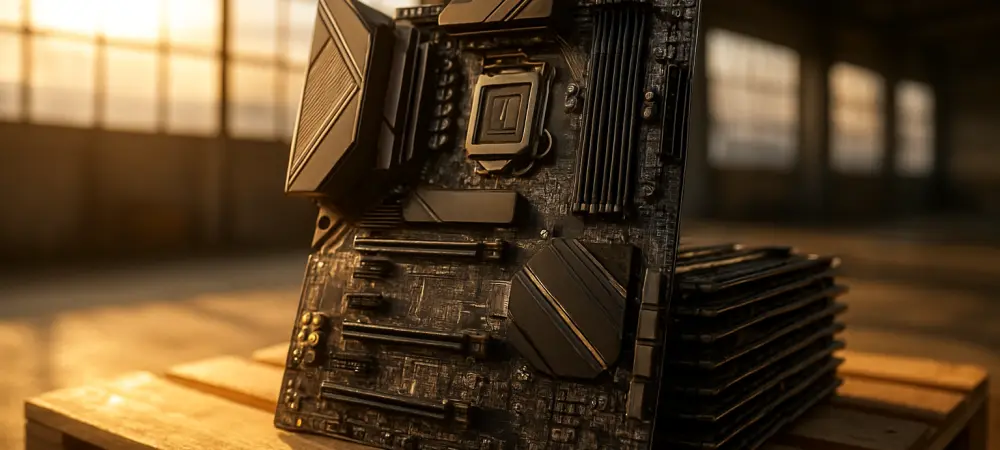
The era of the budget-friendly high-end PC build is under threat as foundational component costs rise far beyond standard inflationary margins. While enthusiasts often direct their frustration toward the eye-watering prices of flagship graphics cards or the unpredictable swings in the memory market, a more insidious financial burden is quietly mounting at the core of every system. The motherboard, long considered a relatively stable expenditure in a PC enthusiast’s budget, is undergoing a transformation from a standard commodity into a premium asset. This shift is driven by a convergence of rising raw material prices and systemic economic instability that shows no signs of abating. As the central nervous system of any computing setup, the motherboard’s rising price tag acts as a significant multiplier for the total cost of ownership. This trajectory suggests that the days of assembling a top-tier machine on a modest budget are rapidly fading as brands grapple with unprecedented overhead.
Escalating Costs in Hardware Manufacturing
Primary Drivers: The Surge in PCB Production Costs
The most substantial catalyst for the current pricing trend is the dramatic increase in the cost of the upstream materials required to fabricate the modern motherboard. Industry data indicates that the fundamental building blocks of Printed Circuit Boards have experienced price surges ranging from 15% to 50% recently. This systemic increase targets the very essence of the board, affecting the copper-clad laminates and fiberglass layers that serve as the foundation for complex electrical routing. Manufacturers are finding it increasingly difficult to absorb these costs as they attempt to balance performance requirements with retail affordability. Unlike previous years where manufacturing efficiencies could offset minor material fluctuations, the scale of this current increase has left little room for maneuver. Consequently, even entry-level boards that prioritize utility over luxury features are seeing their manufacturing margins compressed, forcing a necessary reevaluation of pricing across every product tier.
The complexity of modern motherboard designs further exacerbates these material cost issues, as the demand for high-speed signal integrity requires more expensive, higher-grade substrates. As consumers move toward faster PCIe standards and DDR5 memory, the physical requirements for the PCB become significantly more stringent, requiring more layers and specialized copper treatments. This technological progression creates a double whammy effect; not only are the base materials more expensive, but the amount and quality of those materials needed per board have also increased. Engineers are now tasked with optimizing layouts to minimize material waste, yet there is a physical limit to how much can be saved without compromising the stability of high-performance components. This intersection of rising raw material costs and the pursuit of cutting-edge technology ensures that the motherboard is no longer a cheap necessity but a primary cost driver in the assembly of modern desktop computers.
Secondary Impacts: Rising Costs of Peripheral Components
Beyond the physical circuit board, several essential sub-components that were once considered inexpensive additions are now seeing sharp price rises of their own. Integrated Wi-Fi modules, which have evolved into a standard expectation for most mid-range and premium motherboards, have experienced cost increases between 10% and 20% due to component shortages and logistics. This price hike is particularly impactful because modern wireless standards require dedicated hardware that cannot easily be swapped for cheaper alternatives without losing performance. When combined with the rising costs of the PCB itself, these peripheral components add a significant layer of expense that manufacturers must account for during the final assembly process. For the consumer, this means that features previously considered standard are now contributing to a noticeably higher MSRP, as the cumulative cost of these integrated technologies begins to outweigh the savings traditionally found in large-scale production runs. Even more concerning for the industry is the massive 50% rise in the price of capacitors, which are vital for maintaining power delivery and signal stability across the board. These components are essential for the high-end Voltage Regulator Modules required to power modern processors that demand hundreds of watts under peak load. Without high-quality capacitors, a motherboard cannot provide the clean, stable power necessary for the longevity of a high-end CPU, making them an area where manufacturers cannot afford to cut corners. Collectively, these component-level price spikes are estimated to have a direct impact of at least 10% on the total manufacturing cost of a finished unit. As brands attempt to maintain their reputation for reliability, they are forced to pass these higher costs onto the end user. This trend effectively eliminates the possibility of budget motherboards that still offer robust power delivery, as the underlying cost of the necessary components has simply risen too high.
Global Volatility and Future Market Stability
Supply Chain Risks: Shipping Lanes and Specialized Resins
The root causes of these financial pressures are deeply tied to global geopolitical tensions, particularly those centered around strategic maritime corridors in the Middle East. Conflict in regions such as the Strait of Hormuz acts as a direct catalyst for supply chain disruptions, as these areas are critical for the transit of petrochemicals and raw materials essential to high-tech manufacturing. When naval stability in these vital corridors is threatened, the global flow of goods is immediately throttled, leading to localized scarcity and a subsequent ripple effect that drives up prices for manufacturers worldwide. This volatility creates an environment of uncertainty where shipping insurance and freight costs fluctuate wildly, adding further overhead to the movement of materials from refineries to assembly plants. For the electronics industry, which relies on just-in-time manufacturing, even a brief interruption in these shipping lanes can result in months of backlog and sustained price increases for consumers. A specific and highly critical example of this supply chain vulnerability involves the production of Polyphenylene Ether resin, the essential adhesive used to bind the layers of high-performance PCBs. A substantial portion of the world’s high-quality PPE resin is currently produced in Saudi Arabia, and its export relies heavily on the maintenance of stable shipping lanes. Recent production interruptions at major chemical plants in the region have severely restricted the global supply of this specialized material, creating a bottleneck that affects every major motherboard brand. Because there are currently few viable alternatives for this high-grade resin that can meet the thermal and electrical requirements of modern motherboards, the resulting shortage forces every manufacturer down the line to pay a premium. This situation highlights the extreme fragility of the high-tech supply chain, where the availability of a single chemical compound can dictate the production capacity of the entire global industry.
Strategic Outlook: Market Projections and Consumer Advice
Major manufacturers like Asus and Gigabyte have initially responded to these pressures with soft price adjustments, typically hovering around 3% for their high-volume models. This cautious approach was designed to test market resilience while clearing out inventory produced at previous cost levels. However, industry insiders noted a distinct lag effect where the high prices paid at the chemical and refinery levels took several months to reach the retail sector. As existing low-cost inventory began to dwindle, the threat of a more aggressive second stage of price hikes became a reality for the global market. Mainland Chinese brands, which initially implemented adjustments of only a few dollars, were eventually forced to align with broader market trends as their material overhead became unsustainable. This transition period served as a final warning for builders that the window of relative affordability was closing as the industry moved toward a more expensive production standard.
Navigating this landscape required consumers to adopt a more forward-looking perspective on hardware procurement and system longevity. It was observed that the most successful strategy involved investing in high-quality motherboards early in the price cycle to avoid the steeper increases that followed the depletion of older stock. Builders who prioritized boards with robust power delivery and modern connectivity standards found that they could extend the lifespan of their systems, thereby offsetting the higher initial investment over a longer period. The market shifted toward valuing durable foundations that could support multiple generations of components, effectively making the motherboard a long-term asset rather than a disposable part. Ultimately, the industry acknowledged that while the era of cheap components had ended, informed purchasing decisions and a focus on modularity provided a viable path forward. These actions helped enthusiasts maintain high-performance standards despite the persistent economic and logistical challenges.