

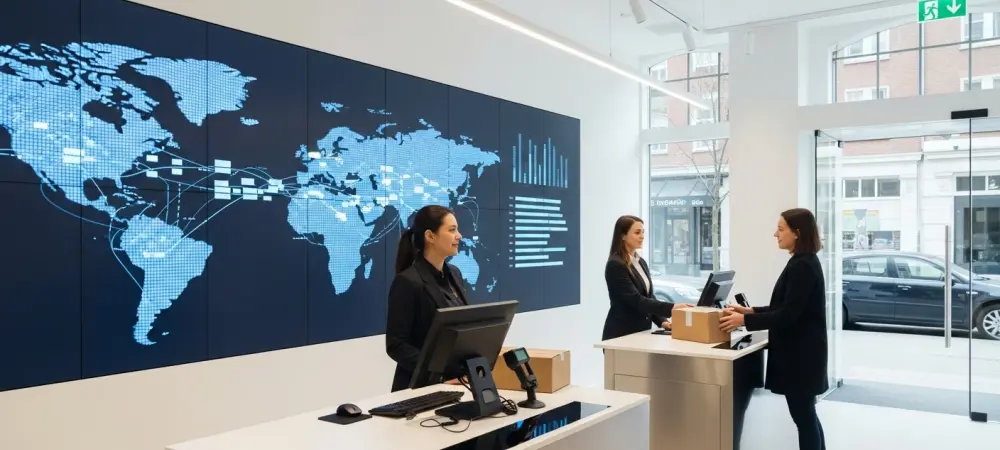
The seamless integration of digital and physical storefronts has shifted from a competitive advantage to a basic requirement for survival in a market where consumers expect instant gratification across every touchpoint. Retailers today face the daunting task of managing stock that moves through an increasingly tangled web of online orders, in-store pickups, and global shipping routes. This guide provides a strategic roadmap for leveraging Microsoft Dynamics 365 to unify inventory operations, ensuring that businesses can eliminate data fragmentation and build a resilient, responsive supply chain.
Bridging the Digital-Physical Divide Through Unified Inventory Management
The modern retail landscape has evolved into a complex ecosystem where the boundaries between physical storefronts and digital marketplaces have virtually disappeared. To remain competitive, retailers must adopt a unified operational backbone that synchronizes every sales channel in real time. This integration allows for a fluid customer journey, where a shopper might research a product on a mobile app, verify its local availability, and complete the purchase in person within the same hour. Microsoft Dynamics 365 serves as a transformative ERP solution, providing the technological infrastructure necessary to harmonize inventory, streamline fulfillment, and meet the high expectations of today’s omnichannel consumer. By placing all operational data within a single cloud-based environment, businesses can finally move past the limitations of legacy systems. This shift ensures that every department, from the warehouse floor to the executive suite, operates with the same set of facts.
The Cost of Fragmentation: Why Traditional Inventory Systems Fail
Historically, retail operations have been hindered by data silos, where point-of-sale, warehouse management, and e-commerce platforms exist as isolated islands of information. When these systems operate independently, the resulting lag in data synchronization creates a distorted view of actual stock levels. This fragmentation leads to “phantom inventory,” where items appear available online but are actually out of stock, resulting in lost sales and diminished customer trust. Furthermore, a lack of central visibility causes the “bullwhip effect,” forcing retailers to navigate the dual challenges of excessive carrying costs for overstocked items and the logistical paralysis of unexpected stockouts. Without a clear window into the entire supply chain, managers often over-order to compensate for uncertainty, which ties up valuable capital in depreciating goods. Conversely, failing to anticipate a surge in demand leads to empty shelves and a rapid migration of customers to more reliable competitors.
Implementing a Unified Inventory Strategy with Dynamics 365
Modernizing a retail enterprise requires a systematic transition from reactive “back-office” accounting to “front-line” operational intelligence. This process involves more than just a software update; it requires a fundamental rethinking of how data flows through the organization.
1. Establishing a Single Source of Truth Across All Channels
The first step involves integrating disparate data streams into a centralized dashboard to ensure absolute transparency. By connecting every node of the business, leaders can see a comprehensive picture of their assets at any given moment.
Real-Time Global Visibility of Stock Levels
Centralizing inventory allows retailers to track current stock, incoming shipments, and reserved items across all locations simultaneously. This visibility extends beyond the four walls of a single warehouse to include goods in transit and stock held at third-party logistics providers. Having this data available instantly allows for more accurate promising to customers and more precise replenishment cycles.
Elimination of Departmental Data Silos
Connecting finance, supply chain, and storefront operations ensures that every team works from the same live dataset, improving organizational accuracy. When the marketing team sees the same stock levels as the procurement department, they can avoid promoting items that are currently running low. This alignment reduces internal friction and ensures that strategic decisions are based on reality rather than outdated spreadsheets.
2. Optimizing Order Routing via Intelligent Fulfillment Logic
Once visibility is established, the focus shifts to using Distributed Order Management (DOM) to enhance delivery efficiency. This intelligence layer acts as the brain of the fulfillment process, making split-second decisions that balance customer speed with corporate profitability.
Dynamic Rules-Based Order Allocation
The system automatically determines whether to ship an order from a regional warehouse or a local storefront based on cost and transit time. By evaluating variables such as distance, carrier rates, and current store labor capacity, the ERP selects the most logical path for every individual package. This automation removes the guesswork for floor staff and ensures that fulfillment logic is applied consistently.
Reducing Transit Times and Shipping Expenses
By optimizing the fulfillment path, retailers can significantly lower the carbon footprint and logistical costs associated with last-mile delivery. Shipping from a store five miles away rather than a distribution center five hundred miles away saves money and delights the customer with faster arrival. Moreover, this efficiency allows retailers to offer more competitive shipping rates, further incentivizing consumers to choose their brand.
3. Leveraging AI and Predictive Analytics for Demand Forecasting
The transition to proactive management is achieved by using Microsoft Power BI and AI to anticipate market shifts before they occur. These tools transform raw historical data into a forward-looking strategy that can withstand market volatility.
Analyzing Historical Patterns and Seasonal Trends
Dynamics 365 identifies buying behaviors to help retailers allocate the right products to the right geographic regions. By recognizing that certain styles or items trend differently in urban versus rural settings, the system suggests stock movements that maximize sell-through. This granular level of analysis ensures that inventory is not just present, but positioned where it is most likely to be purchased.
Synchronizing Marketing Campaigns with Inventory Readiness
Ensuring that promotional efforts are backed by sufficient stock levels prevents customer frustration and maximizes campaign ROI. The system can alert marketing teams if a planned sale involves items with low availability, allowing them to pivot to different products. This synchronization turns the supply chain into a supportive partner for sales initiatives rather than a bottleneck.
4. Repurposing Physical Stores as Local Fulfillment Hubs
The final stage of modernization involves transforming brick-and-mortar locations into agile distribution centers. This evolution maximizes the value of physical real estate, turning stores into multi-functional assets that serve both walk-in traffic and digital orders.
Facilitating Buy-Online-Pick-Up-In-Store (BOPIS)
Unified inventory enables seamless local pickup options, providing customers with instant gratification and driving foot traffic to stores. When a customer knows with certainty that an item is waiting for them at a nearby counter, they are more likely to complete the purchase. Once in the store, these customers often make additional impulse purchases, further increasing the average order value.
Empowering Ship-from-Store Capabilities
Treating every retail location as a mini-warehouse allows retailers to compete with e-commerce giants by leveraging existing real estate for faster local delivery. This approach utilizes store inventory that might otherwise sit idle, turning it into a high-velocity resource. It also provides a buffer during peak seasons, as the fulfillment load can be distributed across dozens of locations rather than overwhelming a single central hub.
Key Takeaways for Modernizing Retail Operations
- Centralized Visibility: Achieved a 360-degree view of inventory across e-commerce and physical stores to prevent stockouts.
- Intelligent Fulfillment: Utilized Distributed Order Management to identify the most cost-effective and fastest shipping routes for every order.
- Proactive Planning: Employed AI-driven analytics to transition from reactive restocking to predictive, data-backed allocation.
- Store Agility: Transformed retail outlets into multi-functional hubs capable of supporting both local pickups and regional shipping.
- Operational Unity: Eradicated departmental silos to ensure that finance and supply chain teams operated with perfect alignment.
Future-Proofing Retail in an Increasingly Integrated Market
The shift toward a unified ERP was no longer a luxury but a strategic imperative for survival in a globalized market. As consumer behaviors continued to trend toward high-speed, multi-channel interactions, the ability to scale operations through cloud-based intelligence defined the industry leaders. Emerging challenges, such as global supply chain volatility and the rising demand for sustainable logistics, required the level of agility that only a unified system provided, ensuring that retailers could pivot quickly to meet new economic realities.
Moving forward, the focus should shift toward refining these integrated systems to incorporate even more granular data, such as real-time Internet of Things (IoT) sensor feedback from the supply chain. Leaders ought to evaluate their current technological debt and consider how modular cloud updates can close the gap between their current state and a fully autonomous inventory environment. By prioritizing data integrity and cross-channel visibility today, organizations prepared themselves for a future where the distinction between digital and physical commerce is entirely non-existent. Embracing the future of unified retail required a fundamental shift in how businesses interacted with their customers and managed their assets. By moving away from legacy environments and adopting a cohesive, AI-powered ecosystem, retailers delivered the consistent and reliable experiences that defined modern brand loyalty. Retail leaders reflected on their digital maturity and took the necessary steps toward an integrated, future-ready infrastructure that prioritized long-term resilience over short-term fixes.