

In an era where compact computing solutions are increasingly vital for professionals tackling demanding workloads, a new player has emerged to redefine the boundaries of mini PCs with server-grade capabilities. Imagine a device that seamlessly bridges the gap between a desktop workstation and a data center rack setup, delivering unprecedented power in a small footprint for AI inference, video rendering, and complex multitasking. This innovative approach to design and performance is capturing the attention of tech enthusiasts and industry experts alike. With the rise of localized processing needs, such as running massive language models with over 100 billion parameters, the demand for versatile hardware has never been more pressing. This groundbreaking device promises to meet those needs by combining cutting-edge technology with a unique form factor, setting a new standard for what compact systems can achieve in professional environments.
Pushing the Boundaries of Compact Computing
Unmatched Hardware for Intensive Workloads
The core strength of this mini PC lies in its integration of AMD’s Strix Halo platform, featuring the formidable Ryzen AI Max+ 395 processor. This high-end component, paired with support for up to 128GB of LPDDR5x-8000 memory operating in quad-channel mode, offers a staggering 256GB/s bandwidth. Such specifications make it an ideal choice for professionals who require robust local processing power for tasks like AI model training or high-definition video editing. The ability to handle intensive workloads without relying on cloud solutions positions this device as a game-changer for industries where data security and speed are paramount. Beyond raw power, the thoughtful design ensures that users can push the hardware to its limits without compromising performance, catering to a niche yet growing segment of tech users who demand workstation-grade capabilities in a compact package.
Innovative Design for Scalable Solutions
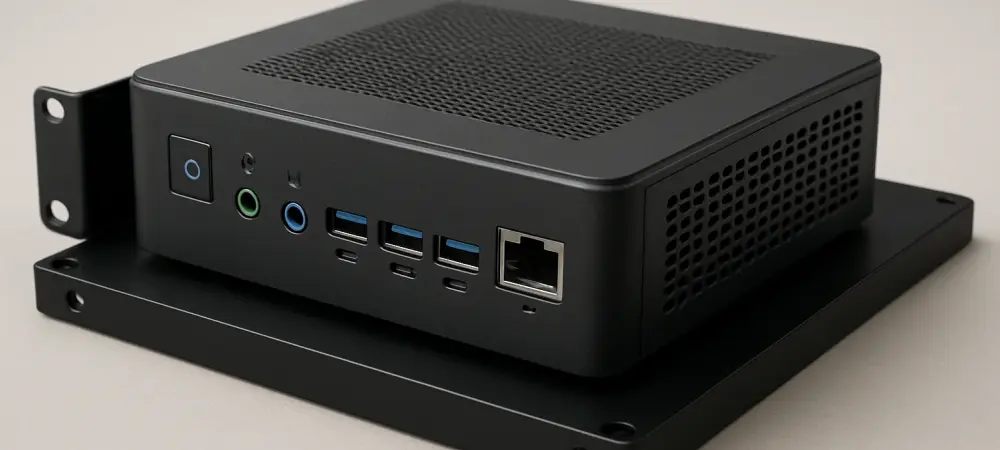
A distinguishing feature of this system is its adaptability, described as scaling from a desktop setup to a 2U rack configuration. While exact details on whether this involves modular case options or a unified rack-compatible enclosure remain undisclosed, the flexibility to transition between environments is a significant advantage. This dual-purpose design appeals to businesses and individuals who need a single device for both office use and data center integration, reducing the need for multiple systems. The inclusion of a PCIe x16 slot further enhances its versatility, allowing for the addition of discrete graphics cards or other expansion hardware—a rarity in mini PCs. Such expandability ensures that the device can evolve with technological advancements, providing long-term value to users who invest in cutting-edge solutions for their professional needs.
Connectivity and Practicality for Modern Professionals
Cutting-Edge Ports and Networking Options
When it comes to connectivity, this mini PC stands out with an impressive array of options tailored for modern professional demands. The rear I/O panel boasts a USB4v2 Type-C port with 80Gbps speed and 15W USB-PD output, alongside two additional USB4 Type-C ports at 40Gbps, four USB-A ports, dual 10 Gigabit LAN ports for high-speed networking, and an HDMI output. Front-facing ports add further convenience with two USB-C, one USB-A, a headphone jack, and dual microphones, ensuring accessibility for a variety of peripherals. Wireless capabilities are equally advanced, featuring WiFi 7 and Bluetooth 5.4 for seamless connectivity in any environment. This comprehensive setup eliminates bottlenecks often encountered in compact systems, making it a reliable choice for users who rely on multiple devices and fast data transfer in their daily operations.
Streamlined Power and Setup Efficiency
Practicality is another area where this device excels, particularly with its integrated 320W internal power supply. By eliminating the need for an external power brick, the design reduces clutter and simplifies both desktop and rack-mount installations. This thoughtful feature is especially beneficial in server environments where space and cable management are critical considerations. Although specifics about the cooling system are not yet available, the device’s form factor suggests it can accommodate a robust solution to maintain performance during extended use under heavy loads. The absence of pricing and availability details does pose a challenge in evaluating its market competitiveness, but the focus on user-friendly design and powerful internals hints at a product aimed at delivering significant value to professionals seeking efficiency without sacrificing capability.
Reflecting on a Game-Changing Innovation
Pioneering a New Era of Mini PCs
Looking back, the unveiling of this compact powerhouse marked a pivotal moment in the evolution of mini PCs, blending desktop convenience with server-grade functionality in a way that few devices had achieved before. Its ability to cater to niche professional needs, from running complex AI models to supporting high-speed networking, set it apart as a bold step forward in hardware innovation. The rack-mounting potential and top-tier specifications underscored a shift toward more versatile computing solutions that could adapt to diverse environments. While uncertainties around thermal management and cost lingered, the initial reception highlighted a strong interest from industries hungry for localized processing power. This device emerged as a testament to how far compact systems have come in meeting the demands of modern workloads.
Charting the Path Ahead for Professional Tech
As discussions around this mini PC unfolded, the focus shifted to actionable considerations for its future impact. Potential buyers were encouraged to weigh the benefits of its scalable design against the unknowns of pricing and release timelines when planning upgrades or new setups. For businesses, exploring integration into existing rack systems could unlock significant efficiency gains, particularly in data-heavy sectors. Meanwhile, keeping an eye on forthcoming details about cooling capabilities would be crucial to ensure sustained performance under stress. The broader tech community was poised to see how this device would influence competitors to innovate, potentially sparking a wave of hybrid systems that blur the lines between desktop and server hardware. This moment in tech history served as a reminder to stay adaptable, embracing tools that redefine productivity in professional landscapes.