

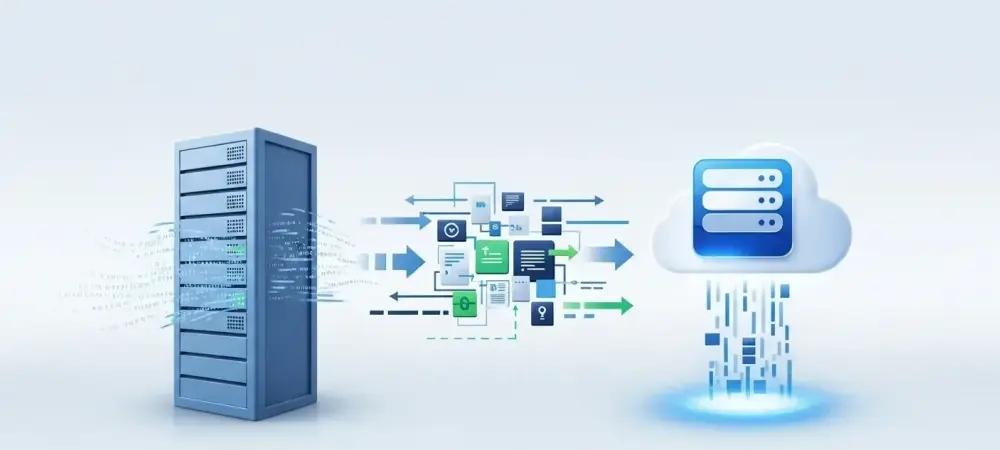
Bridging the Gap Between Legacy Reliability and Cloud Innovation
The transformation of a core operational system from a static on-premise foundation to an agile cloud-native architecture represents one of the most significant strategic hurdles a modern enterprise will ever face. Modernizing the enterprise resource planning (ERP) landscape is no longer a luxury but a strategic requirement for staying competitive in a digital-first economy. As organizations move further into 2026, the reliance on aging systems creates a growing chasm between traditional stability and the high-velocity demands of the current market. Decision-makers increasingly recognize that while legacy systems provided a reliable anchor for years, the maintenance of such infrastructure now consumes resources that should be directed toward growth and innovation. Moving from the aging infrastructure of Dynamics NAV to the cloud-native environment of Business Central represents a fundamental shift in how organizations handle data, scalability, and operational workflows. This evolution is not merely a technical patch or a version update but a complete reimagining of the ERP as a dynamic, interconnected hub. Unlike the isolated silos of the past, modern cloud environments allow for seamless data flow across departments, providing a unified version of the truth that is accessible from any location. This shift enables businesses to shed the physical limitations of local servers, replacing them with a scalable framework that expands or contracts based on real-time organizational needs.
This guide explores the financial realities, technical transitions, and long-term strategic benefits that define a successful migration journey. For a business to thrive, it must view this transition through a lens of total organizational renewal rather than a simple IT project. Industry leaders emphasize that the journey involves a careful balancing act between preserving unique business logic and embracing the standardized efficiencies of the cloud. By understanding the intersection of technical requirements and financial planning, companies can navigate the complexities of migration while ensuring that their operational backbone remains a catalyst for long-term excellence rather than a legacy liability.
Navigating the Financial and Functional Shift to Modern ERP
Decoding the Investment: Scaling Migration Costs by Business Complexity
Financial outlays for migration vary significantly, ranging from $5,000 for streamlined setups to over $100,000 for complex, global enterprise environments. For smaller organizations with basic financial needs and minimal modifications, the path is often straightforward and cost-effective. These businesses typically utilize standard modules without the burden of intricate third-party connections, allowing for a rapid transition that focuses primarily on data mapping and user onboarding. In such cases, the primary investment is directed toward ensuring that the foundational financial data is accurately reflected in the new environment, providing a quick return on investment through immediate access to cloud-based reporting tools.
Small businesses benefit from “out-of-the-box” features, while mid-sized and large firms must account for heavy redevelopment of legacy custom logic and multi-layered integrations. Mid-market companies often find themselves in a middle ground where years of operational growth have led to the creation of specialized workflows that do not exist in the standard software package. For these entities, the budget must account for the time required to evaluate which customizations are still necessary and which can be replaced by modern, native functionalities. The financial commitment increases as the number of users grows and the complexity of the supply chain or manufacturing processes demands a more tailored approach to the migration. Data from industry benchmarks suggest that the complexity of existing code and the volume of historical data are the primary drivers of consulting hours and project budgets. Large-scale enterprises with massive databases spanning decades face a unique set of challenges, as the sheer weight of historical records can slow down the migration process and increase storage costs. Furthermore, global organizations with multi-currency requirements and localized tax compliance must invest in rigorous validation to ensure that international operations remain uninterrupted. Analysts note that the most successful projects are those where the budget is viewed as a strategic allocation toward future-proofing, rather than a one-time expense to be minimized at the cost of functionality.
From C/AL to AL: Overcoming the Technical Hurdle of Customizations
Legacy NAV systems rely on C/AL code, which is fundamentally incompatible with the extension-based AL architecture used in Business Central. This technical divergence represents the most significant barrier for companies that have heavily modified their ERP over the years. In the old environment, developers often modified the base application code directly, making upgrades difficult and expensive. In contrast, the modern AL approach utilizes extensions that sit on top of the base code, ensuring that the core system remains clean and easily updatable. This architectural shift requires a complete change in mindset for internal IT teams and external consultants alike.
Every tailored report, unique posting logic, and specialized workflow must be meticulously redesigned and rewritten to function in the modern SaaS environment. This process is not a simple translation; it involves analyzing the original intent of the customization and determining how to achieve that goal within the constraints and opportunities of the new platform. Some legacy features may no longer be required because the modern ERP handles those tasks natively, while others might be better served by a specialized application from the Microsoft AppSource marketplace. The transition period is often used to audit the entire system, identifying redundant features that have accumulated over time and clarifying the essential needs of the current workforce. This transition offers a rare opportunity to shed “technical debt” by replacing obsolete custom code with native Business Central functionalities or modern AppSource extensions. Over the lifespan of a Dynamics NAV installation, many businesses find themselves burdened by customizations that were built to solve problems that no longer exist or were designed for outdated business models. By migrating to Business Central, organizations can “clean house,” stripping away the layers of unnecessary complexity that hinder system performance. Industry experts recommend a “standardization-first” philosophy, where the default features of the platform are used whenever possible, reserving custom AL development only for those features that provide a genuine competitive advantage.
The Rise of the Subscription Model and Managed Cloud Ecosystems
Transitioning to Business Central marks a shift from Capital Expenditure (CapEx) for perpetual licenses and hardware to an Operational Expenditure (OpEx) subscription model. This change in financial structure provides businesses with greater predictability in their monthly budgeting and removes the need for large, infrequent cash outlays for server refreshes. The subscription-based approach ensures that the organization is always paying for the exact capacity it needs, allowing for easy adjustments as the headcount changes. Furthermore, this model includes the cost of regular software updates, ensuring that the business is never more than a few months behind the latest technological advancements. Cloud deployment eliminates the recurring costs of physical server maintenance, manual security patching, and on-premise backup management. In a traditional NAV setup, internal IT departments are often bogged down by the daily grind of monitoring hardware health and ensuring that data is securely stored off-site. Moving to a managed cloud ecosystem shifts this responsibility to the software provider, who offers enterprise-grade security and redundancy that most mid-sized companies could never achieve on their own. This liberation of internal resources allows the IT team to pivot toward strategic projects, such as data analytics and process optimization, rather than spending their time in a server room.
Emerging trends show that businesses are increasingly leveraging native integrations with the Microsoft 365 stack—such as Teams and Excel—to drive cross-departmental productivity. The ability to view ERP data directly within an Outlook email or to share a live report in a Teams channel changes the nature of collaboration. Instead of exporting data to static spreadsheets and emailing them across the company, employees can interact with live, synchronized information within the tools they already use every day. This level of interconnectivity reduces the friction between departments, ensuring that the sales team, the warehouse, and the finance department are all operating from the same dataset in real time.
Addressing the Human Element: Training and Change Management
Beyond the technical “data dump,” the success of a migration hinges on user adoption and the ability of staff to navigate a web-based, automated interface. The move from a desktop-based NAV client to a browser-based Business Central interface can be jarring for long-tenured employees who have spent years mastering specific keyboard shortcuts and menu paths. Without a proactive strategy for change management, the organization risks a period of internal frustration and resistance that can undermine the goals of the migration. It is essential to communicate the “why” behind the change, helping employees understand how the new system will ultimately make their daily tasks easier and more efficient.
Hidden costs often emerge from the temporary productivity dip during the “go-live” phase and the internal resource strain on finance and IT teams during testing. While the technical migration might be complete, the “human” migration takes longer as users learn new workflows and adjust to a different visual layout. Management must account for this period by setting realistic expectations for output and providing ample support during the initial weeks. Furthermore, the testing phase requires significant time from key subject matter experts within the company, who must validate that the new system handles their specific tasks correctly, often while still performing their regular job duties. Expert opinions suggest that a phased approach to training can mitigate resistance to change and ensure the organization captures the full ROI of the new platform. Rather than a single, overwhelming training session, successful companies utilize a “train-the-trainer” model or a series of targeted workshops focused on specific roles. By identifying internal champions who are enthusiastic about the new technology, businesses can create a support network that encourages peer-to-peer learning. This cultural alignment ensures that the software is not just installed but fully integrated into the daily habits of the workforce, leading to the high levels of engagement necessary for long-term success.
Strategic Best Practices for a Seamless Transition
Organizations should prioritize a “standardization-first” approach, utilizing native features to reduce the need for expensive, high-maintenance customizations. Every piece of custom code added to an ERP environment represents a future liability that must be tested and potentially updated during every software release. By sticking to the standard functionality provided by Microsoft, companies can ensure that their system remains lean and agile. If a specific business process does not fit the standard software, it is often more beneficial to adjust the internal process to match the software’s best practices than to force the software to mimic an outdated or inefficient manual workflow. Archiving legacy data instead of migrating decades of historical records can significantly lower project costs and improve system performance. Many organizations mistakenly believe that they must move every transaction from the last twenty years into the new cloud environment. However, this often leads to a bloated database and increased complexity in data mapping. A more effective strategy involves migrating only the essential opening balances and master records while keeping the old NAV system in a read-only state for historical reference or moving the old data into a cost-effective data warehouse. This approach keeps the new Business Central environment clean and focused on the future. Effective migration requires a rigorous lifecycle involving deep gap analysis, proactive data cleansing, and exhaustive financial validation before the final cutover. The quality of the data going into the new system determines the quality of the insights coming out of it. Spending time on the front end to remove duplicate records, correct formatting errors, and update vendor information pays massive dividends once the system is live. Moreover, a comprehensive gap analysis helps identify where the new system might fall short of current expectations, allowing the team to find solutions long before they become critical issues during the “go-live” weekend.
Securing the Future Through Digital Transformation
The migration from Dynamics NAV to Business Central was a pivotal investment in long-term agility, enterprise-grade security, and real-time decision-making. Organizations that successfully completed this journey found that the transition provided more than just a new interface; it delivered a foundation for data-driven growth. By moving to the cloud, these businesses positioned themselves to take advantage of advanced features like artificial intelligence and machine learning, which were previously out of reach for on-premise systems. This move ensured that the technical architecture was no longer a bottleneck but a supportive framework for exploring new market opportunities and improving customer service. While the initial transition required a disciplined budget and clear roadmap, the resulting reduction in IT maintenance and increase in scalability provided a compelling return on investment. The historical costs of server hardware and manual upgrades were replaced by a transparent subscription model that scaled alongside the business. Companies reported that the ability to deploy new features and modules without significant infrastructure changes allowed them to respond to market shifts with unprecedented speed. This financial and operational flexibility became a key differentiator, allowing migrated firms to outperform competitors who remained tethered to legacy technologies. Embracing this evolution ensured that an organization’s operational backbone remained a catalyst for growth rather than a legacy liability in an ever-changing market. The move toward a modernized ERP environment allowed leadership teams to gain deeper insights into their operations through integrated business intelligence tools. By prioritizing user training and data integrity during the migration process, businesses secured their digital future and empowered their employees with better tools. The shift to Business Central was not merely a conclusion to the NAV era but the beginning of a more connected and efficient way of doing business that continues to yield benefits as the digital economy evolves.