

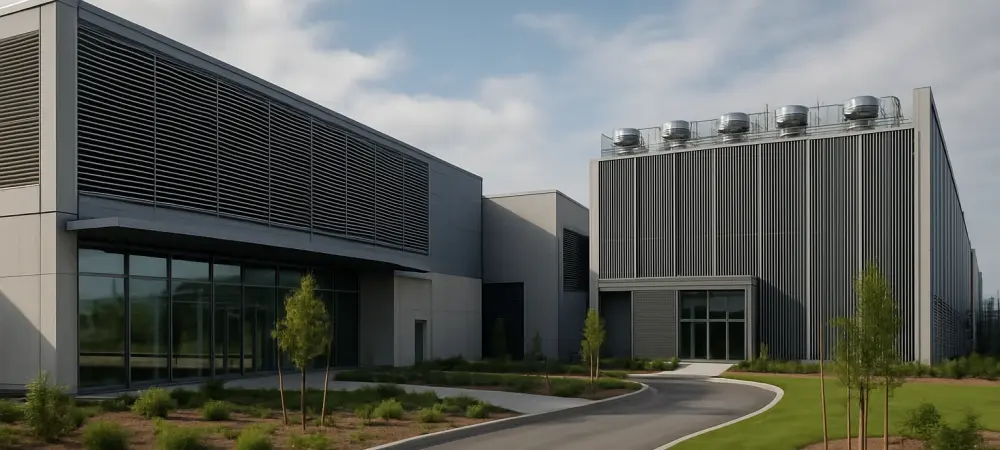
Imagine a world where artificial intelligence powers every interaction, from social media algorithms to virtual reality experiences, at a scale never before seen. This vision is becoming reality with Meta’s latest endeavor—a sprawling data center campus in Beaver Dam, Wisconsin. As the tech giant pushes the boundaries of AI innovation, this facility stands as a cornerstone of its strategy, marking its 26th U.S. and 30th global site. This review dives into the intricacies of this $1 billion investment, exploring how it redefines computational capacity and positions Meta at the forefront of digital transformation.
Unveiling the AI-Optimized Powerhouse
At the heart of this ambitious project lies a 700,000-square-foot facility, meticulously engineered for AI workloads. Situated on a 520-acre plot in Dodge County, roughly 65 miles northwest of Milwaukee, the campus is a testament to cutting-edge design tailored for high-performance computing. Its infrastructure promises to handle the immense demands of AI training models and real-time data processing, potentially setting new benchmarks in efficiency and speed for the industry.
Beyond raw power, the design reflects a forward-thinking approach to scalability. As AI applications grow more complex, the facility’s architecture is poised to adapt, supporting Meta’s long-term vision of seamless digital services. This isn’t just a data center; it’s a blueprint for how tech giants can future-proof their operations against the escalating needs of tomorrow’s innovations.
Strategic Placement and Local Impact
The choice of Beaver Dam as the site for this technological marvel is no accident. With robust local infrastructure and access to a skilled workforce, the location offers a perfect synergy of practicality and opportunity. Meta has also forged strong partnerships with community stakeholders, ensuring the project integrates smoothly while acting as a catalyst for regional development.
Economically, the ripple effects are already tangible in Dodge County. The influx of jobs and investment is breathing new life into the area, positioning it as a hub for tech-driven growth. This development transcends mere business expansion—it’s a commitment to shared prosperity, blending corporate goals with community upliftment.
Meta’s Broader Infrastructure Ambitions
Zooming out, the Beaver Dam campus is just one piece of a much larger puzzle. Meta’s aggressive push into data center expansion is evident with staggering capital expenditure plans, including a commitment of $72 billion for the current year, set to rise even higher by 2027. This financial muscle underscores a clear strategy to dominate the AI and digital services landscape through advanced facilities.
Moreover, plans for multi-gigawatt clusters in places like New Albany, Ohio, and a proposed Hyperion site in Louisiana highlight a global vision. These initiatives signal an industry shift toward unprecedented computational power, with Meta leading the charge. The consensus among its leadership is clear: advanced infrastructure is the key to maintaining a competitive edge in a rapidly evolving tech arena.
Real-World Implications and Challenges
Practically speaking, the Beaver Dam facility is set to bolster Meta’s AI initiatives, from enhancing user experiences on its platforms to pioneering new virtual environments. Its capacity to process vast datasets in real time could redefine how digital services are delivered, impacting millions of users worldwide. This is where the rubber meets the road—translating infrastructure into tangible innovation.
However, such ambitious expansion doesn’t come without hurdles. Scaling AI infrastructure poses technical challenges, from energy consumption to cooling systems, while regulatory and environmental concerns loom large. Meta is tackling these head-on with sustainable practices, including a partnership with Ducks Unlimited to restore 570 acres of wetland and prairie, alongside a pledge to be water-positive by replenishing more than it consumes.
Final Thoughts and Path Forward
Reflecting on this journey, Meta’s venture into Beaver Dam proved to be a pivotal step in redefining AI infrastructure. The fusion of cutting-edge technology with strategic foresight set a high bar for what was possible in the realm of data centers. Looking back, the balance struck between innovation and responsibility offered valuable lessons for the industry.
Moving ahead, the focus shifted to refining these advancements, ensuring that scalability and sustainability remained hand in hand. Exploring partnerships for renewable energy integration emerged as a critical next step, alongside continued community engagement to amplify local benefits. As the tech landscape evolved, Meta’s blueprint from Beaver Dam laid a foundation for others to build upon, promising a future where technology and humanity progressed in tandem.