

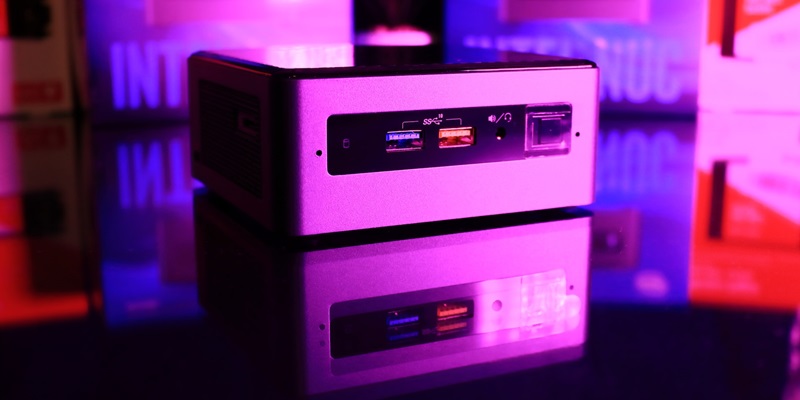
MECHREVO, a prominent player in the mini PC market, is set to revolutionize the industry with its latest offering, featuring the highly anticipated Intel Core Ultra 5 125H “Meteor Lake” CPU. This compact form factor mini PC promises to deliver exceptional performance and power efficiency, making it an enticing choice for users seeking a powerful computing experience in a small footprint.
Confirmation from Intel on Meteor Lake Availability
Intel, the world-renowned semiconductor manufacturer, has officially confirmed that the much-anticipated Meteor Lake chips will be available for both All-in-One (AIO) and Mini PCs. This announcement has sparked excitement among tech enthusiasts and professionals who eagerly await the arrival of this groundbreaking CPU architecture.
Expected launch timeline
MECHREVO’s iMini Pro Mini PC equipped with the Intel Core i5-125H CPU is slated for release in the first half of 2024. With the launch just around the corner, users are anxious to explore the cutting-edge features and performance capabilities of this new mini PC.
CPU Details: Intel Core i5-125H “Meteor Lake”
The Intel Core Ultra 5 125H CPU is crafted using the advanced Intel 4 process node, incorporating a 14-core design with an impressive 18 threads. This noteworthy configuration enables seamless multitasking and ensures smooth operation even under demanding workloads, gaming sessions, and creative endeavors.
Clock speeds and power efficiency
The Intel Core Ultra 5 125H CPU boasts a base clock speed of 3.6 GHz, ensuring snappy performance for everyday tasks. To unleash its full potential, this CPU offers a boost clock speed of 4.5 GHz, enabling users to push the boundaries of their computing experience. The energy-conscious will appreciate the 28W TDP (Thermal Design Power) rating, which promises excellent power efficiency without sacrificing performance.
Integrated graphics with Intel Arc Xe-LPG
The CPU incorporates Intel’s revolutionary Arc Xe-LPG integrated graphics solution, featuring 7 Xe-Cores. This powerful graphics hardware offers stunning visual experiences, enabling users to conquer graphics-intensive tasks, enjoy immersive gaming, and indulge in high-resolution multimedia content with ease.
Performance details of the MECHREVO iMini Pro Mini PC
During performance tests, the MECHREVO iMini Pro Mini PC showcased its prowess by harnessing the full potential of the Intel Core Ultra 5 125H CPU. Running at its maximum boost clock of 4.5 GHz, combined with a GPU boost clock of 2200 MHz, this mini PC demonstrated remarkable processing capabilities. The system was equipped with 32 GB of memory, ensuring seamless multitasking and effortless handling of resource-hungry applications.
Benchmark Scores and Comparison
In single-core tests, the Intel Core Ultra 5 125H CPU exhibits performance levels comparable to the Core i5-13500H. This ensures lightning-fast responsiveness and swift execution of single-threaded applications. In multi-threaded tests, this CPU performs on par with the Ryzen 7 7840HS, showcasing its immense capability to tackle resource-intensive workloads and multitasking scenarios.
Potential performance improvements with a higher power limit
The performance of the MECHREVO iMini Pro Mini PC can be further enhanced by opting for designs that allow higher power limits. Such configurations unlock the full potential of the CPU, resulting in significant performance uplifts, particularly in multi-threaded scenarios and graphics-intensive applications. Users seeking uncompromised computing power and seamless content creation should consider these high-power options.
MECHREVO’s upcoming launch of the iMini Pro Mini PC, featuring the Intel Core Ultra 5 125H “Meteor Lake” CPU, is poised to redefine the mini PC landscape. With its compact form factor and impressive performance capabilities, this mini PC provides an enticing solution for users in need of a powerful and space-saving computing device. As the release date approaches, tech enthusiasts and professionals eagerly await the opportunity to experience the potential of the Intel Core Ultra 5 125H in this innovative mini PC offering.