

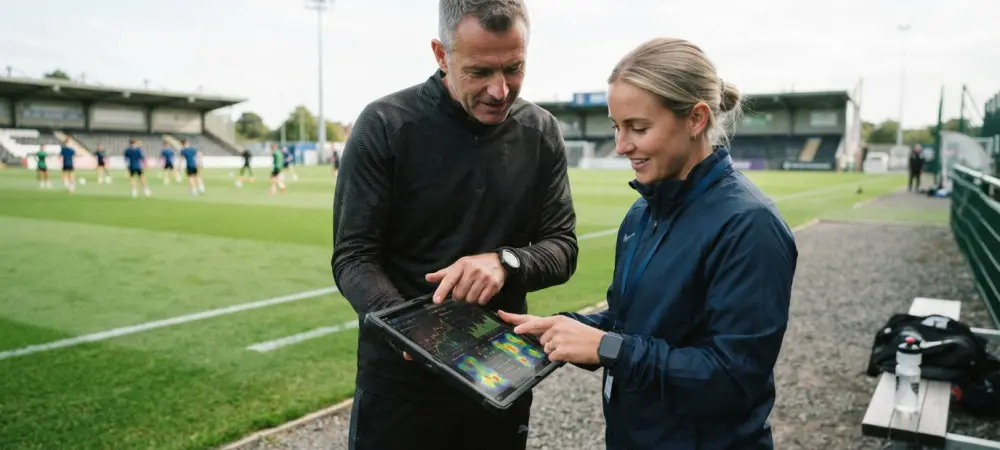
By translating complex datasets into actionable competitive advantages, Gerhart demonstrates how computational science can optimize modern athletic performance. As a computational data science major at Penn State, he has moved beyond the theoretical to apply algorithmic precision to the world’s most popular sport. His development reflects a shift in the sports industry, where raw athletic data is no longer just archived but used to dictate tactical changes. In the current year, 2026, the reliance on high-frequency tracking and predictive modeling has become a prerequisite for success. Gerhart’s journey from a childhood fan to a technical authority highlights the potential for niche expertise to drive innovation within traditional structures. By focusing on the intersection of mathematics and strategy, he has established a blueprint for how academic rigor can directly influence match outcomes and efficiency in a high-stakes athletic environment.
Collegiate Impact and Innovation
University Analytics
During his tenure at the University Park campus, Gerhart worked closely with the Penn State men’s soccer coaching staff to create custom tools that addressed specific operational gaps. This collaboration led to the development of a proprietary player rating system, which used algorithmic weights to evaluate contributions that often go unnoticed in basic box scores. By centralizing disparate data streams into customized dashboards, Gerhart provided the staff with an objective platform for assessing roster depth and individual growth. These technical solutions effectively modernized the team’s approach to scouting, reducing the reliance on subjective observations that can be biased. The implementation of such a system within a collegiate environment emphasizes the necessity for data-literate personnel who can bridge the gap between information and field execution. This infrastructure allowed the coaching staff to refine training regimes based on empirical evidence.
Tactical Mobile Solutions
To enhance tactical flexibility, Gerhart developed a mobile application for tracking player positioning and shot distributions during live competition. This tool enabled the coaching staff to visualize spatial patterns and identify defensive vulnerabilities in real time, providing a critical advantage during high-stakes matches. By mapping every movement, the application created a historical record that was later used to inform specific game-day strategies and long-term development plans. This data-driven feedback loop became essential for ensuring that tactical adjustments were rooted in observable facts rather than gut feeling. The success of this mobile solution prompted the university’s athletic department to expand its investment in analytical resources, acknowledging the edge provided by custom software. Gerhart’s work served as a proof of concept for how mobile technology can be integrated into sideline decision-making to optimize overall athletic performance.
Professional League Integration
Professional Scouting
The transition to professional soccer was marked by a high-impact internship with the Philadelphia Union, where Gerhart managed the club’s primary opponent scouting application. He was responsible for integrating complex visualizations, such as radar charts and percentile metrics, to help the coaching staff quickly interpret player profiles. These tools transformed dense statistical outputs into intuitive graphics, facilitating a more efficient communication process between data analysts and tactical decision-makers. By standardizing these metrics, the Union maintained a consistent scouting philosophy that prioritized analytical integrity over traditional scouting anecdotes. Gerhart’s ability to operate in the fast-paced environment of Major League Soccer demonstrated his technical authority and readiness for professional challenges. His contributions ensured that the club remained technologically competitive by leveraging data for strategic preparation.
Analytical Progress
The successful adoption of these analytical frameworks established a new requirement for professional clubs to invest in custom technical infrastructure. Stakeholders realized that the true value of data science resided in its translation into specific on-field actions rather than passive statistical reporting. Moving forward, the industry prioritized the development of proprietary software that aligned with unique coaching philosophies to maintain a competitive advantage. Professionals were encouraged to seek cross-disciplinary training that merged athletic experience with high-level computational science to meet rising organizational standards. As teams continued to treat data as a primary strategic asset, the focus shifted toward turning real-time telemetry into executable training programs. Consequently, the reliance on specialists who understood the nuances of soccer became the gold standard for achieving sustainable success in a data-rich landscape.