

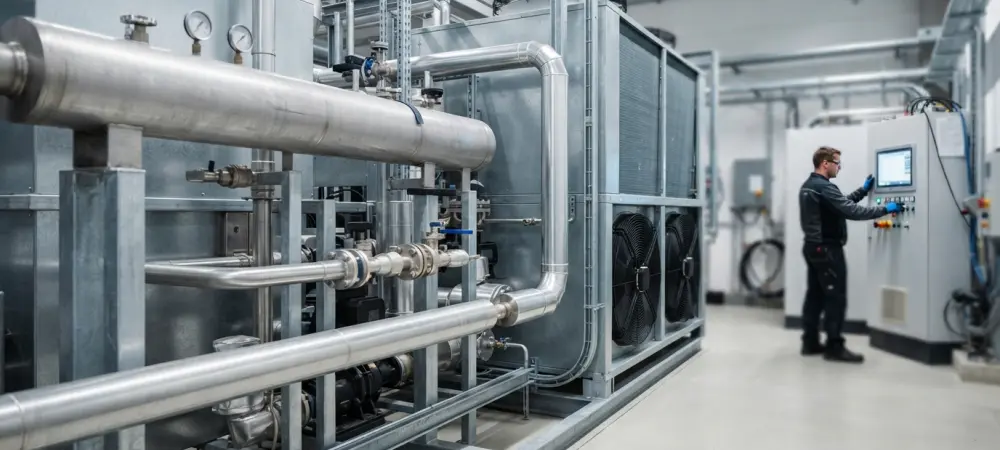
The silent hum of a modern data center no longer signals just the processing of code, but the birth of a machine that truly understands the weight of steel and the flow of heat. For decades, artificial intelligence was confined to the digital realm, processing text and images behind a screen. Today, that boundary has dissolved as AI “wakes up” inside the physical infrastructure of the world. We are witnessing a fundamental shift where software no longer just monitors a factory or a skyscraper; it understands engineering principles, the friction of a bearing, and the thermodynamics of an HVAC system. This transition from passive data analysis to “Physical AI” is turning static industrial assets into sentient, self-optimizing entities that can reason through complex mechanical problems in real time.
The Moment Machines Started Understanding the Material World
The evolution of industrial intelligence has reached a tipping point where machines are moving beyond simple pattern recognition and toward a grounded understanding of physical reality. In the past, software could identify a malfunctioning pump by comparing its output to a baseline, but it lacked the context to understand why the failure occurred. Physical AI changes this dynamic by embedding the laws of physics directly into the reasoning process. By integrating engineering constraints—such as pressure limits, thermal expansion, and mechanical stress—into the AI model, the system gains a functional intuition that mirrors the expertise of a veteran engineer.
This material awareness allows facilities to operate with a level of precision that was previously impossible. When an AI understands the specific physical properties of the materials it manages, it can make adjustments that optimize performance without exceeding safety thresholds. This is not merely about increasing speed; it is about extending the life of equipment by operating it within its most efficient physical envelope. The transition represents a move toward machines that do not just follow instructions, but actually comprehend the environment they inhabit.
Bridging the Gap: Information and Operation
The industrial sector has long struggled with a fragmented architecture where Information Technology (IT) and Operational Technology (OT) exist as separate entities. Sensors have been collecting petabytes of data for years, yet much of it remained “dark data”—uninterpreted and unactionable because the systems lacked a bridge to translate digital insights into physical results. Physical AI serves as this missing cognitive layer, providing the necessary intelligence to turn raw data into a sequence of operational steps. As global enterprises face mounting pressure to reduce carbon footprints and manage aging workforces, this integration has shifted from a luxury to a competitive necessity.
By harmonizing these two worlds, organizations can finally realize the full potential of their digital investments. Instead of human operators spending hours correlating data from disparate dashboards, agentic AI systems autonomously identify the most relevant information and suggest immediate physical corrections. This capability is vital for managing the complexity of modern industrial operations, where the sheer volume of sensory input often overwhelms human cognitive capacity. The result is a more resilient infrastructure that can adapt to shifting demands without the friction traditionally associated with IT-OT silos.
The Architecture of Autonomous Industrial Intelligence
Transforming industrial operations requires a sophisticated tech stack that combines reasoning capabilities with high-fidelity simulations. Unlike standard AI that requires human prompts for every step, agentic AI functions as an autonomous coordinator. In an industrial setting, these agents do not just see a temperature spike as an isolated data point; they contextualize it within the history of the specific machine, the current production load, and even external weather conditions. This allows the system to plan and execute complex sequences of actions to resolve issues before they escalate, moving the facility toward a state of self-healing.
Real-time digital twins serve as the essential laboratory for this intelligence. By creating a physically accurate virtual replica of a facility, AI agents can run thousands of “what-if” simulations in seconds. This ensures that any intervention—whether it is adjusting a cooling cycle or recalibrating a turbine—is tested for safety and efficiency in the digital world before a single physical switch is flipped. Furthermore, the integration of vision AI, utilizing advanced models like NVIDIA Cosmos, allows systems to “see” and summarize visual sensor data across vast infrastructures. This provides a 360-degree view of operations, identifying structural anomalies or mechanical wear that traditional sensors might overlook.
Synergistic Partnerships: Real-World Validation
The leap to Physical AI is a collaborative effort involving hardware giants and industrial experts, leading to measurable breakthroughs in the field. The computational demands of these systems require massive power at the edge, which is why strategic collaborations, such as the AI Factory concept involving Dell PowerEdge servers and NVIDIA GPUs, are so critical. These systems allow for low-latency processing directly on-site, ensuring that an industrial facility can make split-second decisions without waiting for cloud-based instructions. This hardware backbone is what allows complex AI agents to function in environments where every millisecond counts.
The impact of this technology is best illustrated through its deployment at high-stakes facilities like the NVIDIA Voyager campus. By implementing Honeywell’s Forge Cognition platform, the facility achieved a 90% reduction in alarm fatigue by filtering out false positives that often distract maintenance teams. Simultaneously, the campus saw a 10% reduction in utility consumption while maintaining an occupant comfort score of over 95%. These metrics provide clear evidence that Physical AI can deliver significant efficiency gains without compromising the human experience or operational safety, validating the business case for widespread adoption.
Strategies: Implementing Physical AI in Modern Facilities
Transitioning to an AI-driven operational model requires a structured approach to ensure reliability and a strong return on investment. Organizations should prioritize a human-in-the-loop governance model, which utilizes a tiered autonomy framework. This approach begins with manual oversight, moves to semi-autonomous operations where AI suggests actions for human approval, and eventually reaches full autonomy for low-risk tasks. This ensures that human experts remain the final authority, providing a safety net while being unburdened from the tedious task of repetitive monitoring.
Industrial operators must also leverage Physical AI to shift from reactive to predictive maintenance. By analyzing vibration patterns and thermal data through the lens of engineering principles, companies can identify subtle indicators of equipment wear long before a failure occurs. This allows for precision maintenance performed exactly when needed, significantly extending the lifespan of expensive assets. Additionally, applying simulation-based AI to energy intelligence allows managers to balance the competing goals of sustainability and occupant comfort. By dynamically adjusting systems based on real-time occupancy and energy costs, facilities can hit environmental targets while maintaining an optimal operational environment.
The transition toward these intelligent systems required a rigorous overhaul of data governance and a commitment to edge computing infrastructure. Organizations that successfully integrated Physical AI into their core operations moved beyond the limitations of legacy management and established a baseline for autonomous coordination. These entities prioritized the cleanup of historical data silos and established clear boundaries for machine intervention, ensuring that safety remained the primary directive. As these strategies matured, the focus shifted from mere operational uptime to the holistic optimization of the entire industrial lifecycle. The results validated the premise that physical systems could possess a cognitive layer capable of independent growth and self-correction. Future efforts focused on the standardization of sensory data to create a universal language for industrial intelligence across global networks.