

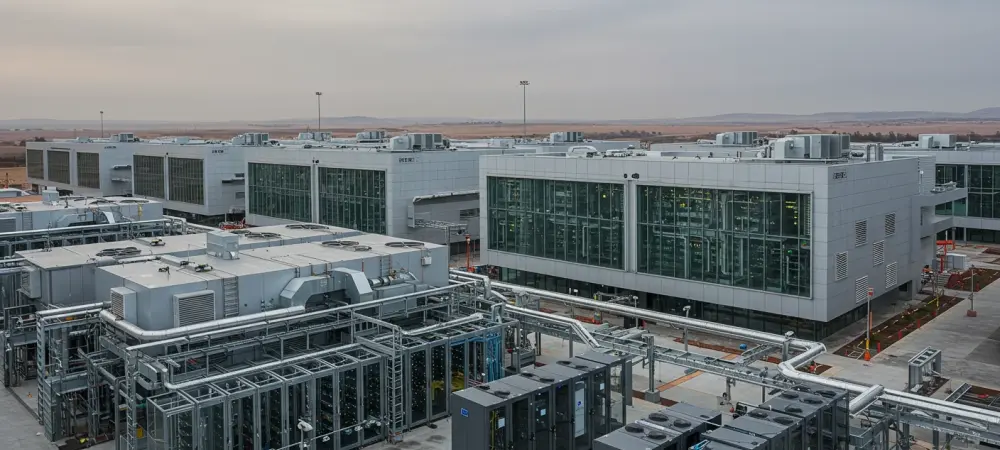
The renowned Max Planck Society, a beacon in the global research community, is poised to revolutionize its computational facilities with the construction of a state-of-the-art data center in Munich. Situated in Martinsried, part of the Planegg municipality, this new development marks a significant leap for the institution. Initially faced with hurdles related to its size, energy needs, and sustainability, the plans have been revised and were recently approved by the Planegg municipal council. This center, projected to span around 3,120 square meters with a robust power capacity of approximately 15MW, signifies the society’s commitment to advancing its computational capabilities. Initially intended to occupy a site designated for greenhouses, it was relocated to an existing parking area, indicative of its importance in enhancing the Max Planck Society’s research infrastructure.
Enhancing Research Infrastructure
Securing a generous €500 million backing from the Free State of Bavaria, this endeavor is set to significantly enhance the Max Planck Society’s existing computing resources at their Garching campus north of Munich. The renowned Max Planck Computing and Data Facility (MPCDF), known for its operation of high-performance systems like Raven and Viper, alongside various compute clusters and cloud services, will oversee the new facility. These sophisticated resources drive scientific exploration at the society’s 84 research institutes, contributing significantly to domains spanning natural sciences, life sciences, and humanities. The new facility promises improved efficiency, effectively supporting researchers in their quest for innovation and discovery while addressing the increasing demands for computational power and storage.
Sustainable and Collaborative Innovation
This ambitious project offers more than technological progress; it emphasizes sustainability and collaboration. The data center is crafted to enhance computational tasks, support collaborative research, and facilitate data-intensive analyses, which are crucial for disciplinary breakthroughs. An innovative element is redistributing the facility’s waste heat to third-party users, facilitated by the introduction of five new medium-voltage substations. This underscores a strong dedication to energy efficiency and integrating with the community. The project’s phased structure aims for initial operation by 2027, with full completion by 2037, illustrating a strategic plan to meet extended research and sustainability objectives.
Led by the Max Planck Society, this initiative reflects a global trend where research institutions recognize the importance of investing in advanced computing infrastructure, fueling scientific discovery and fostering interdisciplinary collaboration. Such efforts address complex global issues. Located in Munich, the center is set to enhance Germany’s reputation as a research hub, demonstrating how computing resources can be sustainably employed to serve both the scientific community and society.