

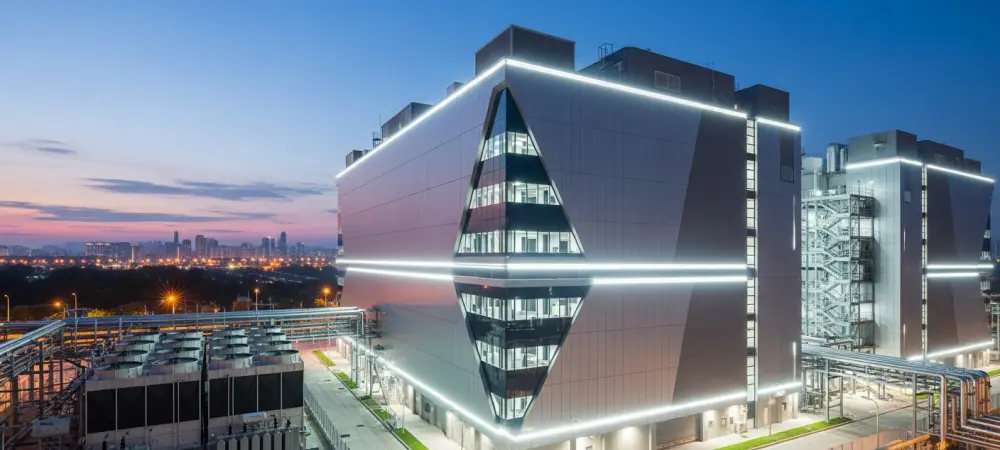
The neon-lit skyline of Johor Bahru has undergone a profound transformation as massive windowless monoliths rise to house the silicon brains of the modern global economy, signaling Malaysia’s ascent as the dominant digital hub of Southeast Asia. This rapid expansion began as a direct consequence of shifting regional dynamics, particularly when neighboring Singapore implemented a restrictive moratorium on new data center developments between 2019 and 2022, effectively diverting billions in foreign direct investment toward the Malaysian peninsula. What initially appeared to be an unalloyed economic victory has now evolved into a complex national debate regarding the limits of infrastructure and the preservation of vital domestic resources. As the country moves through the current fiscal cycle from 2026 to 2028, the central government is forced to weigh the prestige of hosting global hyperscalers against the reality of a domestic power grid and water supply system that are being stretched to their absolute breaking points.
The Environmental and Social Impact of Rapid Expansion
Tracking Industrial Utility Consumption: The Strain on Infrastructure
The sheer volume of electricity required to sustain modern hyperscale facilities, particularly those optimized for generative artificial intelligence workloads, has introduced an unprecedented burden on the Malaysian national power grid. Experts have noted that a single large-scale data center can consume as much energy as fifty thousand residential homes, creating a concentrated demand that necessitates significant upgrades to high-voltage transmission lines. This surge in power consumption is not just a logistical challenge but a financial one, as the cost of expanding the grid often falls on the state-owned utility providers who must balance industrial needs with public service. In response to this, the authorities have begun to demand that new projects include dedicated substations and energy-efficient architecture from the outset. The scale of this requirement is staggering when considering that the total projected capacity in regions like Johor is expected to increase eightfold within the current development cycle.
Assessing the Critical Impact on Local Water Security
Water consumption has emerged as an equally contentious issue, as traditional cooling methods for server racks require millions of liters of fresh water every day to maintain optimal operating temperatures within these massive halls. In some coastal and suburban areas of southern Malaysia, proposed data center projects were estimated to require a daily water intake equivalent to dozens of Olympic-sized swimming pools, threatening the local supply. This level of usage is particularly alarming in districts where aging municipal infrastructure already struggles to provide a consistent supply to residential neighborhoods and local agricultural sectors. The realization that a few dozen industrial buildings could potentially jeopardize the water security of an entire township has shifted the national conversation from economic growth toward resource preservation. Consequently, there is now a widespread consensus that the old model of growth at any cost is fundamentally incompatible with Malaysia’s long-term sustainability goals.
Evaluating Public Sentiment: Resistance and the Quest for Social Licensing
Beyond the quantifiable strain on physical utilities, the rapid proliferation of data centers has sparked a wave of public resistance fueled by concerns over local living conditions and environmental degradation. Residents in the state of Johor have become increasingly vocal about the destruction of natural landscapes and the loss of green spaces as massive, windowless industrial parks replace traditional land uses. This physical encroachment is often accompanied by tangible disruptions, such as falling water pressure in surrounding homes and the constant hum of heavy-duty ventilation systems that impact the quality of life in nearby communities. The visual impact of these monolithic structures, which offer little aesthetic or functional value to the average citizen, has become a symbol of a perceived imbalance between global corporate interests and local welfare. This growing friction has forced developers to reconsider their approach to community engagement, as the social license to operate is no longer guaranteed.
Adapting to a New Regulatory and Sustainable Landscape
Implementing Technological Solutions: Cooling and Circular Management
In response to the mounting pressure from both the public and regulators, data center operators are undergoing a major shift toward the integration of advanced sustainable technologies and circular resource management. Industry leaders are now prioritizing water-efficient cooling systems, such as closed-circuit liquid cooling and immersion technologies, which significantly reduce the need for constant municipal water intake. Furthermore, several major hyperscalers have committed to using treated industrial wastewater for their cooling needs, effectively decoupling their operations from the local drinking water supply. These innovations are not merely voluntary corporate social responsibility initiatives but have become essential requirements for securing operational permits in highly scrutinized zones. By adopting these sophisticated methods, companies are attempting to prove that high-performance computing can exist in harmony with regional environmental constraints while maintaining the high uptime required by global services.
Strengthening National Policy: Vetting and Local Content Standards
State governments have significantly tightened their oversight mechanisms, moving away from a policy of unvetted expansion toward a more strategic and selective development model. In states like Selangor, authorities have implemented new guidelines that require developers to demonstrate clear local content contributions before breaking ground on any new project. This includes a commitment to hiring local residents for high-value engineering and circuit design roles, as well as partnering with domestic universities to foster research and development in the digital sector. These stricter vetting processes are designed to ensure that every new data center adds tangible value to the national economy rather than just acting as a passive consumer of electricity and land. By raising the bar for entry, the government is successfully filtering out speculative projects and favoring long-term partners who are willing to invest in the country’s human capital and technical infrastructure.
Navigating Regional Competition: Future Resilience and Global Standards
The regional landscape continued to evolve as neighboring nations like Thailand and Vietnam sought to capture the investment overflow resulting from Malaysia’s more stringent regulatory environment. Stakeholders eventually realized that the era of unchecked expansion had to give way to a more disciplined approach that balanced technological ambition with national resource security. The transition through the current period saw a significant pivot where the government prioritized the stability of the utility grid and the preservation of communal water supplies over short-term capital gains. This shift ensured that the digital infrastructure sector contributed meaningfully to the local economy while respecting the environmental boundaries of the Malaysian peninsula. By integrating stricter oversight and incentivizing sustainable innovation, the nation successfully redefined its role as a regional leader in ethical data management. The industry moved toward a balanced model that harmonized global digital needs with the requirements of its citizens.