

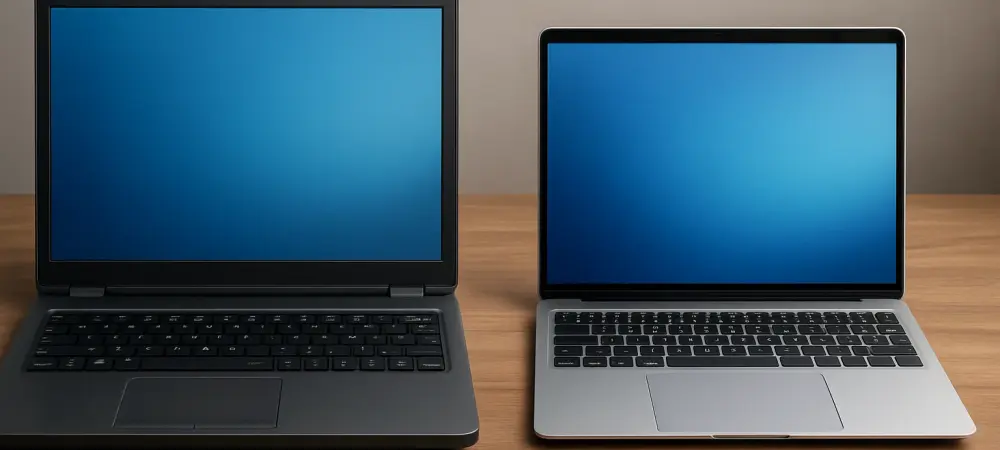
In today’s fast-paced digital landscape, where over 70% of professionals rely on laptops for daily tasks, choosing the right device can significantly impact productivity and convenience. Whether drafting reports in a corporate office or presenting ideas during a cross-country business trip, the type of laptop selected can make all the difference in ensuring efficiency and ease of use. This comparison dives into two prominent categories—mainstream laptops and ultraslim laptops—each designed with distinct strengths to meet varying user demands. By exploring their differences in design, performance, and practicality, the aim is to provide clarity for buyers navigating an ever-expanding market of portable computing solutions.
Key Characteristics and Target Audiences
Mainstream laptops stand as the versatile backbone of personal and professional computing, often regarded as all-purpose workhorses. These devices cater to a broad audience, including students, office workers, and creative professionals, by offering a balance of power and affordability for diverse tasks like document editing, web browsing, and moderate multimedia production. Typically priced between $500 and $2,500, they appeal to those seeking reliability across multiple use cases without breaking the bank.
Ultraslim laptops, on the other hand, target a more specific demographic: frequent travelers, executives, and individuals prioritizing mobility over raw power. With sleek designs and lightweight builds, these machines are engineered for portability, often weighing under 2.9 pounds and focusing on seamless integration into on-the-go lifestyles. Priced similarly to mainstream models, between $500 and $2,500, they emphasize convenience for users who value compactness over extensive hardware capabilities.
The relevance of both categories spans industries such as business, education, and creative fields. Mainstream laptops dominate in settings requiring robust multitasking, like corporate environments or academic research, while ultraslim models shine in scenarios demanding frequent movement, such as client meetings or remote work in varying locations. Understanding these distinctions sets the foundation for a deeper analysis of how each type serves unique needs in today’s tech-driven world.
Key Differences in Design and Features
Portability and Build Quality
When it comes to portability, ultraslim laptops take the lead with their featherlight construction, typically weighing under 2.9 pounds and measuring less than 0.5 inches in thickness. This makes them ideal for slipping into a briefcase or backpack without adding bulk, catering to professionals who are constantly on the move. Their design often prioritizes aesthetics, with sleek, minimalist profiles that appeal to style-conscious users.
Mainstream laptops, by contrast, range from 2.5 to 5 pounds and are generally thicker, reflecting a focus on functionality over compactness. While less convenient for travel, their sturdier builds can withstand daily wear and tear in office or home settings. Many models in this category also meet durability standards like MIL-STD-810H, ensuring resilience against drops or harsh conditions, which is beneficial for users in rugged environments like field operations.
Build materials further differentiate the two. Ultraslim devices often utilize premium alloys or lightweight composites to maintain their svelte form, though this can sometimes compromise durability under extreme stress. Mainstream laptops, with their broader design scope, may incorporate a mix of plastic and metal, offering a practical balance for users who need a reliable device without the premium price tag of high-end materials. This contrast highlights how design priorities shape their suitability for different lifestyles.
Performance and Hardware Specifications
Performance is a critical battleground where mainstream laptops often edge out their ultraslim counterparts due to their capacity for handling heavier workloads. Equipped with processors like Intel Core Ultra or AMD Ryzen AI, they support a wide range of RAM configurations, from 8GB to 64GB, and storage options up to 4TB SSDs. This makes them well-suited for multitasking, video editing, or running resource-intensive applications, catering to users with diverse computing needs.
Ultraslim laptops, while still powerful with similar modern processors, typically cap at 8GB to 32GB of RAM and 1TB of SSD storage to maintain their slim profiles and energy efficiency. Their hardware is optimized for lighter tasks such as document processing, web-based work, and presentations, aligning with the needs of mobile professionals who prioritize battery life over raw computing muscle. This trade-off ensures they remain functional without overheating in compact chassis.
The distinction in hardware focus reflects broader usage patterns. Mainstream laptops serve as desktop replacements for stationary or semi-stationary users requiring consistent performance across varied software. Ultraslim models, however, are tailored for efficiency, ensuring adequate power for essential tasks while keeping power consumption low, which is crucial for users working away from reliable power sources. This balance defines their respective roles in the market.
Battery Life and Connectivity Options
Battery life is another area where ultraslim laptops often outperform mainstream ones, thanks to energy-efficient components and smaller screens. Many models in this category are designed to last longer on a single charge, often exceeding mainstream counterparts when optimized for low-power tasks. This makes them indispensable for users who spend hours unplugged, such as during long flights or remote fieldwork.
Mainstream laptops, however, show greater variability in battery performance, largely dependent on usage intensity and battery capacity, which ranges from 50 to 100 watt-hours. While some can match ultraslim endurance under light use, their broader hardware options and larger displays often lead to quicker power drain during demanding activities. This inconsistency can be a drawback for users needing guaranteed runtime without frequent recharging.
Connectivity further sets these categories apart. Mainstream laptops typically offer a wider array of ports, including HDMI, USB-A, and Ethernet, accommodating a variety of peripherals and external devices essential for office setups. Ultraslim laptops lean toward compactness, favoring USB-C and Thunderbolt ports to save space, which can limit direct compatibility with older equipment unless adapters are used. Such differences in design philosophy directly influence user convenience and workflow adaptability.
Challenges and Limitations of Each Category
Mainstream laptops, despite their versatility, come with notable downsides that can affect certain users. Their bulkier designs often hinder portability, making them less practical for those who frequently travel or work in multiple locations. Additionally, battery life can be unpredictable, especially under heavy use, posing challenges for professionals who rely on consistent power away from outlets.
Ultraslim laptops face their own set of constraints that may deter potential buyers. Limited upgradeability is a common issue, as their compact builds often restrict hardware modifications or expansions, locking users into initial configurations. Furthermore, the scarcity of ports can complicate connectivity with multiple peripherals, requiring additional accessories that add to the overall cost and complexity of use.
Broader considerations also come into play when evaluating both types. Cost-effectiveness varies, with ultraslim models sometimes carrying a higher price per performance ratio due to their premium design focus. Durability trade-offs and power limitations further complicate decisions, as users must weigh their specific needs against these inherent compromises. Assessing workload demands and lifestyle factors becomes essential to avoid mismatched expectations with either category.
Conclusion and Recommendations for Buyers
Reflecting on the detailed comparison, it becomes evident that mainstream laptops excel in performance versatility, catering to a wide array of tasks with robust hardware configurations. Ultraslim laptops, on the other hand, stand out for their unmatched portability, proving indispensable for mobile professionals. Each category reveals distinct limitations, from the bulkiness of mainstream models to the restricted connectivity of ultraslim designs, shaping their suitability for different scenarios.
Looking ahead, buyers should prioritize aligning their choice with specific requirements. For those rooted in office environments or tackling intensive workloads, mainstream laptops offer the necessary power and flexibility to handle diverse challenges. Conversely, frequent travelers and executives find greater value in ultraslim laptops, which provide ease of movement without sacrificing essential functionality. A practical next step involves creating a checklist of must-have features—be it battery endurance or port availability—to narrow down options effectively.
Beyond immediate needs, considering long-term trends proves vital. As technology continues to evolve, evaluating devices for future-proofing, such as support for emerging AI capabilities or modern connectivity standards, ensures sustained relevance. Balancing budget constraints with these forward-looking aspects helps in making a strategic investment, ultimately enhancing productivity and satisfaction in both personal and professional spheres.