

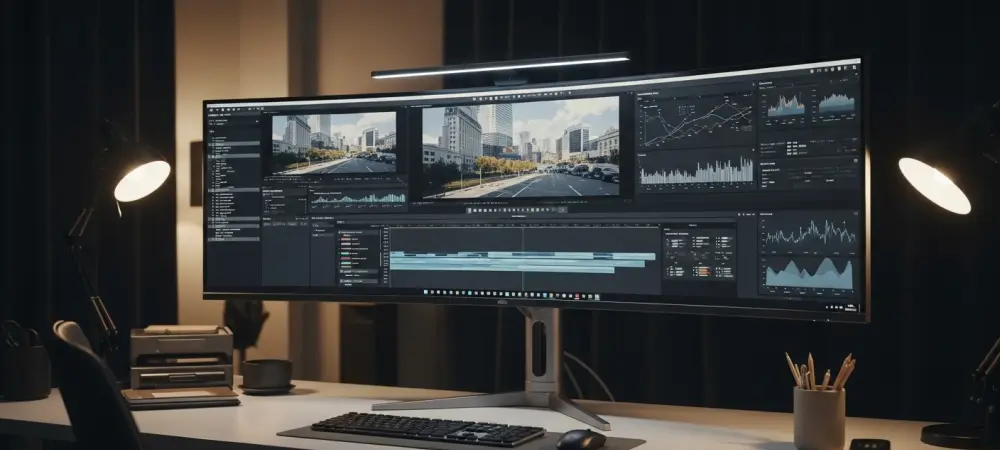
For several years, creative professionals and power users have navigated a landscape of third-party utility installations and complex terminal commands just to achieve proper aspect ratio alignment on non-standard monitor resolutions. This fragmentation often led to blurred text or distorted UI elements, creating a significant barrier for those invested in the immersive productivity offered by 21:9 or 32:9 screen formats. The release of macOS 27 marks a definitive shift in this paradigm by integrating a sophisticated display engine designed specifically for high-bandwidth video output. By prioritizing pixel density and scaling accuracy at the kernel level, the operating system now recognizes diverse hardware configurations without requiring manual intervention. This update effectively resolves long-standing issues with HighDPI scaling on ultra-high-resolution panels, ensuring that the crisp aesthetic of the Apple ecosystem translates seamlessly to the vast canvases of modern displays used in studios.
Refined Architecture: The Mechanics of Adaptive Scaling
Building on this foundation, the updated window management system leverages a new protocol that adjusts the rendering buffer based on the specific physical dimensions of the connected hardware. This approach allows the operating system to dynamically allocate GPU resources, ensuring that demanding graphical applications maintain high frame rates even when stretched across extreme horizontal planes. Furthermore, the inclusion of native support for Display Stream Compression facilitates higher refresh rates over a single cable, eliminating the ghosting effects that previously plagued certain gaming and video editing setups. The desktop environment now includes a revised Mission Control interface that intelligently groups active windows to fill the additional horizontal space without overlapping essential toolbars. This integration represents a deep restructuring of how the window server interacts with the graphics pipeline. Consequently, developers can now utilize standard APIs to optimize their software for wider views.
Strategic Implementation: Next Steps for Hardware Integration
Organizations successfully streamlined their hardware procurement cycles by phasing out multi-monitor configurations in favor of single ultrawide units that simplified workspace cable management. IT departments prioritized the deployment of high-speed Thunderbolt 5 cables to maximize the capabilities of the new display engine, ensuring that data throughput remained sufficient for concurrent 8K video feeds. System administrators also conducted thorough audits of legacy software to verify compatibility with the new scaling algorithms, finding that most applications transitioned smoothly. For individuals, the transition involved calibrating color profiles through the updated system settings to match industry-standard color gamuts. Professionals utilized the built-in window tiling features to create persistent digital zones, effectively replacing the physical bezels of older dual-head setups. These steps established a robust baseline for high-resolution computing that prioritized ergonomic efficiency over hardware limits.