

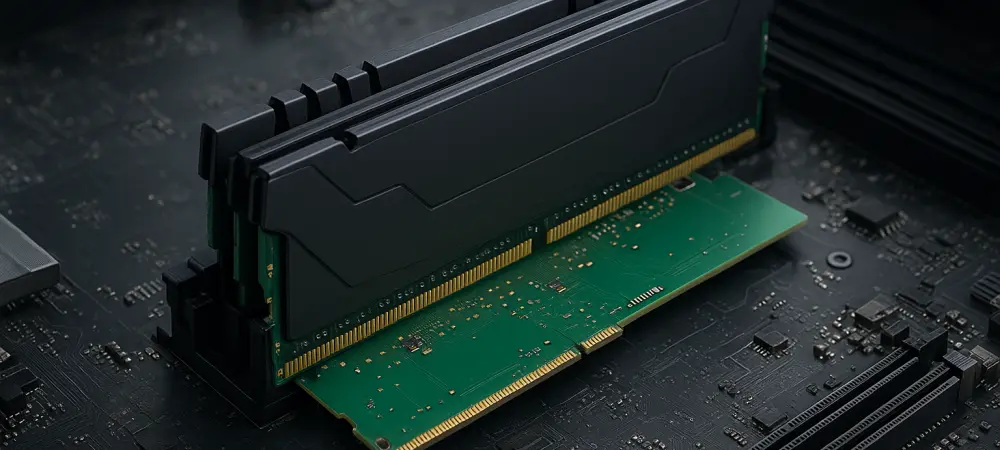
Cloud service providers promising confidentiality against physical infrastructure owners face a new challenge as hardware-level security remains a difficult frontier in data protection. This reality became starkly apparent with the recent revelation of DDRop, a sophisticated physical attack targeting the latest DDR5 memory standards. Developed by a collaborative team of experts from institutions including KU Leuven, ETH Zurich, and Google, this discovery highlights a critical weakness in the way modern processors handle encrypted data at a massive scale. Unlike traditional software-based exploits that rely on coding errors, this method utilizes a physical bridge to manipulate the very hardware signals traveling between the CPU and the RAM modules. The researchers identified that the pursuit of high-speed performance in modern data centers led to architectural compromises that can now be systematically exploited. By focusing on the high-frequency command bus, they demonstrated that the integrity of the most secure virtual environments is no longer guaranteed when an adversary has physical access to the server rack.
Physical Interception: the Architecture of Memory Manipulation
The technical foundation of the DDRop exploit relies on a custom-engineered device known as an active memory interposer, which is positioned physically between the processor socket and the DDR5 DIMM. Historically, such hardware attacks required prohibitively expensive laboratory equipment and specialized knowledge of signal timing, but the researchers designed a functional prototype using off-the-shelf components costing less than two hundred dollars. This circuit board acts as a silent mediator, intercepting the high-speed traffic on the DDR5 bus and selectively “dropping” specific write operations before they can reach the memory chips. By preventing the memory from updating its contents while allowing the processor to believe the transaction succeeded, the attacker creates a discrepancy between the intended state of the system and the actual data stored in the RAM. This capability allows for a highly controlled environment where an attacker can maintain “stale” information in memory, effectively bypassing the encryption safeguards meant to protect sensitive information from prying eyes.
The vulnerability exists primarily because contemporary scalable memory encryption designs, such as Intel TDX and AMD SEV-SNP, have prioritized data throughput over the rigorous “cryptographic freshness” checks used in older technologies. In earlier iterations of hardware security like the original Intel SGX, the system would constantly verify that the data being read was indeed the most recent version written, but this process became a significant performance bottleneck for large-scale cloud workloads. To accommodate the massive memory requirements of modern servers, manufacturers moved toward a model that encrypts data to prevent reading but lacks the granular integrity checks needed to prevent replay attacks. Consequently, when the interposer drops a write command, the hardware does not immediately detect that the memory contains outdated information. This architectural gap provides the perfect window for the DDRop device to force a protected virtual machine to execute instructions or process data using previously recorded, outdated information, thereby breaking the isolation of the confidential compute environment.
Vulnerability Analysis: the Impact on Secure Environments
The technical significance of targeting the command bus rather than the data bus is what sets DDRop apart from earlier memory-based exploits. In a standard DDR5 environment, the data bus is heavily encrypted and protected, making it extremely difficult to manipulate specific bits without detection. However, the command bus, which carries instructions such as “read” and “write” along with memory addresses, operates with different protection priorities. By using a Field Programmable Gate Array to monitor these signals in real-time, the DDRop interposer can identify the exact moment a write command is sent for a specific memory address. Instead of modifying the encrypted data itself, the device simply suppresses the “write enable” signal. This causes the memory module to ignore the incoming data, while the processor remains unaware that the update failed. This method effectively turns a standard memory write into a “no-operation” at the hardware level, allowing the attacker to preserve old data without needing to crack the underlying encryption keys.
During the practical demonstrations on Intel TDX servers, the research team successfully leveraged the DDRop hardware to compromise secure virtual machines in under two minutes. By dropping specific write operations, they forced the virtual environment into a debug mode that allowed for reading private memory in plaintext. Manufacturers like Intel and AMD initially categorized the attack as out of scope, citing the requirement for physical access, but they eventually acknowledged the need for architectural hardening. The researchers recommended that memory controllers incorporate randomized mapping to make bus interception less predictable. Ultimately, the industry moved toward integrating robust integrity verification directly into the memory fabric to ensure that stale data could no longer be used as a weapon against confidential computing. This shift emphasized that true security required a holistic approach that accounted for both digital and physical realities of the infrastructure.