

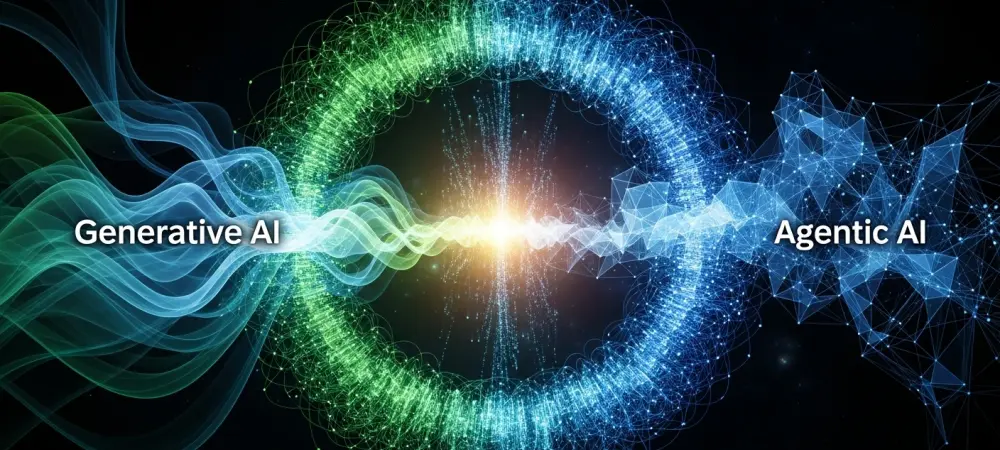
The rapid shift from static prompt-and-response interactions to autonomous, iterative cycles represents the most significant architectural evolution in artificial intelligence since the mainstream adoption of large language models. Loop engineering provides the necessary framework for generative AI to move beyond simple queries and into the realm of complex, multi-stage problem solving where the system monitors its own progress. Instead of a human operator providing constant feedback, the loop structure allows an agent to evaluate its output, identify shortcomings, and refine its approach until a specific success metric is met. This methodology is particularly transformative for agentic AI, where autonomous agents must navigate unpredictable environments and make decisions without a human tether. By defining a clear perimeter and objective, developers enable these systems to work in the background, performing tedious or highly complex research tasks that previously required dozens of individual prompts. This shift toward autonomy is not merely a convenience but a fundamental change in how computational resources are directed toward achieving high-value outcomes across various industries in 2026.
As these systems become more integrated into business operations, the distinction between a simple chatbot and a sophisticated agent becomes increasingly clear through the lens of workflow management. Traditional generative AI often waits for the next command, leading to a fragmented user experience that places the burden of continuity on the human participant. Loop engineering flips this script by establishing a persistent state where the AI understands that its work is not finished until the objective is fully satisfied. This allows for background processing of data-intensive tasks such as market analysis, code debugging, or legislative research, where the initial prompt serves as the catalyst for a long-running process rather than a final instruction. The efficiency gains observed in these setups suggest that the time saved on manual prompt engineering can be redirected toward higher-level strategy and oversight, as the AI manages the granular details of the iterative cycle internally. The implementation of looped architectures also facilitates a higher degree of consistency in AI outputs by allowing the system to self-correct and verify information before presenting it to the user. When an AI operates within a loop, it can be programmed to cross-reference its findings with external databases or logic checks, effectively acting as its own editor. This capability is vital for maintaining the integrity of data in high-stakes environments like financial forecasting or medical documentation. Furthermore, loop engineering supports the development of more resilient AI models that can adapt to new information mid-process without requiring the user to restart the entire session. By treating AI interactions as a continuous journey toward a goal rather than a series of isolated events, organizations can leverage generative tools with greater confidence and broader scope than ever before.
1. Defining the Mechanics: Autonomous Loop Engineering
The core of loop engineering lies in the transition from linear task execution to a circular, self-reinforcing process where the AI remains active until a specific condition is fulfilled. In this environment, the system is not merely answering a question but is pursuing a state of completion that has been defined by the user at the outset. This “background” mode of operation is what distinguishes modern agentic AI from previous iterations of large language models, as it allows the software to navigate complex workflows without human hand-holding. For example, an agent tasked with optimizing a supply chain might run thousands of simulations, adjusting variables in each iteration to find the most cost-effective route. This level of independent operation is made possible by structuring the interaction so that the AI understands the iterative nature of the task and possesses the internal logic to determine if the current result matches the desired outcome.
Moreover, loop engineering serves as the foundational layer for AI agents that need to perform actions across multiple platforms and software environments. These agents are programmed to take a step, observe the result, and then loop back to decide the next best action based on the new data they have gathered. This is particularly useful in standard generative AI tasks that require refining long-form content or generating complex codebases where the first draft is rarely the final product. By allowing the AI to iterate through several versions of a document or a script, the user receives a more polished and accurate result. The autonomy provided by these loops reduces the cognitive load on the human operator, transforming the AI from a simple reactive tool into a proactive assistant capable of handling end-to-end responsibilities.
The systemic adoption of these iterative cycles also permits a more granular control over how AI models utilize computational power and time. Developers can specify the intensity of the loop, determining how many times the agent should retry a failed operation or how deeply it should investigate a particular lead before moving on. This flexibility ensures that simple tasks do not consume excessive resources, while high-priority, complex tasks are given the room to breathe and evolve through repeated refinement. As the technology matures, the ability to engineer these loops effectively becomes a critical skill set for anyone looking to maximize the output of generative systems. By moving away from the “one-shot” mentality of traditional prompting, loop engineering enables a more sophisticated and reliable interaction model that aligns with the complex needs of modern digital workflows.
2. Establishing Foundational Guidelines: Secure System Iteration
To prevent an AI loop from descending into inefficiency or making critical errors, the first and most vital principle is the establishment of a crystal-clear objective that the system can verify. Designers must ensure that the AI understands the “success state” in quantifiable terms, whether that involves reaching a certain price point in a procurement task or identifying a specific number of relevant sources in a research project. This clarity acts as the north star for the AI, guiding every decision it makes within the loop and providing a baseline against which its progress can be measured. When the objective is well-defined, the risk of the system generating irrelevant or low-quality data is significantly reduced, ensuring that every cycle brings the agent closer to the final goal.
An equally important component of a successful loop is the integration of an internal evaluation method that allows the AI to monitor its own performance in real-time. This layer of self-correction is what makes the loop truly “engineered” rather than just a repetitive script. For instance, if an AI is searching for a specific dataset, it should be able to recognize when its current search parameters are yielding no results and adjust its strategy accordingly. This layer of self-correction is what makes the loop truly “engineered” rather than just a repetitive script. By giving the AI the tools to judge its own progress, developers create a more intelligent and responsive system that can navigate obstacles without needing to ask for help at every turn, which is the hallmark of effective agentic behavior.
Furthermore, building in mandatory check-ins and strict shutdown conditions is essential for maintaining human oversight and resource management. A check-in serves as a pause in the loop where the AI must report its findings and wait for a “proceed” signal before making significant changes to a project or spending a large portion of a budget. These moments of collaboration ensure that the human remains in the driver’s seat even while the AI does the heavy lifting. Simultaneously, shutdown conditions act as safety valves that terminate the loop if certain thresholds are met, such as reaching a maximum number of iterations or an elapsed time limit. These constraints prevent the AI from entering an infinite loop that could result in massive cloud computing costs or data corruption. Finally, conducting a trial run allows the user to observe the loop’s logic on a small scale, ensuring that the instructions are sound before committing the system to a full-scale operational task.
3. Analyzing the Practical Shift: Linear vs Automated Execution
In a traditional, linear interaction model, the user acts as the central processor of information, manually guiding the AI through every single step of a complex task. Consider the scenario of booking a business trip: the user first inquires about hotel choices, reviews the list, provides filters for price and location, and then finally instructs the AI to make a reservation. If the user later realizes that a better deal might be available or that travel dates have shifted, they must log back into the system and manually repeat the entire process from the beginning. This step-by-step management is time-consuming and relies heavily on the user’s ability to keep track of variables and timing. While generative AI makes these individual tasks faster, the overall workflow remains tethered to human availability and constant manual input, which limits the scale of what can be accomplished. Loop engineering completely reimagines this process by automating the decision-making and refinement stages through a single, comprehensive set of instructions. Instead of managing every detail, the user defines the primary booking criteria, such as a maximum budget, preferred neighborhood, and specific dates, and then hands the responsibility to the AI. This looped interaction transforms the AI into a vigilant assistant that works around the clock, reacting to market fluctuations and new data without any additional prompts from the human. The user is only notified when the final, optimized result is achieved or if a major conflict arises that requires high-level intervention.
The shift toward this automated approach also necessitates a more logical and structured method of validating the AI’s intended actions. Before the loop is fully engaged, the AI can perform a trial run or a simulation of its planned logic to ensure that it will not make contradictory decisions, such as booking two hotels for the same night or exceeding a total travel budget. This validation phase allows the user to see how the AI interprets the “rules” of the loop and make adjustments to the instructions if necessary. By moving the complexity of the task into the engineering of the loop itself, the user creates a more durable and effective automation strategy. This allows for a much higher volume of work to be handled simultaneously, as a single person can oversee dozens of autonomous loops instead of being stuck in the minutiae of one individual task at a time.
4. Identifying Potential Failures: Managing Operational Hazards
While the benefits of loop engineering are substantial, the transition to autonomous iterations introduces a new set of risks that require a workflow-centric mindset to mitigate. One of the primary concerns is the potential for unexpected economic costs associated with high-frequency computing. If an AI loop is programmed to iterate too rapidly or without sufficient exit conditions, it can consume a massive amount of processing power in a very short period. This is particularly dangerous when using “pay-per-token” or usage-based cloud AI services, where a runaway loop could generate a significant bill before a human supervisor even notices the activity. Developers must be vigilant in setting hardware and budgetary caps to ensure that the autonomy granted to the AI does not translate into financial liability for the organization.
Another significant risk involves the quality of the decisions made by the AI when it is operating at high speeds within a closed loop. Because the system is focused on meeting a specific success condition, it might take the path of least resistance in a way that compromises the overall goal. For example, an agent tasked with finding the cheapest flight might book a journey with multiple long layovers or inconvenient times just to satisfy the “lowest price” requirement. Without nuanced instructions that account for quality and convenience, the AI’s logic can become overly literal and counterproductive. This “alignment problem” is exacerbated in loops because the AI does not stop to ask for clarification when it encounters a gray area; it simply continues to iterate based on its initial programming, potentially leading to a series of poor choices.
Finally, the danger of the “infinite loop” remains a constant technical challenge that can stall entire systems and lead to data silos. If the exit conditions for a loop are poorly defined or if the AI encounters an edge case that it cannot resolve, it may get stuck in a repetitive cycle of trying the same failed actions over and over. This not only wastes resources but can also prevent other tasks from being processed if the agent occupies a specific lane of the workflow. To prevent this, engineers must implement “heartbeat” monitors and timeouts that automatically flag or kill processes that have exceeded a reasonable operational window. By recognizing these hazards early in the design phase, organizations can build more robust loops that prioritize reliability and efficiency over raw speed, ensuring that the autonomous assistant remains a benefit rather than a burden to the digital infrastructure.
5. Implementing Strategic Safeguards: Sustainable Autonomous Operations
The shift toward loop engineering was a decisive moment in the evolution of artificial intelligence, as it marked the transition from reactive tools to proactive agents. Organizations that successfully integrated these systems discovered that the most effective strategy involved creating a rigorous testing environment where loops were validated before full deployment. They recognized that the initial investment in defining shutdown conditions and user check-ins saved countless hours of troubleshooting later in the process. By treating the AI as a worker that required a clear “employee manual” in the form of loop parameters, these early adopters set a standard for how autonomous systems should be managed within a professional context. This structured approach allowed for the scaling of operations without a corresponding increase in human oversight costs.
Developers and managers focused their efforts on refining the feedback mechanisms that allowed the AI to assess its own success. This included the use of multi-modal verification where the AI had to cross-reference its findings across different types of data before finalizing an iteration. This level of diligence ensured that the decisions made by the AI were not only fast but also contextually accurate and safe for the business. The lessons learned during this period emphasized that autonomy was not a “set it and forget it” solution but a new type of relationship between humans and machines. Those who prioritized transparency and guardrails found that their AI agents were far more resilient to the unpredictable nature of global markets and shifting data landscapes.
The transition to these advanced iterative workflows ultimately proved that the value of AI was not just in its ability to generate content, but in its capacity to manage complex processes independently. Enterprises moved away from the fragmentation of step-by-step prompts and embraced the efficiency of the workflow-centric mindset. This evolution required a cultural shift in how teams interacted with technology, moving from a command-and-control style to a more supervisory and strategic role. By establishing these frameworks, the industry ensured that the growth of generative and agentic AI was both sustainable and economically viable. The foundations laid through careful loop engineering created a more robust digital ecosystem where autonomous assistants could be trusted to handle the intricacies of modern business operations with minimal intervention.