

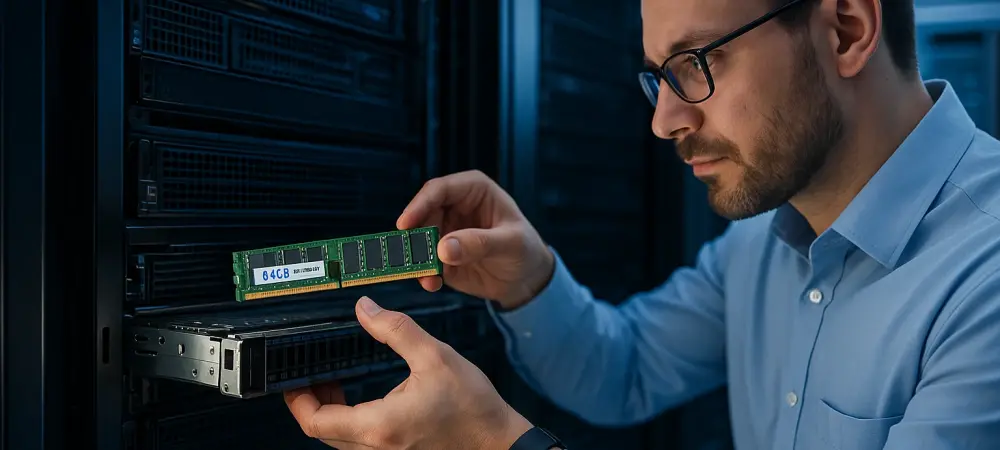
The unexpected discovery of nearly two terabytes of high-density server memory tucked away in a suburban garage highlights the staggering residual value of aging silicon in a world obsessed with speed. While DDR5 commands current headlines, thirty 64GB DDR4-2666 modules represent a $12,000 windfall that proves legacy standards are far from obsolete. This accidental stockpiling phenomenon underscores a market reality where cost-effectiveness keeps older components competitive.
Introduction to DDR4 Memory and its Market Persistence
DDR4 remains a cornerstone of digital infrastructure due to its balance of lower voltage and high data transfer rates compared to older iterations. Its continued relevance is not merely sentimental; it is a pragmatic response to the high cost of migrating to newer standards. Many enterprises find that the performance delta of DDR5 does not yet justify the total cost of ownership for most general-purpose workloads.
Core Technical Components and Market Value
High-Density ECC Memory Architecture
The 64GB DDR4-2666 ECC modules are designed for stability rather than raw clock speed. Error Correction Code technology is the differentiator, as it detects and fixes memory errors that would otherwise crash mission-critical servers. This architecture allows data centers to maintain uptime despite the inherent volatility of high-density silicon.
Hardware Compatibility and Secondary Market Valuation
Utility is gated by hardware compatibility, requiring server-grade Intel Xeon or AMD Epyc processors. In the secondary market, these components retain high value because they offer a path to massive expansion without the cost of a full platform upgrade. They provide a bridge for specialized tasks that prioritize volume over bandwidth.
Recent Developments: Manufacturing and Demand
Against expectations of a phase-out, semiconductor manufacturers increased DDR4 production throughout 2026. This resurgence is driven by enterprises maximizing existing investments. Q2 2026 saw double-digit sales growth, suggesting the industry hit a sweet spot where reliability meets falling price points. Global economic shifts toward fiscal conservatism further cemented this trend as organizations favored the performance-per-dollar ratio of proven technology.
Real-World Applications: Industrial Integration
Enterprise Resource Management and Hybrid Systems
Innovation occurs in how legacy modules integrate into modern stacks. Firms like Meta use custom CXL ASICs to bridge memory generations. This allows salvaged DDR4 to sit alongside DDR5 in newer architectures, effectively recycling hardware while mitigating the rising costs of fresh silicon.
Specialized Use Cases: Legacy Maintenance
Beyond corporate use, this surplus empowers home labs and boutique virtualization. Hobbyists build systems with 2TB of RAM for a fraction of retail costs by sourcing recycled components. This adoption keeps the ecosystem vibrant, ensuring legacy modules process data long after their primary enterprise lifecycle ended.
Challenges and Constraints: Memory Adoption
Physical and electrical differences prevent direct insertion of older memory into next-generation motherboards. Without specialized bridging hardware like CXL, integration remains impossible, creating a “locked-in” scenario for many legacy systems. Furthermore, the finite supply of high-capacity modules means prices may fluctuate significantly before the technology eventually reaches its final performance ceiling.
Future Outlook for the DDR4 Ecosystem
The longevity of DDR4 demonstrated that a circular tech economy was a practical financial strategy. Enterprises balanced performance requirements with fiscal responsibility by extending the lifespan of their infrastructure. As CXL technology matured, the distinction between memory generations blurred, allowing legacy components to remain integral to global operations.
Summary: The Legacy DDR4 Landscape
This market shift proved that hardware value was defined by utility in hybrid environments rather than raw specifications. The enduring utility of DDR4 ECC memory served as a reminder that massive existing infrastructure ensured legacy standards remained a cornerstone of the industry. These trends encouraged a more sustainable approach to hardware procurement for both enthusiasts and global enterprises.