

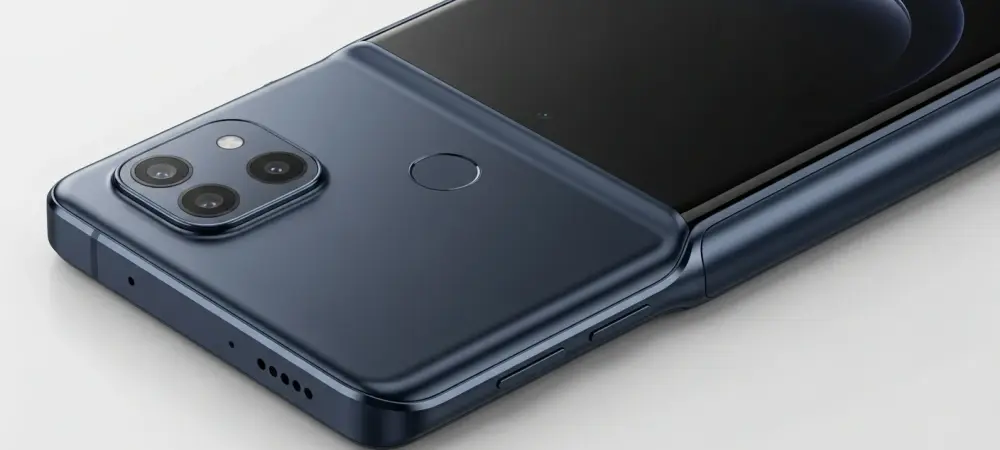
The perpetual search for a smartphone that can comfortably last through more than a single day of heavy use might soon have a new contender, as details emerge about a device that prioritizes endurance above all else. Comprehensive specifications for the upcoming Motorola Edge 70 Fusion, reportedly codenamed ‘Avenger’, have surfaced ahead of its official debut, painting a picture of a mid-range powerhouse designed to eliminate battery anxiety. The most striking detail from this extensive leak is the inclusion of a colossal 7,000mAh battery, a massive leap from the 5,500mAh cell found in its predecessor, the Edge 60 Fusion. This significant upgrade signals a clear strategic focus on delivering exceptional longevity, a feature that could redefine user expectations for devices in this category. Such a substantial power source suggests Motorola is aiming to deliver true multi-day usage on a single charge, a compelling proposition that could set the Edge 70 Fusion apart in a highly competitive marketplace.
Upgrades Under the Hood
Beyond its impressive battery capacity, the leaked specifications point to a significant performance overhaul powered by the new Snapdragon 7s Gen 3 chipset. This next-generation processor is expected to bring notable improvements in both processing power and efficiency, which will be crucial for managing the device’s advanced features without compromising its marathon battery life. The handset will reportedly be offered in two memory configurations, 8GB and 12GB of RAM, both paired with a generous 256GB of internal storage, ensuring smooth multitasking and ample space for apps and media. The visual experience is also set for a major enhancement, with a rumored 6.78-inch AMOLED display featuring a sharp 1.5K resolution. This screen is said to support a fluid 144Hz refresh rate and HDR10+, promising vibrant colors and crisp motion. Perhaps most remarkably, the display is slated to achieve an incredible peak brightness of 5,200 nits and will be protected by durable Corning Gorilla Glass 7i, making it exceptionally viewable even in direct sunlight.
Familiar Features and Future-Proofing
While the internal components receive a substantial boost, the device also appears to build upon the successful foundation of its predecessor by retaining several key features. The camera system is said to be identical to the previous model, featuring a capable 50-megapixel Sony LYTIA primary sensor on the rear and a 32-megapixel front-facing camera for high-resolution selfies. The charging technology remains consistent as well, with support for 68W fast charging, a practical choice to quickly replenish the massive battery. Durability is also a clear priority, as the handset carries over its robust IP68/IP69 and MIL-STD-810H certifications for water, dust, and shock resistance. The design features a premium quad-curved front panel and a unique rear finish inspired by nylon and linen, available in five distinct colors: Blue Surf, Country Air, Orient Blue, Sporting Green, and Silhouette. Finally, a commitment to software longevity is evident, with Motorola expected to provide three years of major OS upgrades, ensuring the device will remain secure and up-to-date for years to come.