
KT Cloud Unveils 10MW AI Data Center in South Korea

Article Highlights
Off On

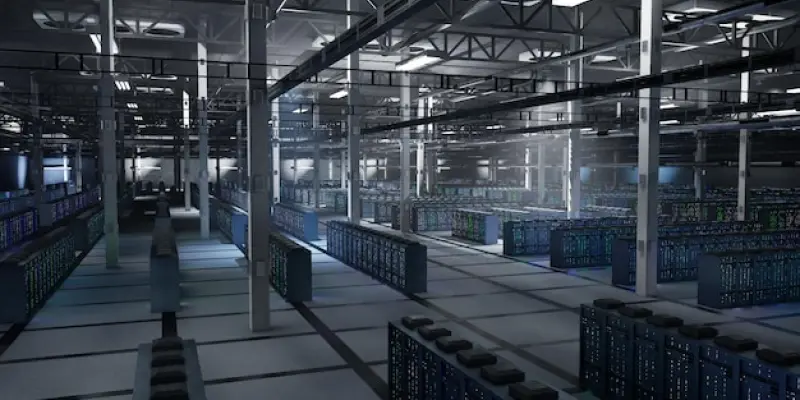
KT Cloud has achieved a milestone in its expansion endeavors by launching the 10MW Gyeongbuk AI Cloud Data Center in Yecheon-gun, South Korea. This new establishment is a testament to a significant public-private partnership between KT Cloud and the local government, aiming to boost the regional data industry. The center covers an extensive 9,830 square meters across four stories and represents a substantial investment of 110 billion won, equivalent to $79.7 million. This facility marks KT Cloud’s ongoing journey to enhance its cloud service capabilities, reflecting its strategic role in broadening the AI cloud market. With this addition, KT Cloud demonstrates forward-thinking initiatives as it continues to expand its presence in South Korea’s growing data center landscape. This development aligns with KT Cloud’s overarching goal to reach a 320MW data center capacity by 2030, having established itself as a separate business entity from KT Corp in 2022.

Strategic Initiatives and Future Prospects of KT Cloud

KT Cloud is expanding its presence in the AI cloud sector beyond its new facility in Gyeongbuk, with several projects that underscore its strategic growth. Notable among these is a 26MW center in Seoul’s Geumcheon District, targeting the rising demand for sophisticated cloud solutions in urban areas. KT Cloud is also preparing to launch a 30MW center in Gae Bong Dong, reinforcing its dedication to scaling operations and addressing growing domestic needs for AI cloud services. These endeavors are part of a broader strategy of substantial investment, aiming to enhance KT Cloud’s infrastructure capabilities nationwide.

By capitalizing on technology partnerships, KT Cloud strengthens its market standing while promoting local data service success. As it broadens its facilities and scales operations, KT Cloud is well-prepared to accommodate emerging technologies and evolving industry trends. This focus on partnerships and infrastructure growth positions KT Cloud as an essential player in South Korea’s technological advancement, ensuring it can meet the changing demands of AI cloud services. KT Cloud’s initiatives lay a foundation for ongoing growth and innovation.

Explore more

AI and Generative AI Transform Global Corporate Banking

The high-stakes world of global corporate finance has finally severed its ties to the sluggish, paper-heavy traditions of the past, replacing the clatter of manual data entry with the silent, lightning-fast processing of neural networks. While the industry once viewed artificial intelligence as a speculative luxury confined to the periphery of experimental “innovation labs,” it has now matured into the

Is Auditability the New Standard for Agentic AI in Finance?

The days when a financial analyst could be mesmerized by a chatbot simply generating a coherent market summary have vanished, replaced by a rigorous demand for structural transparency. As financial institutions pivot from experimental generative models to autonomous agents capable of managing liquidity and executing trades, the “wow factor” has been eclipsed by the cold reality of production-grade requirements. In

How to Bridge the Execution Gap in Customer Experience

The modern enterprise often functions like a sophisticated supercomputer that possesses every piece of relevant information about a customer yet remains fundamentally incapable of addressing a simple inquiry without requiring the individual to repeat their identity multiple times across different departments. This jarring reality highlights a systemic failure known as the execution gap—a void where multi-million dollar investments in marketing

Trend Analysis: AI Driven DevSecOps Orchestration

The velocity of software production has reached a point where human intervention is no longer the primary driver of development, but rather the most significant bottleneck in the security lifecycle. As generative tools produce massive volumes of functional code in seconds, the traditional manual review process has effectively crumbled under the weight of machine-generated output. This shift has created a

Navigating Kubernetes Complexity With FinOps and DevOps Culture

The rapid transition from static virtual machine environments to the fluid, containerized architecture of Kubernetes has effectively rewritten the rules of modern infrastructure management. While this shift has empowered engineering teams to deploy at an unprecedented velocity, it has simultaneously introduced a layer of financial complexity that traditional billing models are ill-equipped to handle. As organizations navigate the current landscape,