

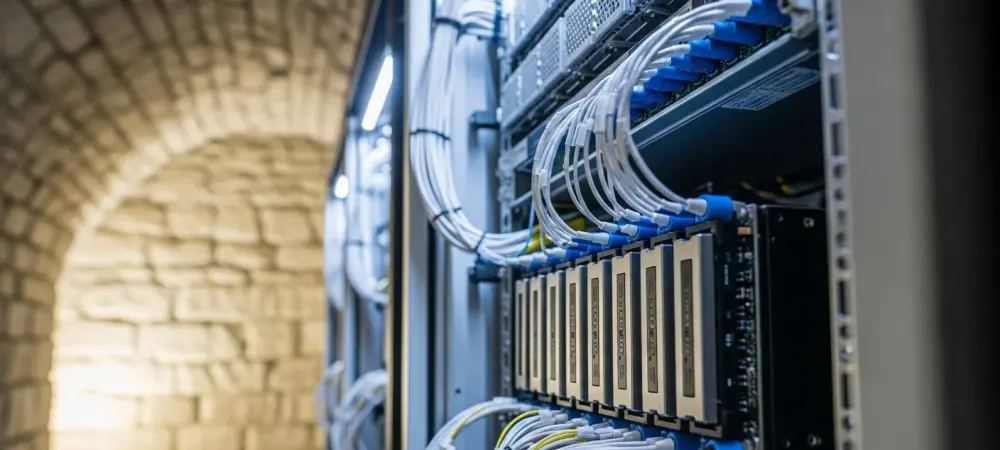
A New Frontier in Subterranean Digital Infrastructure
Hidden deep within the tectonic layers of the Tuenetto di Predaia quarry, a revolution in digital architecture has quietly taken shape beneath the Italian landscape. The inauguration of the Trentino DataMine represents a landmark achievement in the intersection of high-tech infrastructure and environmental stewardship. Nestled 100 meters beneath the surface within the Italian Dolomites, this facility marks a departure from traditional, energy-intensive data centers. The project is significant not only for its technical prowess but also for its role as a blueprint for sustainable development in the digital age. By utilizing the natural thermal properties of dolomite rock and repurposing an active industrial site, the initiative demonstrates how the technology sector can reduce its physical and carbon footprint while enhancing data security. This timeline explores the journey of this €50 million project, illustrating its evolution from a visionary public-private partnership to a functional cornerstone of European digital resilience.
Chronological Development of the Trentino DataMine
2021: Strategic Planning and PNRR Funding Allocation
The project gained momentum as a strategic priority for Italy’s digital transition, securing more than €18 million from the National Recovery and Resilience Plan (PNRR). This funding phase established the public-private partnership led by the University of Trento, setting the stage for a facility that would combine academic research with industrial utility. The initial phase focused on geological assessments to ensure the Tuenetto di Predaia quarry could support high-tech server halls while maintaining its primary function as an active mining site. Engineers worked closely with geologists to map the rock density, ensuring that the subterranean environment could safely house sensitive hardware without disrupting the ongoing extraction of minerals above.
2022 to 2024: The Intensive Construction and Excavation Phase
Over a span of thirty months, engineers and miners collaborated on a massive subterranean undertaking. This period saw the excavation of 15 kilometers of tunnels and the removal of 63,000 square meters of rock to create the necessary voids for server housing. A critical milestone during this phase was the construction of the “fornello,” a specialized vertical shaft designed to connect the deep operational tunnels to the surface for ventilation and access. This engineering feat was completed under strict timelines to meet the requirements of European recovery funds, requiring round-the-clock shifts to navigate the complex geological strata of the Alps.
2024: Project Completion and Operational Launch
The project reached completion in late 2024, officially opening its doors as a sustainable hub for data storage and artificial intelligence. Upon launch, the facility began operating at an initial capacity of 800kW, with infrastructure already in place to scale up to 6MW. The successful integration of hydroelectric power and the natural cooling systems marked the transition from a construction site to a live, carbon-efficient data ecosystem, fulfilling the promise of a facility that coexists harmoniously with the surrounding Non Valley. The site now serves as a primary node for regional governmental data and private enterprise research.
Turning Points in Sustainable Engineering and Resource Management
The most significant turning point for the Trentino DataMine was the decision to forgo traditional mechanical cooling in favor of passive geothermal regulation. By placing the hardware deep within the dolomite, the facility leverages a constant ambient temperature of 12°C, which represents a massive shift in industry standards for energy efficiency. This reliance on the “natural battery” of the earth reflects an overarching theme of circular economy principles—where the byproduct of a mine (the empty space) becomes the primary resource for the digital economy. Furthermore, the successful adherence to the PNRR deadlines highlighted a newfound agility in Italian infrastructure projects, proving that complex, large-scale underground engineering can be delivered within tight regulatory windows. Moreover, this approach significantly reduced the noise pollution typically associated with surface-level cooling fans.
Nuance, Security, and the Future of Subterranean Facilities
While the sustainability aspect of the Trentino DataMine often takes center stage, the regional and security implications are equally vital. Subterranean facilities offer a level of physical protection against natural disasters and geopolitical threats that surface-level buildings cannot match. This project aligns Italy with a growing European trend seen in Norway and Switzerland, where the “fortress” model of data storage is becoming preferred for sensitive AI research and national archives. A common misconception is that such underground projects are prohibitively expensive; however, the long-term savings on electricity for cooling and the reduced need for land acquisition often offset the initial excavation costs. As the demand for AI processing power grows, the Trentino model suggested that the future of the cloud might paradoxically be found deep within the earth. Future stakeholders looked toward expanding this subterranean network to integrate quantum computing laboratories that required extreme vibration isolation. Investigators began evaluating similar abandoned mines across the Alpine arc to replicate this carbon-neutral success story on a continental scale.