

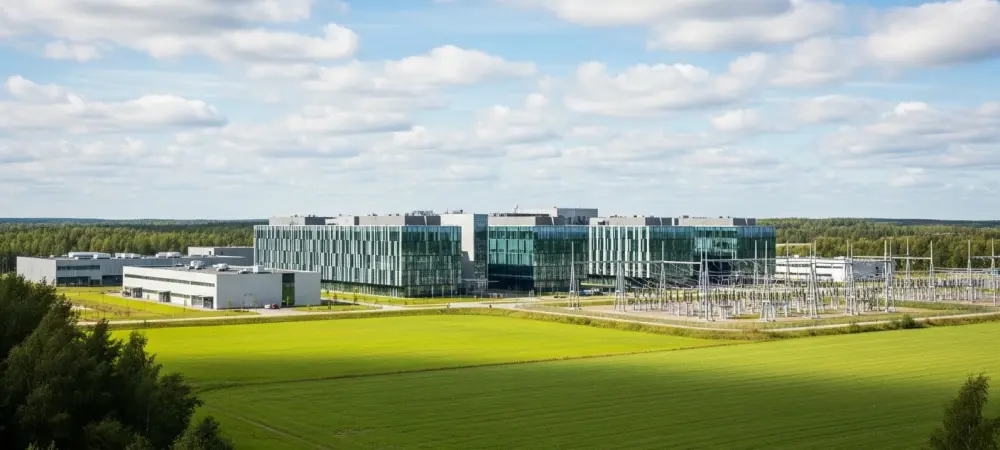
The silent shift from harvesting sunlight to managing the world’s digital heartbeat is accelerating as energy developers redefine the boundaries of modern industrial infrastructure. Helios Nordic Energy, originally known for its Swedish solar projects, is now leading this transition by planning a massive data center campus in Iisalmi, Finland. This move represents a strategic evolution for the firm, which is now backed by the VINCI Group.
Bridging the Gap: Solar Power and Digital Storage
Helios Nordic Energy is no longer content solely with Swedish solar farms, pivoting instead toward the northern frontier to bridge the gap between energy production and data storage. This transformation into a digital infrastructure provider underscores a broader trend where renewable energy developers leverage their expertise to fuel the massive computing power required for modern society.
The integration of power generation and storage allows for a more streamlined approach to utility-scale projects. By moving beyond traditional solar development, the company positioned itself to meet the insatiable global demand for high-capacity data processing facilities that require direct access to clean energy sources.
Finland’s Emergence: A Global Hub for Green Infrastructure
Finland provides a compelling environment for such large-scale endeavors, offering a trifecta of natural cooling, elite telecommunications, and a remarkably resilient power grid. For the VINCI Group, this strategic move secures a foothold in a region that has become a sanctuary for energy-intensive industries seeking carbon-neutral solutions.
As global corporations face mounting pressure to decarbonize their digital footprints, the Finnish landscape offers a predictable and secure harbor for sensitive information. The country’s infrastructure is specifically designed to support high-uptime operations, making it an ideal location for the next generation of green data hosting.
Strategic Integration: The Tervamäki Industrial Landscape
The Tervamäki industrial site in North Savo offers over 100 hectares of land, perfectly suited for a multi-phase campus that can grow alongside global data demand. By situating the facility near a planned Fingrid substation, the developers ensured the high-voltage capacity necessary to support the most power-hungry server racks in operation today.
Securing such a large footprint early in the development cycle allowed for flexible scaling and technical readiness. This proximity to the national grid operator, Fingrid, highlights the project’s technical sophistication and its central role in the broader regional energy strategy for the coming decade.
Economic Transformation: Regional Clean Energy Transition
Local leaders, including Mayor Jarmo Ronkainen, characterized the project as a vital component of the regional clean energy transition that replaced aging industrial models. This investment mirrored the success of earlier initiatives like Vuorimäki and Rajamäki, fostering a high-tech ecosystem that promised stable employment and sustainable economic growth.
The transition toward a digital economy provides a blueprint for how rural regions can revitalize their local markets. By attracting international capital and technical talent, Iisalmi is evolving into a critical node for the Nordic technology sector, ensuring long-term prosperity through modern infrastructure.
Navigating Synergies: Renewable Energy and High-Capacity Data Hosting
Merging power generation with hosting required a framework focused on predictable sustainability and constant uptime through direct grid integration. Developers prioritized locations with existing high-capacity infrastructure to minimize environmental impact while maximizing operational efficiency across the entire site.
This project ultimately proved that aligning digital expansion with regional green goals established a new standard for industrial decarbonization. Future developments likely focused on these integrated models to ensure that the rapid growth of artificial intelligence and cloud computing remained compatible with global climate targets.