

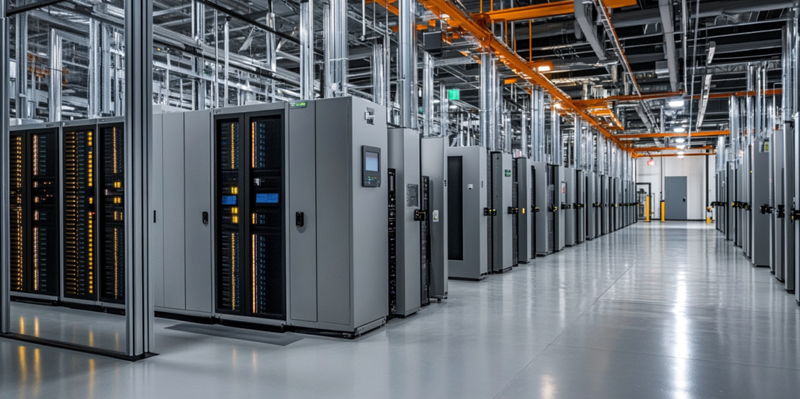
The announcement of the construction of Wonder Valley, the world’s largest AI data center, located in northwest Alberta, has generated significant buzz due to the substantial $70 billion investment. This sprawling data center will be situated in the Greenview Industrial Gateway (GIG), within the Municipal District of Greenview, to the south and east of Grande Prairie. Spearheaded by Canadian millionaire Kevin O’Leary and facilitated through a letter of intent between the Municipal District and O’Leary Ventures, this unprecedented venture is anticipated to fuel innovation and spur economic growth across Canada. The development aims to produce 7.5 GW of low-cost power for hyperscalers over the next five to ten years, positioning the region as a hub for advanced data operations.
Strategic Planning and Phased Development
The immense scale of the Wonder Valley project necessitates a structured, phased approach to its development, with Phase 1 expected to generate 1.4 gigawatts of power, costing around $2.8 billion alone. Each subsequent phase aims to add an additional gigawatt of power annually, pushing the total power output to 7.5 gigawatts over time. This incremental increase in power generation is not merely a logistical necessity but a strategic move to ensure the infrastructure keeps pace with growing demand. The overall investment, covering infrastructure, power generation facilities, data centers, and additional structures, is projected to exceed $70 billion by the completion of all phases. The project’s phased execution ensures the scale can be adjusted as required, providing flexibility in response to technological advancements and market demands.
Proximity to essential resources plays a critical role in facilitating the rapid development and operational efficiency of Wonder Valley. The strategic location, close to natural gas sources, pipeline infrastructure, water, and fiber optic networks, significantly enhances the project’s feasibility. The integration and availability of these resources are expected to expedite the construction process and ensure seamless operation once the data center is functional. Factors like these demonstrate foresight in planning, underpinning the project’s ambition to bolster Alberta’s and, by extension, Canada’s stance as leaders in the burgeoning AI industry.
Economic and Technological Impact
Wonder Valley is not just an infrastructure project; it represents a technological leap forward that has the potential to redefine AI data capabilities on a global scale. The commitment to such a massive project reflects Canada’s strategic intentions to be at the forefront of AI development and data solutions. By creating an environment conducive to hyperscale data centers, which dynamically scale based on demand using distributed systems, the project aspires to attract significant technological investments and advancements to the region.
Additionally, the economic ripple effect of the Wonder Valley project is anticipated to be profound. The infusion of capital into the region, coupled with the creation of jobs and the stimulation of related industries, is expected to drive economic growth significantly. Kevin O’Leary emphasized that the Greenview Industrial Gateway offers unparalleled opportunities for power generation, with the potential to significantly lower operational costs for businesses. As the project progresses, it aims to provide a template for similar developments, encouraging further technological investments and positioning Canada as a global AI powerhouse.
Conclusion: A Vision Toward the Future
The announcement of Wonder Valley’s construction, poised to be the world’s largest AI data center in northwest Alberta, has sparked considerable excitement due to its enormous $70 billion investment. This immense data center will be located in the Greenview Industrial Gateway (GIG), nestled within the Municipal District of Greenview, situated south and east of Grande Prairie. Behind this extraordinary project is Canadian millionaire Kevin O’Leary, with the initiative facilitated through a letter of intent between the Municipal District and O’Leary Ventures. This groundbreaking venture is expected to drive innovation and boost economic growth throughout Canada. The project aims to generate 7.5 GW of affordable power for hyperscalers over the next five to ten years, establishing the region as a key hub for advanced data operations. This development is predicted to attract major technology companies and create numerous job opportunities, further enhancing the local economy and positioning Canada at the forefront of global technological advancements.