

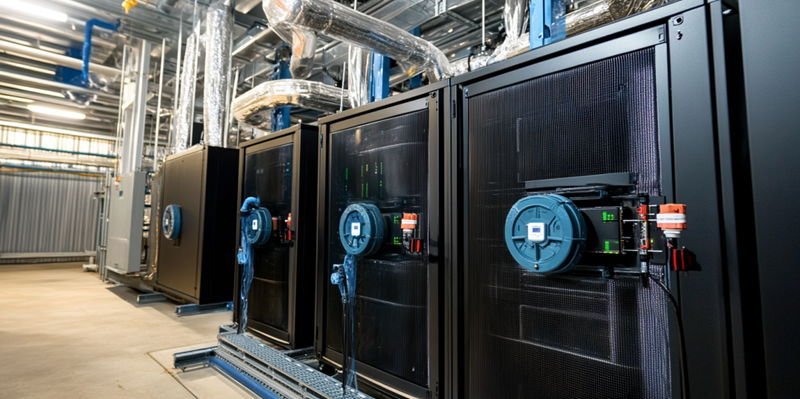
As global water scarcity becomes critical, large-scale data centers, which can consume up to 1.5 million liters of water daily, have come under scrutiny for their traditionally high water usage. An industry giant like Microsoft is taking a proactive stance, developing innovative measures to address this issue. Microsoft plans to implement an advanced chip-level cooling system designed to operate in a closed loop, significantly reducing the water needed for cooling its data centers. This method could potentially save approximately 125 million liters of water annually per facility, marking a notable leap forward in sustainable technology.
The Need for Sustainable Cooling Solutions
Water Consumption Challenges in Hyperscale Data Centers
In regions like drought-prone Maricopa County, Arizona, water conservation is critical. Hyperscale data centers, such as those operated by Microsoft, are vast consumers of water and have significant impacts on local water supplies. In response to these concerns, Microsoft is introducing a highly efficient cooling mechanism that recycles water within a closed loop system, drastically minimizing water intake. This initiative represents not only a technical achievement but also a commitment to resource sustainability and environmental stewardship by one of the world’s leading technology companies.
The innovative chip-level cooling system is expected to drastically reduce water usage. Steve Solomon, Vice President of Data Center Infrastructure Engineering at Microsoft, explained that once the new system is operational, it will function efficiently without the need for additional water. This system supports Microsoft’s dedication to community responsibility and its broader sustainability goals. With the new cooling system, Microsoft’s data centers are projected to save around 125 million liters of water every year, setting new standards in the tech industry for water conservation.
Water Usage Effectiveness: A Key Metric in Conservation
Microsoft’s application of the Water Usage Effectiveness (WUE) index highlights its efforts in water conservation within its data centers. The WUE index measures water consumption relative to the energy used by IT equipment. Over recent years, Microsoft has made notable progress, reducing its WUE from 0.49 L/kWh in 2021 to 0.30 L/kWh, achieving a 39% reduction. These gains are the result of operational changes and water recycling initiatives, demonstrating significant advancements in environmental responsibility and efficiency.
Another crucial component of Microsoft’s strategy involves reclaimed and recycled water systems implemented in various facilities in the United States and Singapore. Since initiating these systems, Microsoft has experienced an 80% improvement in its WUE, showcasing the effectiveness of these methods. By integrating reclaimed water into their infrastructure, Microsoft can decrease fresh water consumption, which is vital for the sustainability of both technology and natural resources. This approach underlines how modernizing traditional cooling methods can positively impact overall ecological footprints.
Advances in Cooling Technology
Integration of Advanced Cooling Systems
The chip-level cooling system supports environmental sustainability by reducing water consumption and its associated environmental impact while also influencing Power Usage Effectiveness (PUE). By allowing data centers to operate at higher temperatures and utilize more efficient chillers, the new technology optimally balances energy and water consumption. This progressive approach exemplifies how innovations in cooling mechanisms can significantly enhance the sustainability of large data centers.
In addition to reducing water usage, these advancements in cooling technology also improve energy efficiency. Operational flexibility is heightened, enabling data centers to maintain performance even in warmer conditions. This method provides a dual benefit by conserving water and maximizing energy usage efficiency, underscoring the broader environmental and operational benefits this technology offers the entire tech infrastructure ecosystem. Microsoft’s pioneer efforts in this domain create a benchmark for others to follow in sustainable data center operations.
Future Applications and Global Impact
Microsoft plans to pilot this zero-water technology at several new construction sites, including those in Arizona and Wisconsin, by 2026. These pilot projects aim to refine and perfect the technology before widespread application globally. By focusing on regions with significant water scarcity issues, Microsoft aligns its technological advancements with pressing environmental needs, reinforcing its commitment to sustainable development and industry innovation.
This strategic endeavor is aligned with a broader goal to enhance global WUE figures and significantly reduce the ecological footprint of data centers worldwide. The initiative showcases Microsoft’s dedication to leading the industry towards sustainable operational practices. By addressing water scarcity and energy consumption simultaneously, Microsoft sets a precedent in environmental stewardship, highlighting the importance of sustainability in tech infrastructure. These advancements not only benefit Microsoft but offer potential solutions that the entire industry can adopt to mitigate environmental impacts.
Conclusion: Pioneering a Sustainable Future
As global water scarcity becomes increasingly critical, the scrutiny on large-scale data centers, which can use up to 1.5 million liters of water daily, has intensified due to their traditionally high water usage. Microsoft, an industry giant, is taking a proactive approach to addressing this issue with innovative solutions. The company plans to roll out an advanced chip-level cooling system that operates in a closed loop, significantly cutting down the water required for cooling its data centers. This cutting-edge method aims to conserve nearly 125 million liters of water annually per facility, marking a significant advancement in sustainable technology. This initiative not only highlights Microsoft’s commitment to environmental stewardship but also sets a precedent for other large-scale data center operators. Reducing water usage in such facilities is sure to have a positive impact on the global water crisis, illustrating how technological advancements can align with sustainability goals to create a more eco-friendly future.