

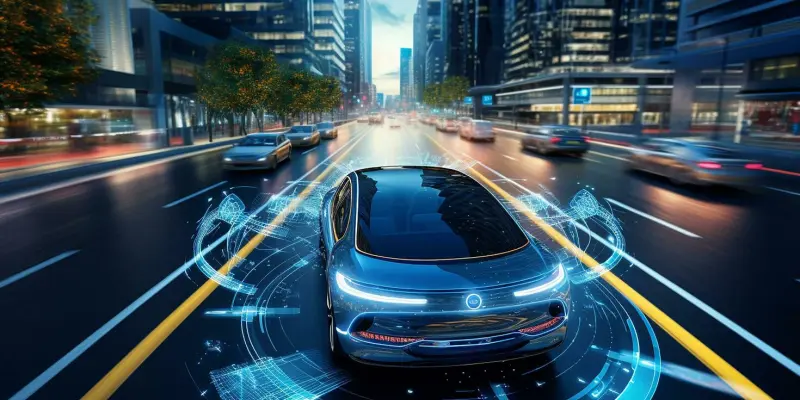
Volkswagen Group has introduced its pioneering in-house automated driving system at the Shanghai Auto Show, marking a significant milestone in the company’s evolution. Scheduled to be launched in a Volkswagen-branded electric vehicle (EV) later this year, this system highlights the advancements VW is making in autonomous driving technology. Developed by Carizon—a collaborative venture between VW’s software division Cariad and Beijing’s Horizon Robotics—the system enhances intelligent data collection and analysis using an AI-powered platform named GAIA.
Advanced Driver-Assistance System (ADAS) Development
Collaboration and Technological Prowess
Since its inception in November 2023, Carizon has been instrumental in creating this advanced driver-assistance system (ADAS) with a concerted team of over 500 engineers based in Beijing and Shanghai. GAIA stands out as a crucial component, facilitating efficient AI training by collecting two terabytes of data per vehicle daily and conducting more than 62,137 miles of test driving each day. This setup significantly accelerates data analysis, making it six times faster and reducing AI verification cycles to one-twentieth of their previous durations.
With the current categorization as Level 2+, the ADAS technology parallels existing systems like Tesla’s Autopilot and Ford’s Blue Cruise. However, the system is poised for further enhancement, with Carizon’s CEO Marcus Hafkemeyer announcing plans to introduce a more sophisticated Level 2++ ADAS by 2026. This future iteration will incorporate Urban Navigation on Autopilot, laying the groundwork for achieving Level 3 autonomy, pending regulatory approval. Such advancements signify a substantial leap in VW’s technological capabilities and commitment to the autonomous driving sector.
Local Innovation and Expertise
Volkswagen Group China’s CEO, Ralf Brandstätter, has emphasized the strategic integration of VW’s strengths with local innovation. The new system has been tailored specifically to cater to Chinese customers, aiming to set new standards in driving performance, safety, and quality. This approach aligns with VW’s “In China, For China” strategy, emphasizing the importance of leveraging local expertise for quicker market launches. The initiative underscores the company’s dedication to delivering advanced, region-specific solutions and enhancing its competitive edge in the burgeoning Chinese market. The introduction of this new system comes at a pivotal juncture, as Chinese authorities intensify regulations on marketing, testing, and updating driver assistance technology. These reforms aim to enhance consumer clarity and ensure strict regulatory compliance. Despite these challenges, VW’s commitment to pushing technological boundaries and offering regionally tailored solutions showcases its proactive approach and adaptability to regulatory landscapes.
Future Prospects and Market Implications
Regulatory and Market Dynamics
As the autonomous driving landscape in China evolves, regulatory frameworks play a critical role in shaping the deployment and adoption of advanced driver-assistance systems. Chinese authorities have introduced stringent regulations to ensure consumer protection and enhance trust in autonomous driving technology. These regulations encompass everything from the marketing of these systems to their rigorous testing and subsequent updates. For companies like Volkswagen, adhering to these evolving norms is crucial for successful market penetration and consumer acceptance. Amidst this regulatory backdrop, VW’s new ADAS initiative exemplifies a forward-thinking approach. The company’s investment in local expertise and innovation places it in a strong position to navigate these regulatory challenges effectively. By aligning its technological advancements with regulatory expectations, Volkswagen aims to provide safe and reliable autonomous driving solutions tailored to the unique needs of the Chinese market. This strategic alignment not only fosters innovation but also ensures compliance, paving the way for sustainable growth in a rapidly transforming automotive industry.
Next Steps and Market Adoption
Looking ahead, Volkswagen’s strategic focus on expanding its ADAS capabilities promises significant advancements in autonomous driving technology. The planned introduction of a Level 2++ ADAS with Urban Navigation on Autopilot by 2026 underscores the company’s commitment to continuous innovation. This development will bring VW closer to achieving Level 3 autonomy, contingent upon regulatory approval, thereby enhancing the overall driving experience for consumers.
Moreover, VW’s approach of integrating local innovation with global expertise is likely to set new benchmarks in the Chinese automotive market. By prioritizing safety, performance, and quality, the company aims to address the growing demand for advanced, reliable autonomous driving solutions. This alignment with consumer expectations positions VW as a frontrunner in the competitive landscape of autonomous driving technology. Volkswagen’s proactive engagement with regulatory authorities and its emphasis on compliance reflect a well-rounded approach to market adoption. This strategy not only ensures successful deployment but also builds consumer trust in the company’s advanced driver-assistance systems. As VW continues to push the boundaries of technological innovation, its commitment to delivering safe and tailored solutions for the Chinese market remains a key driver of its success.
Conclusion
Volkswagen Group has unveiled its groundbreaking in-house automated driving system at the Shanghai Auto Show, a significant step forward in the company’s ongoing evolution. This cutting-edge system, slated to debut in a Volkswagen-branded electric vehicle (EV) later this year, underscores the substantial strides VW is making in autonomous driving technology. The system has been developed through Carizon, a joint venture between VW’s software arm, Cariad, and Beijing-based Horizon Robotics. Central to this advanced technology is the AI-driven platform, GAIA, which significantly enhances intelligent data collection and analysis. This collaboration aims to create a seamless integration of AI capabilities in VW’s EV lineup, reflecting the company’s commitment to innovation and technological advancement. By leveraging state-of-the-art AI, Volkswagen intends to lead the market in providing safer, more efficient autonomous driving solutions within their vehicles. This unveiling not only marks a pivotal moment for VW but also signals a broader shift towards smarter, more autonomous vehicular technology in the automotive industry.