

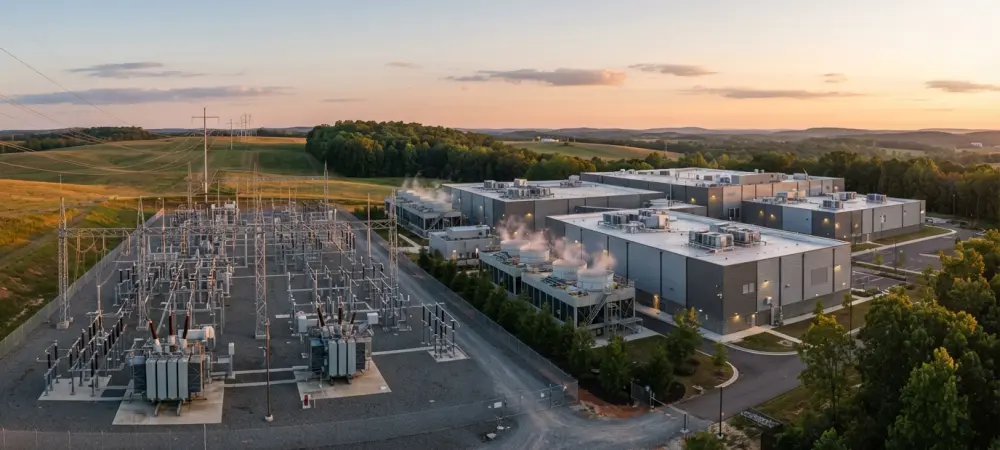
The once-frenetic scramble to secure high-performance silicon chips has yielded to a much more fundamental and daunting challenge: the physical acquisition of electrical grid capacity. In the current landscape of 2026, the primary constraint on artificial intelligence expansion is no longer the production yield of advanced accelerators but the time to power, which refers to the agonizingly slow interval required to secure and activate high-voltage connections. This transition marks a new era where the geography of the digital economy is being rewritten by the availability of megawatts rather than the proximity to traditional tech hubs. As clusters grow in density and scale, the infrastructure that feeds them has become the ultimate arbiter of which companies can deploy their models and which remain stuck in a queue.
The Shift From Silicon Scarcity to Power Grid Prioritization
The artificial intelligence industry is undergoing a fundamental transformation where the primary constraint on expansion is no longer the availability of high-end GPUs, but the physical reality of electrical infrastructure. While the early years of the AI boom were defined by a desperate scramble for hardware accelerators, the current landscape is shaped by the duration required to secure and activate grid capacity. Major market players and infrastructure providers are now recognizing that a site’s strategic value is tied directly to its energization timeline rather than its proximity to urban hubs. This shift has forced a total re-evaluation of what constitutes prime real estate in the digital age.
As global regulations tighten and energy demands soar, the ability to navigate the complexities of power procurement has become the most significant competitive advantage in the digital economy. Companies are no longer asking if they can buy the chips, but if they can plug them in before the hardware becomes obsolete. This priority shift has led to a land grab for locations with existing substation capacity or accelerated utility permitting processes. Consequently, a new hierarchy has emerged where the readiness of the electrical grid dictates the pace of innovation more than the speed of the silicon itself.
Trends and Projections for High-Density Compute Infrastructure
Emerging Strategies in Power Procurement and Vertical Integration
The AI sector is moving toward a model of vertical integration where infrastructure providers own both the physical facility and the compute hardware to synchronize engineering paths. A critical trend is the infrastructure-first approach, where site selection is dictated by a hierarchical ranking that prioritizes available megawatt potential and the credibility of energization dates over traditional factors like land cost. This allows for a more cohesive design process where the power delivery systems are built in tandem with the specific requirements of high-density server racks.
Specialized engineering solutions are becoming essential to bypass grid limitations and improve overall efficiency. For instance, in solar-heavy regions, high-capacity battery storage systems are being integrated to manage intermittency and provide a steady flow of power. In contrast, locations in Arctic climates are leveraging natural cooling systems to reduce the overall energy footprint of their operations. These bespoke strategies allow operators to maximize their compute per watt, ensuring that every available bit of energy is converted into productive intelligence.
Market Data and the Growing Gap in Connection Timelines
Performance indicators now suggest a widening discrepancy between hardware procurement cycles and infrastructure readiness. In the European Union, grid connection wait times currently span between two and ten years, creating a massive backlog for data center operators who have already purchased their equipment. Market forecasts indicate that sites capable of reaching full power within 18 months will command significant premiums, even if operational costs are higher than delayed alternatives. This premium reflects the high opportunity cost of leaving expensive hardware idle while waiting for utility upgrades. Projections show that the long-term value of data centers will increasingly reside in their permanent assets, such as substations, fiber routes, and grid permits, rather than the rapidly depreciating GPUs housed within them. The financial focus of the industry is shifting toward these foundational elements because they provide a stable platform for multiple generations of compute technology. Data suggests that the companies that control the most reliable power assets will maintain the highest margins as the cost of raw compute continues to commoditize over the coming years.
Overcoming Global Grid Constraints and Operational Obstacles
The industry faces a daunting challenge in the form of aging electrical grids that were not designed for the concentrated, high-density loads required by modern AI clusters. This power ceiling forces developers to confront logistical hurdles, such as the slow pace of utility upgrades and the intermittency of renewable energy sources. To mitigate these risks, companies are increasingly adopting strategies like on-site power generation and modular data center designs that can be deployed incrementally as capacity becomes available. These modular approaches allow for a more flexible response to the unpredictable nature of grid expansions.
Moreover, the decoupling of facility capacity from compute needs requires precise thermal engineering to prevent power-usage inefficiencies from stalling growth. Developers are investing heavily in liquid cooling and heat reuse technologies to ensure that they can pack more compute into the same power envelope. By reducing the energy spent on non-compute functions, operators can effectively stretch their power allocations further. This engineering focus is essential for maintaining growth in regions where the electrical grid is at its breaking point.
The Evolving Regulatory Landscape and Energy Compliance
Regulatory bodies are increasingly focusing on the environmental impact and energy consumption of massive AI developments. Significant laws and standards regarding Power Usage Effectiveness are becoming more stringent, requiring operators to prove the sustainability of their energy sources. Compliance now involves navigating complex local zoning laws and national energy security measures, as governments treat grid stability as a matter of public interest. This regulatory pressure is pushing the industry toward more transparent energy reporting and a heavier reliance on carbon-free baseload power.
Data center operators must balance aggressive expansion with social and environmental responsibility to ensure continued access to limited power resources. In many jurisdictions, securing a power permit now requires a commitment to local infrastructure improvements or the funding of community energy projects. This social license to operate has become as important as the technical requirements for grid connection. Failure to meet these societal expectations can lead to project delays or the total revocation of power allocations in sensitive regions.
Future Outlook: Innovations in Energy-Resilient AI Deployment
The future of AI growth lies in the decentralization of compute to regions with untapped power potential and favorable climates. We anticipate a surge in innovation surrounding alternative cooling technologies and the integration of small modular reactors or advanced energy storage to provide 24/7 reliability. These technologies will allow data centers to operate independently of the traditional grid, reducing their vulnerability to regional instability. As the industry matures, the ability to generate and store energy on-site will become a standard feature of any large-scale compute facility.
As consumer preferences shift toward green AI, projects that leverage renewable energy surpluses will likely dominate the market. Global economic conditions will continue to favor those who can master the logistics of time to power, making energy management a core pillar of the tech industry’s long-term evolution. The integration of AI with smart grid technology could even turn data centers into stabilizing assets for the electrical network, where they can modulate their consumption in real-time to help balance supply and demand.
Strategic Conclusions on Power as the Ultimate Gatekeeper
The findings indicated that time to power officially surpassed hardware availability as the critical bottleneck for AI scaling. The industry entered a phase where site engineering and energy logistics dictated the geography and pace of innovation across the globe. For investors and developers, the primary recommendation was to prioritize the acquisition of energized real estate and the development of long-term power assets that outlasted individual hardware generations. This approach ensured that capital remained productive even as chip architectures evolved at a blistering pace.
The study demonstrated that the winners of the AI revolution were not just those with the fastest processors, but those who secured the most resilient and rapid access to the electrical grid. Developers who moved toward vertical integration successfully synchronized their compute needs with infrastructure reality, avoiding the pitfalls of stranded hardware. Ultimately, the transition to a power-constrained market required a total reimagining of data center architecture. Those who adapted by investing in on-site generation and efficient thermal management systems created a durable competitive moat that defined the sector for years to come.