
Is Thermaltake’s 2000W PSU Too Powerful for American Homes?

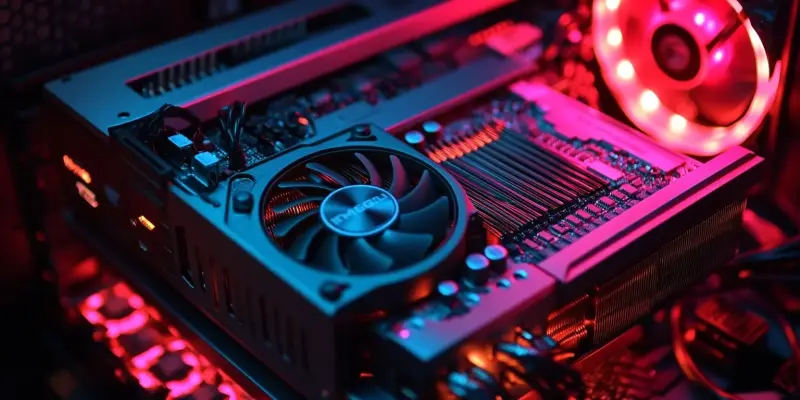
Thermaltake has recently released the Toughpower D2000, a 2000W power supply unit (PSU) designed to meet the swelling energy demands of the newest GPUs and CPUs from tech giants like Nvidia, AMD, and Intel. This high-powered device, capable of powering an entire air conditioning unit, draws attention due to its exceptional capacity but also raises important questions about its feasibility in American homes. The main concern centers on the power draw of the D2000, which surpasses the capabilities of standard American household electrical outlets. As a result, U.S. consumers are being guided toward other robust alternatives within the same brand, which include the 1650W and 1600W models from Thermaltake’s Toughpower RGB Plus Titanium and Toughpower TF3 Titanium lineups. These options, with their own impressive specifications, were prominently displayed at CES 2025 and promise to fill the gap left by the unavailable D2000.

High-Wattage Alternatives and Features

Thermaltake’s 1650W and 1600W PSU models boast fully modular designs, multiple SATA power connectors, and 16-pin GPU power ports compliant with PCIe 5.1 standards. Adhering to the ATX 3.1 standard, these units cater to modern PC enthusiasts with their high power, customizable features, and efficiency. Both models hold the 80 PLUS Titanium certification, ensuring top-notch performance and efficiency under loads. They offer single-rail and multi-rail configurations and customizable RGB lighting in the RGB Plus versions. For smaller builds, the Toughpower SFX Titanium 1200W PSU provides a compact yet potent solution, supporting PCIe Gen 5.1 and suitable for small form factor setups while delivering ample power.

These high-wattage PSUs align with the trend of increasing power requirements driven by advancements in PC hardware. While Thermaltake’s D2000 PSU might be excessive for standard American electrical infrastructures, it highlights the industry’s push toward higher power solutions. Thermaltake continues to innovate, addressing regional limitations and escalating tech needs. This shift in PC power supplies by Thermaltake and others showcases the necessity for tailored solutions that balance user demands with existing infrastructure constraints.

Explore more

How Can HR Resist Senior Pressure to Hire the Unqualified?

The request usually arrives with a deceptive sense of urgency and the heavy weight of authority when a senior executive suggests a “perfect candidate” who happens to lack every required credential for the role. In these high-pressure moments, Human Resources professionals find themselves caught in a professional vice, squeezed between their duty to uphold organizational integrity and the direct orders

Why Strategy Beats Standardized Healthcare Marketing

When a private surgical center invests six figures into a digital presence only to find their schedule remains half-empty, the culprit is rarely a lack of technical effort but rather a total absence of strategic differentiation. This phenomenon illustrates the most expensive mistake a medical practice can make: assuming that a high-performing campaign for one clinic will yield identical results

Why In-Person Events Are the Ultimate B2B Marketing Tool

A mountain of leads generated by a sophisticated digital campaign might look impressive on a spreadsheet, yet it often fails to persuade a skeptical executive to authorize a complex contract requiring deep institutional trust. Digital marketing can generate high volume, but the most influential transactions are moving away from the screen and back into the physical room. In an era

Hybrid Models Redefine the Future of Wealth Management

The long-standing friction between automated algorithms and human expertise is finally dissolving into a sophisticated partnership that prioritizes client outcomes over technological purity. For over a decade, the financial sector remained fixated on a zero-sum game, debating whether the rise of the robo-advisor would eventually render the human professional obsolete. Recent market shifts suggest this was the wrong question to

Is Tune Talk Shop the Future of Mobile E-Commerce?

The traditional mobile application once served as a cold, digital ledger where users spent mere seconds checking data balances or paying monthly bills before quickly exiting. Today, a seismic shift in consumer behavior is redefining that experience, as Tune Talk users now spend an average of 36 minutes daily engaged within a single ecosystem. This level of immersion suggests that