

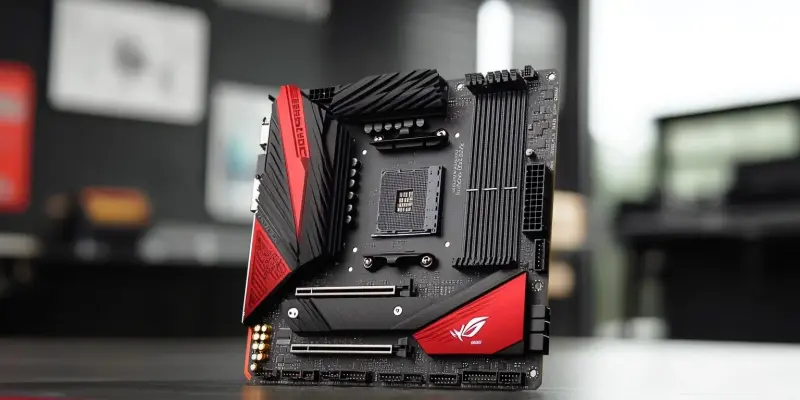
In the ever-evolving world of PC hardware, gamers and PC builders are often on the lookout for components that offer a perfect blend of performance, reliability, and compactness. MAXSUN has recently unveiled a new series of motherboards designed to cater to the needs of both gaming enthusiasts and those who prefer compact system builds. The company has introduced motherboards for both AMD and Intel platforms, focusing on the new AMD B850 series for Ryzen 9000 CPUs and the Intel B860 series for Arrow Lake processors. These new offerings include models from the Terminator, eSport, and Challenger series, each promising to deliver high performance in a compact form factor. But the critical question remains: are these new motherboards truly ideal for gaming and compact builds?
AMD Ryzen Support: B850 Series
For users who opt for AMD Ryzen 9000 and 7000 series chips, MAXSUN’s B850 series motherboards are a significant development. One of the standout models in this series is the MS-Terminator B850M WiFi, which features an 8+2+1 power phase VRM with 50A Dr.MOS. This configuration ensures robust power delivery, which is essential for gaming rigs that demand high CPU performance. Another notable aspect of this motherboard is its compact micro-ATX form factor, making it an ideal choice for small form factor (SFF) builds. Furthermore, it supports DDR5 memory speeds of up to 8000 MT/s, which is a significant advantage for those looking to future-proof their systems.
Adding to the flexibility of the B850 series, the MS-eSport B850M WiFi ICE and MS-eSport B850ITX WiFi ICE models cater to varied form factors, with the former offering a micro-ATX and the latter a mini-ITX design. This variety enables users to pick a motherboard that fits their specific build requirements without compromising on performance. Both these models come with a 6+2+1 power phase 50A DrMOS design, dual PCI-E 4.0 M.2 slots, and WiFi 6 connectivity. The inclusion of WiFi 6 is particularly advantageous for gaming applications, providing faster and more stable wireless connections. The combination of high-speed connectivity, efficient power delivery, and support for the latest memory standards makes the B850 series a strong contender for gamers and compact PC enthusiasts.
Intel Arrow Lake Compatibility: B860 Series
On the Intel front, MAXSUN has introduced the B860 series motherboards, specifically designed for the upcoming Arrow Lake processors. One of the prominent models in this lineup is the MS-Terminator B860M WiFi. This motherboard features a 10+1+1 power phase 60A Smart Power design, capable of supporting 8800 MT/s DDR5 memory. Like its AMD counterpart, this Intel model also comes with an m-ATX form factor, making it suitable for compact builds. It further includes multiple high-speed ports, including dual 10G Type-C ports, enhancing its versatility and usability for various gaming and computing needs.
Complementing the Terminator series, the eSport lineup includes the MS-eSport B860M SNIPER WiFi, which takes the performance up a notch with a 10+1+1 power phase 60A SPS power design. This model supports up to 8600 MT/s DDR5 memory speed, offering ample headroom for gamers and power users who demand the best. It also features a USB-C port capable of 40Gbps transfer speeds, ensuring quick data transfers and peripheral connectivity. The eSport series is also complemented by the GANK model, which provides 8+1+1 50A power phases and additional PCI-E and USB ports, catering to a wide array of user needs.
Compact and High-Performance Design: Challenger Series
In the rapidly changing landscape of PC hardware, gamers and PC builders consistently seek components that strike a balance between performance, reliability, and compactness. MAXSUN has recently announced a new lineup of motherboards aimed at meeting the expectations of gaming enthusiasts and compact system builders alike. These latest motherboards are compatible with both AMD and Intel platforms, specifically focusing on the new AMD B850 series designed for Ryzen 9000 CPUs and the Intel B860 series crafted for Arrow Lake processors.
The new product range includes models from the Terminator, eSport, and Challenger series, each of which promises high performance within a compact design. Such variety allows users to find the right fit for their specific needs, whether they prioritize gaming or the efficiency of a smaller build. However, the prevailing question is whether these new motherboards can genuinely deliver optimal performance for gaming and compact setups. This remains to be seen as users put these products to the test in real-world scenarios.