

The high-end graphics card market has long been characterized by a relentless climb in retail prices that often leaves the average PC enthusiast feeling alienated from the most significant technological breakthroughs of the era. However, the arrival of the PowerColor Reaper AMD Radeon RX 9070 XT has signaled a significant shift in this narrative by offering a high-performance solution that intentionally ignores the recent trend of overpriced flagship models. This specific hardware release has become a major disruptor by targeting a price-to-performance ratio that many consumers believed was a thing of the past. By prioritizing raw computational power over expensive marketing gimmicks, the card caters to a demographic that values hardware longevity and consistent native frame rates. The initial market reaction reflected a growing desire for transparency in pricing, as the substantial discounts applied shortly after the launch made this GPU one of the most accessible high-tier options for gamers. This strategy has forced a reevaluation of the value proposition across the entire industry.
Performance Benchmarks: Thermal Efficiency
Under technical scrutiny, the Radeon RX 9070 XT was designed to excel in scenarios where native resolution and raw rasterization are the primary focus. Unlike some competitors that rely heavily on artificial intelligence upscaling to reach acceptable performance levels at 1440p or 1600p, this card delivers impressive results without the need for visual compromises. In many modern gaming titles, the hardware maintains high frame rates while preserving the crisp, uncompressed look of the original textures and geometry. This approach is particularly beneficial for competitive gamers who require the lowest possible latency, as native rendering avoids the additional processing overhead often introduced by complex frame-generation software. The consistency of its performance across a wide variety of game engines highlights the strength of the underlying architecture, proving that sophisticated hardware engineering remains more important than proprietary software layers for the majority of standard rendering tasks.
To maintain these performance levels during extended gaming sessions, the physical design of the card incorporates a robust cooling solution that manages heat without excessive noise. The PowerColor Reaper variant features a triple-fan array and a densely packed heatsink that efficiently dissipates energy even under a full load. Despite its massive cooling capabilities, the card remains relatively compact, ensuring it can fit into standard mid-tower cases without requiring specialized mounting hardware. The power delivery system is equally thoughtful, utilizing standard 8-pin connectors and requiring a common 750W power supply, which saves users from the additional cost of upgrading their existing power infrastructure. This combination of thermal efficiency and power accessibility makes the card a practical choice for those looking to upgrade an existing system. By focusing on these fundamental aspects of hardware design, the manufacturer has created a product that is as reliable as it is powerful, ensuring that the components stay within safe operating temperatures.
Memory Capacity: A Foundation for Longevity
One of the most compelling arguments for choosing this specific model is the inclusion of a 16GB GDDR6 memory buffer, which provides a significant advantage over cards equipped with only 12GB. As modern video games continue to evolve, the demand for video RAM has increased dramatically due to the use of high-resolution textures and complex environment assets in open-world designs. Having 16GB of VRAM acts as a critical safety net, preventing the stuttering and performance drops that occur when a system is forced to swap data between the GPU and slower system memory. This headroom is not just about current games but serves as insurance for upcoming releases that will likely push hardware requirements even further. For a consumer looking to keep their hardware for several years, this memory capacity is a non-negotiable feature that ensures the card will not become obsolete prematurely. The choice to include this much memory at this price point reflects a deep understanding of the long-term needs of the gaming community.
Beyond the realm of entertainment, the generous memory pool transforms the card into a versatile tool for various professional and creative applications. High-resolution video editing, particularly in 4K or 8K formats, requires substantial VRAM to handle real-time playback and complex color grading without lag. Furthermore, the rise of local artificial intelligence models and 3D rendering software has made high-capacity GPUs essential for productivity. Users who experiment with image generation or complex architectural visualizations will find that the 16GB buffer allows for larger datasets and more detailed scenes than competing cards in the same price bracket. This dual-purpose nature creates a unique value proposition for “prosumers” who need a single piece of hardware capable of handling both heavy workloads and high-end gaming. By addressing the needs of both the creative and gaming sectors, the card establishes itself as a multi-functional investment that provides utility well beyond its primary marketing focus as a gaming component.
Display Standards: Connectivity and Competition
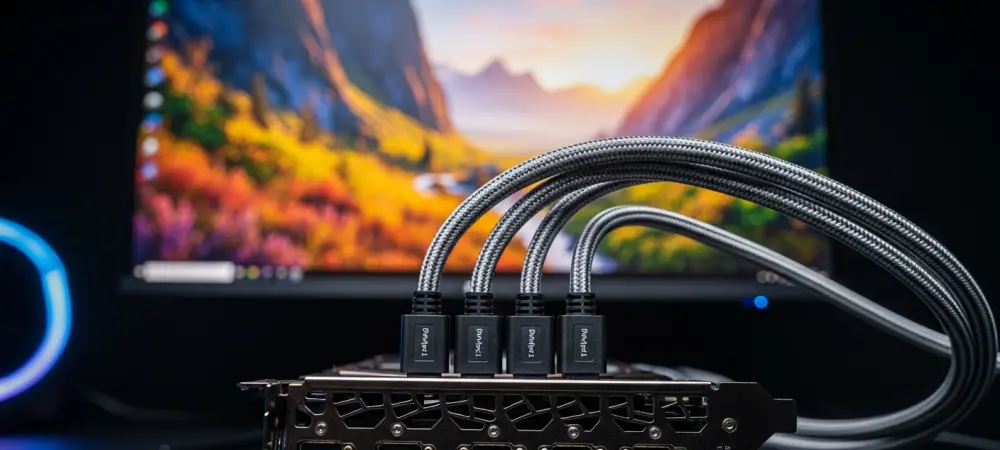
When examining the technical specifications regarding display output, the inclusion of three DisplayPort 2.1 connectors sets this hardware apart from many contemporary rivals. These ports offer significantly higher bandwidth compared to the older standards found on many other cards, enabling support for the next generation of high-refresh-rate 4K and 8K monitors. As display technology continues to advance, having a card that is already compatible with these standards means users can upgrade their monitors in the future without worrying about bandwidth limitations or compressed signals. This forward-thinking approach to connectivity is a clear indication that the hardware was built with a long-term perspective in mind. It allows for a level of visual fidelity and smooth motion that older standards simply cannot replicate, making it an ideal choice for enthusiasts who want to be prepared for the next wave of screen innovations. This commitment to modern standards ensures that the investment remains relevant as the surrounding ecosystem of peripherals matures.
The competitive positioning of the RX 9070 XT becomes even more apparent when it is compared to the latest offerings from the RTX 50-series. While the competition often emphasizes specialized features such as advanced ray tracing and proprietary upscaling technologies, the Radeon card wins on the grounds of raw hardware value and memory scalability. The Radeon approach offers a more balanced experience that excels in traditional gaming scenarios while providing a much larger memory buffer for the price. In an environment where hardware costs have become a primary concern for many builders, the ability to obtain high-tier performance without the “halo” product tax is a refreshing change. This philosophical difference in product design highlights the two distinct paths available to modern consumers: one focused on bleeding-edge software features and the other on sustainable, high-quality hardware fundamentals.
Market Dynamics: Future Planning and Investment
While the industry has recently seen a push toward new and expensive technologies like GDDR7 memory and PCIe 5.0 interfaces, this card proves that mature and refined technology can still offer superior value. By utilizing the reliable GDDR6 architecture, the manufacturer was able to keep production costs low and pass those savings directly to the consumer. This decision does not come at the expense of performance, as the card remains more than capable of handling the most demanding tasks available today. The use of established standards also means that the hardware is highly compatible with a wide range of existing motherboards and components, reducing the likelihood of technical conflicts or the need for expensive ecosystem upgrades. This focus on reliability and accessibility makes the product an attractive option for those who prefer proven technology over the potential instability of early-adoption cycles. It represents a pragmatic approach to system building that prioritizes real-world results and financial sensibility over the pursuit of unproven benchmarks.
The evaluation of the Radeon RX 9070 XT demonstrated that value was not merely a matter of finding the lowest price but identifying the hardware that offered the longest operational lifespan. It was observed that the card effectively bridged the gap between enthusiast-grade power and mainstream accessibility, rendering the high-priced alternatives less appealing for those with fixed budgets. Moving forward, potential buyers considered several critical factors before finalizing their upgrade paths. It was highly recommended that users evaluated their current monitor capabilities to ensure they could take advantage of the DisplayPort 2.1 features. Furthermore, those who looked toward professional workflows prioritized the 16GB memory buffer as a non-negotiable requirement for 3D rendering and local AI processing. The decision to invest in mature GDDR6 technology proved to be a safer financial move than early adoption of unproven standards. Ultimately, the market shifted toward cards that offered tangible hardware value over marketing-led software hype, providing a clear roadmap for future component selection.