

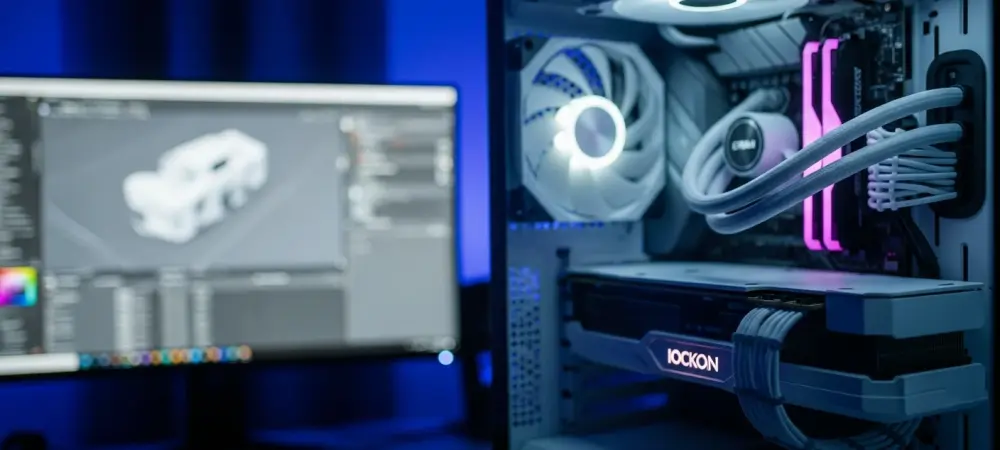
The sheer velocity of technological advancement in the graphics hardware sector typically renders flagship components obsolete within a few years, yet the NVIDIA GeForce RTX 3090 continues to defy standard depreciation cycles in the current market. As high-end PC builders evaluate their options in 2026, the presence of the Blackwell architecture has set a new standard for efficiency and specialized AI performance, making older generations seem like relics of a bygone era. However, the RTX 3090, particularly the specialized White Edition, occupies a distinct territory where legacy raw power meets specific professional requirements that newer mid-range cards often fail to address. The situation creates a fascinating dilemma for enthusiasts who are trying to balance the allure of cutting-edge software features against the brute force of a massive 24GB memory buffer. While the industry has moved toward more streamlined and efficient designs, the 3090 remains a heavy-hitting alternative for specific workflows that demand high capacity. The transition from 2026 to 2028 is already being shaped by these hardware choices, as the gap between entry-level accessibility and professional-grade capability continues to widen for the average consumer.
The Enduring Technical Advantage: 24GB of VRAM
Modern graphics solutions in 2026, such as the NVIDIA GeForce RTX 5070 or the AMD Radeon RX 9070 XT, have undoubtedly improved in terms of clock speeds and architectural efficiency, yet they often fall short in memory capacity. These contemporary mid-range options typically offer 12GB or 16GB of VRAM, which is sufficient for standard gaming but creates a significant bottleneck for users working with ultra-high-resolution textures or complex data sets. The RTX 3090, with its massive 24GB GDDR6X buffer, provides a level of headroom that remains rare outside of the most expensive flagship models of the current generation. This specific technical advantage ensures that the card does not suffer from the stuttering or asset streaming issues that plague memory-constrained hardware when pushing the boundaries of modern visual fidelity. Even as the industry moves toward 2027, the reliance on substantial memory buffers for high-end production continues to validate the 3090 as a viable piece of equipment for many specialized systems.
The utility of the 24GB memory pool extends far beyond the realm of traditional gaming, making the RTX 3090 a favorite for those involved in localized artificial intelligence development and complex 3D rendering. Training small-scale language models or running massive generative AI suites requires significant VRAM to store parameters and intermediate data, a task that newer gaming cards with limited memory struggle to perform effectively. Creative professionals using software like Blender or DaVinci Resolve also benefit from this massive capacity, as it allows for the manipulation of enormous scenes and 8K video timelines without constant cache swaps to system memory. For these specialized users, the card functions as a budget-friendly workstation GPU, bridging the gap between consumer-grade hardware and the astronomically priced enterprise solutions like the NVIDIA RTX A-series. This versatility ensures that the hardware maintains its market value even as newer architectures prioritize gaming-centric features over the sheer volume of onboard memory.
Gaming Performance: Navigating the Blackwell Feature Gap
From a pure gaming perspective, the RTX 3090 remains a powerhouse capable of delivering smooth 4K experiences across the vast majority of titles available in 2026. However, the primary drawback of sticking with this older architecture is the absence of the latest software-driven performance enhancements introduced with the Blackwell generation. Modern titles are increasingly optimized for DLSS 4 and advanced frame-generation technologies that require the specific optical flow accelerators and tensor core updates found in the RTX 50-series. While the 3090 can utilize older versions of deep learning super sampling, it misses out on the transformative frame-rate boosts that allow newer, lower-tier cards to outperform it in ray-traced environments. Gamers must decide if the raw, unscaled power of the 3090 is more valuable than the refined, AI-boosted performance of more modern alternatives that leverage the latest advancements in neural rendering to achieve higher visual clarity and stability.
Efficiency has become a central pillar of graphics card design in 2026, and this is where the generational gap becomes most apparent to the average user. The RTX 5080, for instance, provides a substantial leap in performance-per-watt, delivering higher frame rates while drawing significantly less power from the wall compared to the older flagship. The RTX 3090 is well-known for its aggressive power consumption and its tendency to produce significant heat, which necessitates a robust cooling setup and a high-wattage power supply unit. In an era where energy costs and thermal management are high priorities for PC builders, the older card presents a challenge that modern counterparts have largely solved through architectural refinements. For users who are not constrained by power limits or thermal concerns, the trade-off may be acceptable, but for those seeking a more balanced and modern system, the newer Blackwell-based cards offer a level of operational sophistication that the 3090 cannot match.
Aesthetic Appeal and Demanding Thermal Requirements
The aesthetic appeal of the ASUS ROG Strix White Edition adds another layer of complexity to the buying decision, as high-end white components remain a niche and highly sought-after commodity. In 2026, the trend toward visually cohesive, light-themed PC builds has only intensified, yet manufacturers often limit their white-shroud designs to a small handful of premium models. This specific variant of the RTX 3090 stands out not just for its performance, but as a centerpiece for enthusiasts who prioritize the visual design of their workspace or gaming station. Finding a card that matches this specific aesthetic without paying the extreme premiums associated with the latest generation’s white-themed flagships makes the 3090 an attractive prospect for collectors and builders alike. The premium build quality of the ROG Strix line, characterized by its metallic accents and sophisticated RGB implementation, ensures that the card looks just as modern and impressive as hardware released much more recently.
Managing the significant thermal output of the GA102 chip requires the massive 2.9-slot cooling solution that ASUS implemented on this flagship model. Equipped with three Axial-tech fans and a high-surface-area heatsink, the card is designed to maintain stable clock speeds even under heavy, sustained workloads, but its physical dimensions pose logistical challenges. Potential owners must verify that their chassis has the necessary clearance and that the airflow configuration is sufficient to exhaust the heat generated by a component with such a high total graphics power. The 3090 is notorious for transient power spikes that can trip older or lower-quality power supplies, necessitating a reliable 850W or 1000W unit for consistent operation. These requirements mean that the true cost of the card often includes necessary upgrades to the surrounding infrastructure, making it a more complex investment than a simpler, more efficient mid-range card from the current 2026 or 2027 lineup.
Strategic Value: Assessing the Risks of Renewed Hardware
Navigating the market for renewed or refurbished hardware in 2026 requires a careful assessment of the risks versus the potential financial rewards. While these cards are often professionally inspected and come with short-term protection programs, they lack the multi-year manufacturer warranties that accompany brand-new RTX 50-series purchases. This lack of long-term security is a major consideration for a card that has likely seen several years of use, potentially including high-stress scenarios like 24/7 rendering or intensive gaming. However, for those who can find a unit at a price point that significantly undercuts the current mid-range market, the 3090 offers a price-to-performance ratio in professional tasks that is difficult to ignore. The decision ultimately rests on the user’s tolerance for risk and their ability to troubleshoot potential hardware issues, as the savings realized at the time of purchase must be weighed against the possibility of total component failure without the safety net of a standard retail warranty.
The evaluation of the RTX 3090 in the current year demonstrated that legacy flagships could still provide immense value if the user’s requirements aligned with specific hardware strengths. For those who prioritized massive VRAM for AI development or 3D production, the card served as a vital bridge toward more expensive professional equipment, proving that architectural age mattered less than raw capacity in specialized fields. It became clear that buyers needed to invest in high-quality power delivery and spacious enclosures to accommodate the card’s demanding physical and electrical profile. Moving forward, enthusiasts were encouraged to monitor the secondary market for certified refurbished units that included at least some form of buyer protection to mitigate the inherent risks of aging silicon. Ultimately, the decision to opt for this older powerhouse over a modern Blackwell card required a strategic look at software needs, where the choice between cutting-edge AI features and massive memory buffers dictated the long-term success of the build.