

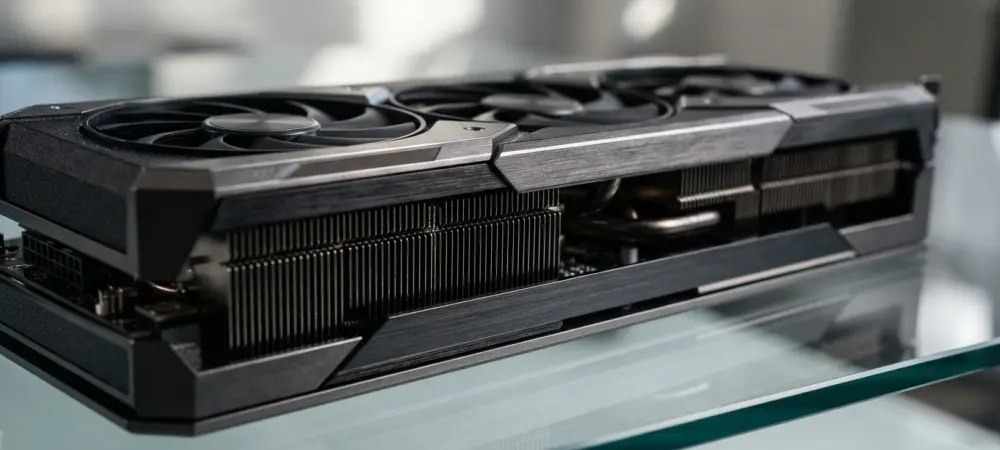
The strategic gap between 80-class and 90-class GPUs has widened from a 19 percent difference in the 30-series to a massive 47 percent in the 50-series. This staggering divergence marks a fundamental shift in how hardware manufacturers segment their product stacks, making older flagship-adjacent models look increasingly attractive to the savvy consumer. Historically, few graphics cards have achieved the near-mythical status of the GTX 1080 Ti, a piece of silicon that remained relevant for nearly a decade by offering performance that punched far above its weight class for years. In the current hardware landscape of 2026, the GeForce RTX 3080 has emerged as the clear spiritual successor to that legacy, providing an architectural foundation so robust that it effectively disrupts the traditional upgrade cycle. This specific model represents a unique moment in engineering where raw power and accessibility intersected, creating a product that resists the artificial limitations often found in later iterations of the 80-class series, securing its place as a legendary long-term investment.
The Performance Leap: Generational Shift and Value
A Staggering Increase: Power and Pricing Dynamics
When the RTX 3080 first arrived, it delivered an unprecedented 70 percent performance increase over its predecessor, the RTX 2080, while maintaining a surprisingly competitive launch price of 699 dollars. This leap was not merely an incremental improvement but a tectonic shift that redefined what high-end gaming could look like for the average enthusiast. By providing such a massive surge in raw rasterization power, the card effectively narrowed the gap between the upper-mid tier and the ultra-premium “halo” products like the RTX 3090. Despite the historical supply chain challenges and market inflation that defined its early availability, the underlying technical specifications provided a robust foundation that rendered more expensive tiers unnecessary for the majority of serious gamers. Even today, the sheer processing density of the Ampere architecture allows it to handle modern workloads that typically choke newer, more expensive mid-range options, proving that its initial value proposition was far more substantial than many realized.
Architectural Parity: Comparing the 3080 and 3090
A major factor in the enduring legacy of the RTX 3080 is how closely it mirrored the flagship hardware of its time, a trend that has since been reversed by hardware manufacturers seeking to drive up profit margins. The 3080 possessed approximately 81 percent of the flagship’s memory bandwidth, a figure that ensured it would not face significant bottlenecks as game engines evolved and texture sizes increased. This level of hardware parity allowed owners to enjoy a near-flagship experience without paying the exorbitant “titan-class” tax that has become standard in the current market. By maintaining high core counts and a wide memory bus, the card avoided the early obsolescence that often plagues GPUs designed with narrower specifications. This engineering philosophy prioritizes performance stability over artificial market segmentation, allowing the 3080 to maintain its composure even in demanding titles that were released long after its debut. This architectural integrity is precisely why it continues to hold its ground against newer generations.
Market Realities: Longevity and the Used Economy
Hardware Integrity: Resisting the Trend of Shrinkflation
A defining characteristic of the RTX 3080’s longevity is its resilience against the “shrinkflation” that has characterized more recent GPU releases. While subsequent generations have seen a deliberate reduction in the relative power of the 80-class tier, the 3080 remains a high-density outlier that refuses to age quietly. For example, while the newer RTX 5080 has dropped to just 53 percent of the flagship’s bandwidth, the 3080 still utilizes its wide bus to move data with an efficiency that newer mid-range cards often struggle to replicate. This hardware density is what gives the card its staying power in modern gaming, specifically regarding high-resolution textures and complex shader calculations. By retaining such a high percentage of flagship-level core hardware, the RTX 3080 was arguably too well-constructed for its price point. This decision by the manufacturer accidentally created a “forever card” that provides the necessary muscle to handle modern, VRAM-intensive titles years after its initial release, much to the benefit of the used market.
Value Analysis: Navigating the Modern GPU Economy
As new GPU prices soar to astronomical levels in 2026, with even mid-tier cards often exceeding the 900 dollar mark, the secondary market has highlighted the enduring financial value of the RTX 3080. Currently available for a fraction of its original cost, often between 350 and 400 dollars, it offers rasterization performance that rivals significantly newer mid-range hardware like the RTX 4070. While it may lack the very latest software-locked frame generation technologies found in the most recent series, its raw processing power and widespread support for DLSS upscaling ensure it remains a formidable contender for 1440p gaming. This makes it a refuge for players who are being priced out of the retail market but still demand high-fidelity performance. The card’s ability to maintain high frame rates in modern competitive and cinematic titles without requiring a massive financial investment has solidified its reputation as a champion of price-to-performance, ensuring it remains the primary choice for value-conscious builders.
Strategic Evolution: Final Insights and Actionable Steps
The transition into the latter half of the decade required a shift in how gamers valued their hardware investments as the pace of performance gains slowed significantly. By choosing to maintain the RTX 3080 as a primary gaming solution, enthusiasts capitalized on a piece of hardware that mastered 1080p and 1440p resolutions with remarkable consistency across diverse workloads. Those who looked toward the 2026 to 2028 horizon recognized that the widening gap between tiers made this specific model a rare sanctuary in a volatile economy. The card’s endurance demonstrated that raw hardware specifications, particularly memory bandwidth and core density, mattered more for total functional lifespan than the latest proprietary software tools. Ultimately, the RTX 3080 served as a definitive lesson in identifying high-value engineering anomalies that bypassed the typical obsolescence cycle. Future buyers were encouraged to seek out cards with high flagship parity, as these units consistently provided the most reliable return on investment throughout the second half of the decade and beyond.