

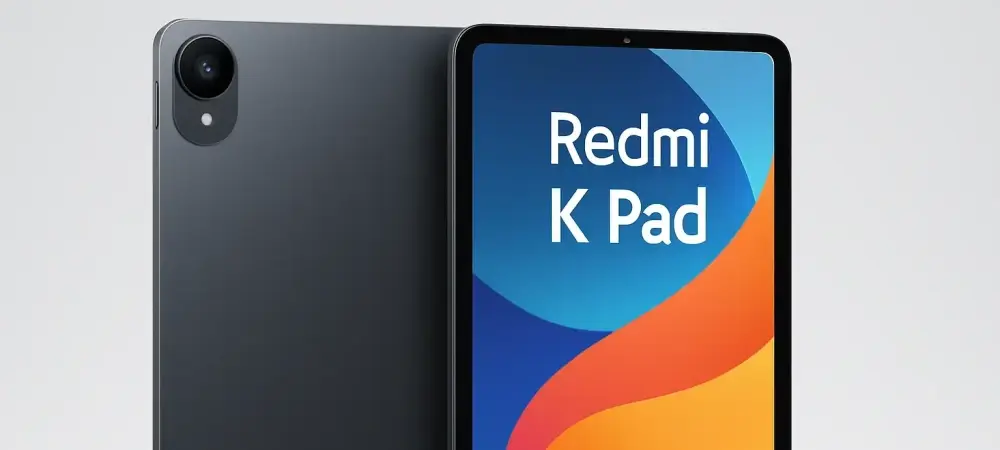
In the dynamic world of technology, user expectations for high-performance gadgets continue to rise, creating a challenging environment for manufacturers. Redmi’s latest launch, the K Pad, seeks to meet these lofty demands by offering a potent combination of sophisticated features tailored to power users. With an impressive 8.8-inch display boasting 3K resolution, it promises both visual excellence and responsiveness. Equipped with the robust MediaTek Dimensity 9400+ chipset, the tablet is designed to handle intensive tasks with ease. Additionally, the generous allotment of up to 16GB of RAM and a maximum of 1TB storage further reinforces its status as a tool for demanding applications. These attributes catapult the Redmi K Pad into the upper echelons of high-performance tablets, appealing directly to those who require reliability and efficiency from their devices.
Balanced Price with Feature-Rich Specifications
Redmi K Pad’s pricing in China ranges from CNY 2,799 to CNY 4,199, closely mirroring the expected affordability of high-spec products, aligning with the brand’s typical strategy of delivering value-packed technology. This pricing spectrum extends from approximately Rs. 33,000 for the base model to Rs. 50,000 for the top-of-the-line variant, offering a comprehensive selection for different budgets. A buyer is not just purchasing a tablet but a synergy of creativity and advanced functionality in the offered options. The thoughtful inclusion of connectivity avenues like Wi-Fi 7 and Bluetooth 5.4 further enhances the K Pad’s market position, catering to modern dynamic connectivity standards. Coupled with a 13MP rear camera and an 8MP front camera, the device delivers capable photography and communication solutions that meet contemporary needs. Available in Deep Black, Smoky Purple, and Spruce Green, the tablet’s design not only conveys sophistication but also personalization opportunities for users.
Beyond Performance: Design and Efficiency
A natural bond exists between performance and thoughtful design in Redmi’s latest creation. The K Pad showcases a commitment to an enriched user experience, embedded in its dual X-axis linear motor for precise haptic feedback and stereo speakers with Dolby Atmos support, presenting an immersive sound environment. Equipped with a robust 7,500mAh battery, the device is engineered to sustain extended use, offering 67W fast charging and 18W reverse charging. With its innovative 12,050mm sq liquid cooling system, thermal efficiency is a focal point, ensuring reliable operation under high-demand scenarios. These elements underscore its suitability for tech enthusiasts eager to own a device equipped to handle heavy-duty activities while maintaining sleek aesthetics. This approach underpins Redmi’s consistent strategy of bringing premier technology to wider audiences, thus solidifying its role as a producer of cost-effective yet high-caliber electronic goods.