

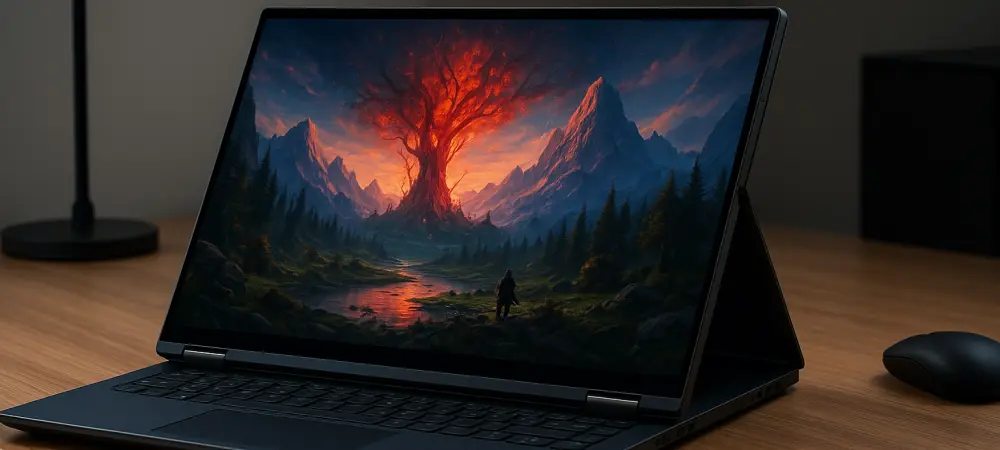
Hardware enthusiasts are closely watching the Ryzen AI Max+ 395 processor, which combines 16 Zen 5 cores with a Radeon 8060S graphics unit to rival the performance of many dedicated GPUs. This architectural leap represents a fundamental shift in how portable computing is perceived, moving away from the compromise of choosing between tablet portability and laptop power. For years, the hardware industry struggled to bridge the gap between high-fidelity gaming and sleek, touch-oriented productivity, leaving professionals and enthusiasts tethered to bulky machines. The introduction of the OneXPlayer Super X aims to disrupt this binary choice by integrating high-end AMD silicon into a versatile 14-inch convertible chassis. This design not only caters to those seeking a premium handheld experience but also provides a legitimate workstation for demanding creative tasks. By merging these capabilities, the device creates a new category of “super-tablets” that handle native Windows games and professional software with ease.
Visual Fidelity: The Interface Standard
The visual experience of the Super X is anchored by a high-end 14-inch AMOLED display, a technology traditionally reserved for flagship smartphones and professional monitors. With a native resolution of 2880 x 1800 and a 16:10 aspect ratio, the screen provides significant vertical real estate that is particularly useful for developers reviewing lines of code or editors managing complex timelines. The inherent properties of AMOLED technology allow for an infinite contrast ratio, ensuring that deep blacks remain truly black, which enhances the cinematic quality of modern gaming titles. Furthermore, the panel covers 100% of the DCI-P3 color gamut, making it a reliable tool for digital artists who require color accuracy across different lighting conditions. This level of hardware specification ensures that whether a user is engaged in a high-fidelity rendering project or simply consuming high-definition media, the output remains sharp, vibrant, and professionally consistent.
In addition to its static visual prowess, the display features a 120Hz refresh rate alongside variable refresh rate support, which is critical for maintaining fluid motion during fast-paced interactive sessions. This technology effectively eliminates screen tearing and minimizes input lag, providing a responsive environment for competitive gaming. Beyond entertainment, the screen serves as a high-precision digital canvas thanks to the inclusion of a specialized stylus with 4,096 levels of pressure sensitivity. This feature transforms the device from a high-performance computer into an artist’s tablet, allowing for nuanced strokes and precise digital sketching. By integrating these tactical input methods, the manufacturer ensures that the hardware appeals to a diverse audience, from hardcore gamers to industrial designers. This multi-modal approach enables the device to transition smoothly between a high-octane gaming station and a focused creative studio without needing extra peripherals.
Unified Architecture: Memory and AI
One of the most notable technical deviations in the Super X is the implementation of a unified memory architecture, which utilizes up to 128GB of LPDDR5X RAM in its most advanced configurations. Traditional PC systems typically separate system memory from the dedicated video memory of a graphics card, which can create bottlenecks during data-heavy operations. In contrast, the Super X allows the Ryzen processor and the integrated Radeon graphics to access the same high-speed memory pool dynamically. This configuration is particularly advantageous for users who deal with massive datasets or high-resolution video files that would normally overwhelm a standard laptop’s VRAM. By providing such a large overhead of unified memory, the system ensures that complex applications have immediate access to the resources they need. This architectural choice not only improves performance in current software but also provides a significant buffer for the increasingly demanding requirements of modern computing tasks. The massive memory capacity of the Super X is not merely a marketing gimmick but a strategic necessity for the burgeoning field of local artificial intelligence. With up to 96GB of memory available for allocation toward graphical or AI-centric workloads, the device is uniquely positioned to run large language models with approximately 70 billion parameters directly on the hardware. This capability is a significant milestone for developers and researchers who prefer to keep their workflows private or operate in environments without stable high-speed internet. Instead of relying on cloud-based servers, users can execute complex neural networks and data analysis locally, reducing latency and enhancing security. This focus on local AI processing signifies a shift in how portable hardware is designed, moving toward machines that are essentially mobile data centers. For professionals working in the tech sector, this specialized configuration offers a level of independence and processing power that was previously impossible.
Thermal Engineering: Sustaining Peak Power
Housing desktop-class components in a slim 14-inch chassis presents a significant thermal challenge, as high-performance chips generate substantial heat that can lead to performance degradation. The Super X addresses this issue through an internal cooling system comprised of dual fans and a dedicated vapor chamber, which is rated to maintain a sustained power draw of 80W. This system effectively disperses heat away from critical internal components, allowing the CPU and GPU to operate at high frequencies during standard usage. However, for users who intend to push the hardware to its absolute limits, the manufacturer has introduced the “Frost Bay” external liquid-cooling module. This modular accessory connects to the tablet to provide a dramatic increase in thermal headroom, allowing the device to boost its power ceiling to 120W. By utilizing liquid cooling, the system can maintain peak clock speeds for extended periods, making it suitable for long-duration gaming sessions or heavy video rendering tasks.
The physical construction of the Super X complements its thermal strategy, featuring a durable aluminum body that weighs approximately 2.9 pounds. This design ensures that the device remains portable enough for travel while providing the structural integrity needed for its advanced internals. To enhance its versatility, the device includes a built-in adjustable kickstand and a detachable magnetic keyboard, allowing it to function as a standalone tablet or a traditional notebook. Connectivity is equally robust, with two USB4 Type-C ports and an HDMI 2.1 output that allow the device to serve as the hub of a larger desktop ecosystem. The inclusion of a microSD slot and a Mini SSD expansion slot provides essential flexibility for users who need to carry extensive media libraries or large software projects. This combination of physical portability and high-speed connectivity ensures that the hardware can adapt to a variety of environments, from a professional office setting to a high-speed commute.
Market Strategy: Performance and Value
With a starting price reaching toward high-tier gaming laptop territory, the Super X is clearly positioned as a specialized tool for enthusiasts rather than a mass-market commodity. This strategic pricing reflects the inclusion of cutting-edge components that are rarely seen in a tablet form factor, such as the ultra-high-speed unified memory and the premium AMOLED panel. For the target audience, the investment represents more than just a purchase; it is an acquisition of a multi-functional workstation that replaces several separate devices. The ability to run AAA titles, compile massive software builds, and execute local AI models within a single 14-inch unit provides a level of efficiency that traditional setups cannot match. As consumers increasingly prioritize versatility, the value of a device that scales from a handheld entertainment hub to a professional-grade development machine becomes more apparent. This makes the Super X a compelling option for those who demand uncompromising performance in every scenario.
The historical deployment of the Super X showed that the convergence of integrated graphics and massive unified memory created a reliable path for portable computing development. Potential buyers found it necessary to weigh their specific performance needs against the available liquid-cooling bundles to ensure optimal thermal stability. The device successfully bridged the gap between different professional requirements, prompting the industry to move toward modular cooling and AI-ready architectures. Stakeholders in the tech sector noted that this hardware transition offered a practical solution for those who refused to sacrifice visual fidelity for mobility. This iteration established a new benchmark, refining the delicate balance between energy efficiency and raw computational power. Ultimately, the Super X functioned as a significant proof of concept during a time when the distinction between workstations and portable tablets became secondary to the specific creative or gaming objectives of the user.