

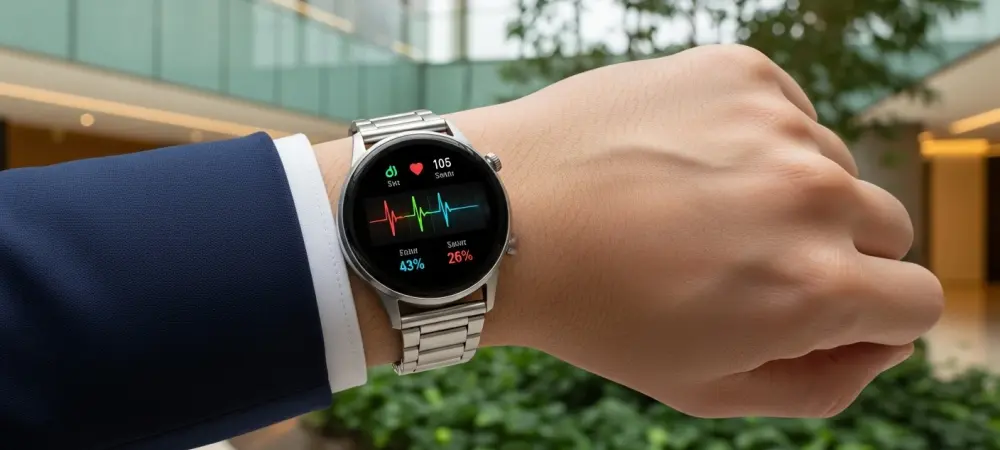
Modern fitness enthusiasts are increasingly finding themselves trapped between delicate, high-priced luxury smartwatches and the plastic-heavy trackers that often fail to survive a single season of intense outdoor training. The quest for a middle ground has led many to settle for devices that compromise either on aesthetics or functional durability. However, the introduction of the OnePlus Watch Lite suggests that a premium feel and rigorous health tracking do not have to be mutually exclusive, especially for those who refuse to pay a flagship premium for features they rarely use.
This device arrives at a pivotal moment in the wearable market, where the novelty of “miniature phones” on the wrist is wearing thin. Instead of trying to replicate every smartphone function, this model focuses on the core needs of the pragmatic athlete. By hitting a €180 price point, it positions itself as a specialized tool for health management rather than a redundant accessory, filling a void for users who prioritize longevity and build quality over a cluttered app store.
A Premium Aesthetic for the Pragmatic Athlete
The mid-range smartwatch market is often a landscape of compromise, where users must typically choose between a device that looks like a high-end timepiece and one that survives a grueling workout. The OnePlus Watch Lite challenges this trade-off by offering a 3,000-nit peak brightness OLED display encased in a stainless-steel frame that measures just 8.9mm thick. It enters a crowded arena not by trying to out-compute flagship WearOS devices, but by perfecting a “fitness-first” philosophy with a build quality that punches well above its cost.
The slim profile is particularly striking given the durability ratings it carries. While many budget alternatives feel hollow or fragile, the cold touch of the steel frame provides immediate reassurance of its structural integrity. This design choice ensures that the watch transitions effortlessly from a high-stakes boardroom meeting to a muddy trail run without looking out of place in either environment.
Bridging the Gap Between Basic Trackers and Flagship Wearables
In an era where battery anxiety and notification fatigue are common, many consumers are pivoting away from “overly smart” watches that require daily charging. This shift has created a high demand for devices that prioritize longevity and core health metrics without sacrificing the premium feel of a traditional watch. The OnePlus Watch Lite addresses this trend by stripping away the complexity of a massive app ecosystem in favor of a streamlined experience that appeals to both Android and iOS users.
Moreover, the device serves those who find themselves overwhelmed by the constant pings and demands of more complex operating systems. By focusing on utility, it provides a sanctuary for the user who wants to track a morning swim or a heart rate spike during a presentation without the distraction of unnecessary software bloat. This lean approach to technology reflects a broader movement toward digital minimalism in the wearable space.
Hardware Craftsmanship and Specialized Fitness Capabilities
The “Lite” moniker is somewhat deceptive when considering the physical construction and sensor array of the device. By integrating a digital crown with a secondary touch surface for health monitoring, OnePlus created a tactile interface that simplifies navigation during high-intensity activities. The watch’s dual-band GPS ensures high-precision tracking for outdoor runners and cyclists, while the IP68 and 5ATM ratings allow it to move seamlessly from the gym to the pool.
Furthermore, the inclusion of arterial stiffness monitoring and wrist temperature sensors provides a layer of data usually reserved for much more expensive health-tech wearables. These advanced biometrics allow users to gain a deeper understanding of their cardiovascular health and recovery patterns. Having such sophisticated tools at a mid-range price point democratizes advanced health monitoring for a wider demographic of health-conscious individuals.
Expert Perspectives: OxygenOS Watch 7.1 and Device Synergy
Tech reviewers and early adopters noted that the move to OxygenOS Watch 7.1 was a strategic play to maximize battery efficiency, allowing the 339mAh cell to last up to 10 days. Industry experts highlighted the unique “dual-pairing” capability—the ability to connect to two smartphones simultaneously—as a game-changer for professionals who carry separate work and personal devices. This feature remains a rare find in the industry, significantly increasing the practical value for the modern workforce.
While the software avoids the bloat of a full WearOS suite, the consensus among testers was that the snappy performance and reliable synchronization offered a more consistent user experience than many of its budget-tier competitors. The interface responded with a fluidity that suggested the hardware and software were designed in tandem. This synergy reduced the friction often found in devices that attempt to run heavy software on limited internal components.
Maximizing the OnePlus Watch Lite Experience
To get the most out of this mid-range contender, users should focus on leveraging its specific hardware strengths rather than treating it like a miniature smartphone. Utilizing the 3,000-nit display by enabling auto-brightness ensures the 2.5D curved screen remains legible even during midday outdoor sessions. Additionally, taking advantage of the cross-platform compatibility allows for a seamless integration where fitness data is visualized on a tablet while notifications arrive on a primary phone.
Long-term wellness trends are best tracked by consistently using the arterial stiffness and temperature sensors, keeping in mind that these metrics serve best as personal reference points. Strategic charging during short intervals, such as while showering, proved sufficient to keep the device powered for several days due to the energy-efficient OS. Ultimately, the focus shifted toward using the watch as a silent partner in a health journey, where the data collected today informed the lifestyle adjustments of tomorrow.