

The rapid saturation of the modern mobile landscape has forced a dramatic shift in how manufacturers approach hardware, transforming what were once experimental features into baseline requirements for the average user. While the industry previously focused on incremental display improvements, the current climate is defined by an aggressive push toward massive battery capacities and immediate price corrections that favor the consumer. This evolution is not merely about faster chips; it represents a fundamental restructuring of value as high-end performance becomes increasingly accessible across various price brackets.
Introduction to Modern Smartphone Infrastructure
The contemporary smartphone is no longer just a communication tool but a sophisticated hub for edge computing and professional-grade photography. At its core, the technology relies on highly integrated systems-on-a-chip (SoCs) that manage everything from artificial intelligence processing to 5G connectivity. The current era has seen these components evolve into more efficient architectures, allowing for thinner designs that do not compromise on the raw power needed for complex multitasking.
This technological evolution emerged from a need to bridge the gap between portable convenience and desktop-level capability. In the broader technological landscape, the smartphone serves as the primary gateway for digital interaction, influencing how software is developed and how data is consumed globally. As these devices become more central to daily life, their infrastructure must support more robust security protocols and energy-efficient operations to meet the growing demands of modern software ecosystems.
Core Pillars of Contemporary Flagship and Mid-Range Devices
Breakthroughs in Mobile Processing and Performance
Recent developments in silicon architecture, particularly with the introduction of the Snapdragon 8 Elite Gen 5 and the Dimensity 9500s, have redefined what mobile devices can handle. These processors utilize advanced manufacturing nodes to pack more transistors into smaller spaces, resulting in a significant reduction in heat generation while boosting clock speeds. This matters because it allows mobile devices to maintain peak performance for longer durations, which is essential for gaming and high-resolution video rendering. What makes this specific implementation unique is the focus on dedicated AI neural engines that work independently of the primary CPU. Instead of relying on cloud processing, modern flagships now handle complex data analysis and real-time image enhancement directly on the device. This shift ensures greater privacy and faster response times, creating a seamless user experience that competitors using older, more centralized architectures simply cannot match.
Advancements in Battery Density and Charging Protocols
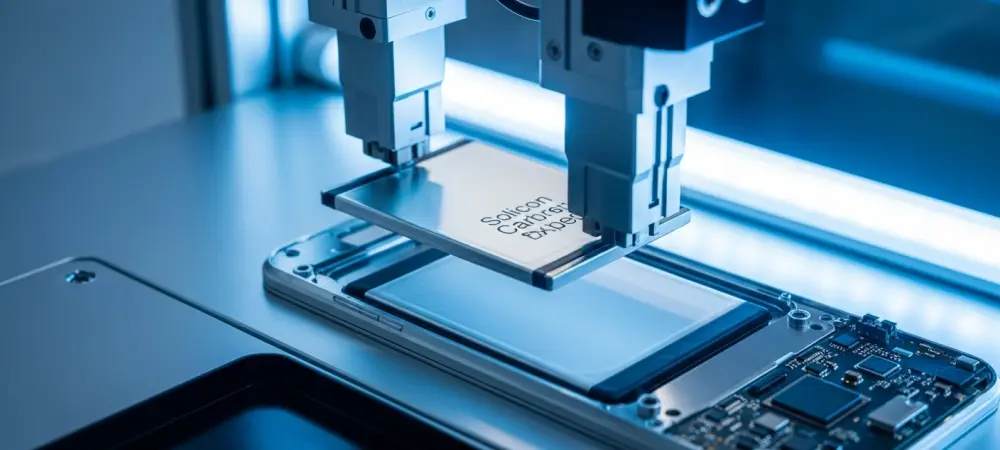
The industry has moved beyond the standard 5,000mAh limit, with new “flagship killers” and mid-range devices pushing toward 8,500mAh capacities. This increase in density is achieved through silicon-carbon battery technology, which allows for higher energy storage without increasing the physical volume of the cell. Consequently, users can enjoy multi-day battery life in devices that remain remarkably pocketable, addressing one of the most persistent pain points in mobile history.
Moreover, the charging protocols have seen a parallel leap, with 90W to 120W speeds becoming the standard for rapid power delivery. These systems utilize dual-cell charging and sophisticated thermal management to top up massive batteries in under thirty minutes. While some legacy brands still offer slower speeds to preserve long-term battery health, the market has largely pivoted toward these high-speed solutions, prioritizing the immediate needs of an always-on society.
Current Trends and Shifting Market Dynamics
A notable shift in the current market is the immediate devaluation of new flagship releases, as seen with the Samsung Galaxy S26 series. Within days of launch, retailers applied heavy discounts to capture market share, indicating that the traditional “wait-and-see” pricing model is effectively dead. This aggressive strategy suggests that the hardware gap between premium and mid-range tiers is narrowing so quickly that brand loyalty alone is no longer enough to sustain high launch prices.
Furthermore, there is a growing trend toward “compact flagships” that offer no-compromise specifications in smaller 6.3-inch form factors. This movement caters to a vocal demographic that finds modern “Phablets” unwieldy but still demands the highest-quality cameras and fastest processors. As a result, the market is diversifying into specialized niches, where physical ergonomics are weighed as heavily as raw internal specifications.
Real-World Implementation Across Consumer Segments
In the professional sector, smartphones are being deployed as mobile workstations capable of handling 8K video editing and sophisticated financial modeling on the go. Industries like real estate and logistics utilize the high-resolution telephoto lenses and integrated GPS sensors to conduct remote surveys and track assets in real-time. These implementations prove that the modern smartphone has transcended its origins as a consumer gadget to become a critical tool for global enterprise.
For the average consumer, the technology is being leveraged through the “creator economy,” where high-speed uploads and advanced image stabilization allow for professional-quality content production. Devices like the vivo V70 focus specifically on this segment, offering specialized optics that rival dedicated mirrorless cameras. This democratization of high-quality hardware means that a user’s creative potential is no longer limited by the cost of professional equipment.
Technical Barriers and Economic Challenges
Despite these advancements, the industry faces significant hurdles in managing the environmental impact of such rapid hardware turnover. The push for larger batteries and more complex camera arrays requires rare earth minerals that are difficult to source and recycle. Regulatory bodies are increasingly pressuring manufacturers to adopt more sustainable practices, which may eventually lead to a slowdown in the current pace of hardware innovation as focus shifts toward repairability.
Additionally, the thermal limitations of ultra-thin designs continue to pose a challenge for engineers. As processors become more powerful, dissipating heat in a 6.0mm frame, like that of the Motorola Edge 70, requires innovative vapor chamber designs and software-side throttling. Balancing the desire for sleek aesthetics with the physical reality of heat generation remains a constant tug-of-war in the design phase of every new device.
Future Projections and Technological Trajectory
Looking ahead, the integration of satellite connectivity for mainstream consumers is expected to become a standard safety feature rather than a luxury. This will ensure that users remain connected even in the most remote areas, effectively eliminating dead zones globally. Furthermore, the refinement of under-display camera technology and “Privacy Displays” will likely lead to truly bezel-less experiences without the compromises in image quality seen in earlier iterations.
The long-term impact on society will be a further blurring of the lines between the digital and physical worlds. As mobile AI becomes more anticipatory, smartphones will transition from reactive tools to proactive assistants that manage everything from health monitoring to home automation. This trajectory suggests a future where the device itself becomes nearly invisible, acting as a seamless conduit for an increasingly digitized human experience.
Conclusion and Strategic Summary
The review of the current smartphone market revealed a landscape where the traditional hierarchy of devices has been completely disrupted by aggressive pricing and rapid technological democratization. It was observed that the distinction between a “mid-range” and a “flagship” device has become largely academic, as high-capacity batteries and top-tier silicon are now available at nearly every price point. This shift signaled a win for the consumer but also highlighted a desperate need for brands to find new ways to differentiate themselves beyond raw specs.
Moving forward, the industry must address the sustainability of this rapid-release cycle by focusing on long-term software support and modular hardware components. Manufacturers that prioritize a holistic user experience, combining durable build quality with intuitive AI features, will likely dominate the next phase of market evolution. As hardware performance reaches a plateau of “good enough” for most tasks, the true competitive front will shift toward software optimization and the seamless integration of devices into a broader, more sustainable technological ecosystem.