

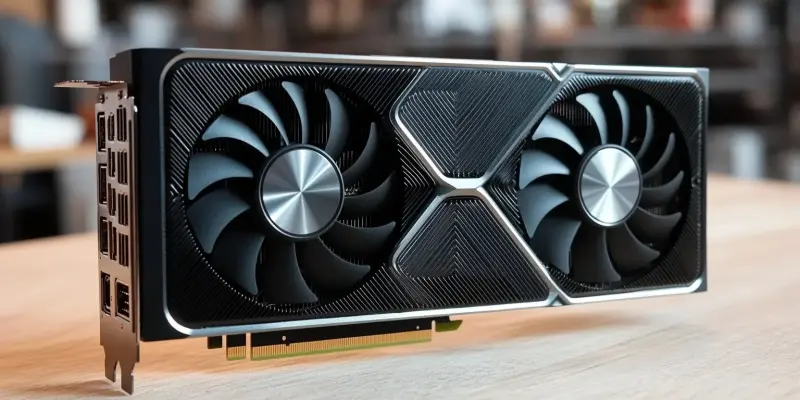
The recent emergence of a possible prototype for the Nvidia GeForce RTX 5090 has sparked significant intrigue and excitement among technology enthusiasts and professionals alike. Appearing on the Chinese hardware forum ChipHell, this prototype was allegedly leaked by a user known as HXL, showcasing impressive specifications that could make it a game-changer in the GPU industry. With a reported CUDA core count of 24,576, substantially higher than the production model’s 21,760 CUDA cores, this leak has set the tech community abuzz with speculation and anticipation. Additional specs include a GPU SKU of GB202-200-A1, a base clock speed of 2,100 MHz, a boost clock of 2,514 MHz, and GDDR7 memory modules at 32 Gbps. These features collectively push the card’s memory bandwidth to an astounding 2 TB/s, significantly improving upon the production version’s 1.79 TB/s. Is the prototype merely an engineering sample, or does it hint at what the future holds for GPU technology?
The Impressive Specifications of the RTX 5090 Prototype
The purported Nvidia GeForce RTX 5090 prototype boasts a set of specifications that are undoubtedly impressive, positioning it as a potential cornerstone in the GPU industry’s future. One of the standout features of this prototype is its CUDA core count of 24,576, which exceeds that of the production model by a substantial margin. These additional cores could provide an unprecedented boost in parallel computing tasks, rendering performance, and graphic-intensive applications. However, the noteworthy specs do not stop there. The base clock speed of 2,100 MHz and boost clock speed of 2,514 MHz suggest that this prototype is designed for high-octane performance, ensuring rapid processing times and efficient workload management.
Moreover, the GDDR7 memory modules running at 32 Gbps and the subsequent increase in memory bandwidth to 2 TB/s indicate a significant leap in data transfer rates, ensuring that even the most demanding applications are managed with ease. For fans of ray tracing and AI-based workloads, the inclusion of 192 SMs, 192 ray tracing cores, and a staggering 768 Tensor cores offers a tantalizing glimpse into the future capabilities of GPUs. These specs highlight Nvidia’s commitment to pushing the envelope in terms of both raw power and specialized processing capabilities. However, the prototype’s high power draw of 800W, nearly double that of the RTX 4090, raises questions about its practicality for everyday consumers.
Practical Considerations and Industry Implications
Despite the excitement surrounding the Nvidia GeForce RTX 5090 prototype, there are several practical considerations and industry implications that need to be addressed. The prototype’s massive power draw of 800W could pose significant challenges for widespread adoption. Most consumer-grade power supplies may struggle to meet such high power demands, potentially necessitating upgrades and additional cooling solutions. This would elevate the overall cost and complexity for end users, making the card less accessible to the average consumer. Furthermore, the need for two 12VHPWR connectors adds another layer of complexity in terms of hardware requirements, which could limit the card’s appeal to a niche market of hardcore enthusiasts and professionals.
Another factor to consider is the nature of prototypes in the tech industry. It is common for prototypes to undergo numerous refinements and adjustments before reaching the final production stage. This means that the final marketed version of the RTX 5090 may differ significantly from the impressive specifications listed in the leaked prototype. While the prototype serves as an exciting glimpse into the potential future of GPUs, it is essential to approach these leaks with a degree of skepticism. Nvidia, like many other tech giants, often experiments with various configurations and architectures during the development process to find the optimal balance between performance, power efficiency, and cost-effectiveness.
What Lies Ahead for Nvidia and the GPU Market
The buzz around the Nvidia GeForce RTX 5090 prototype is palpable, but there are practical and industry considerations to address. The prototype’s hefty power consumption of 800W may pose challenges for widespread use. Many consumer-grade power supplies might not handle such high demands, potentially requiring upgrades and additional cooling solutions. This would increase overall costs and complexity for users, making the card less accessible to the average consumer. Additionally, the requirement for two 12VHPWR connectors adds further hardware complexity, restricting the card’s appeal to a niche market of hardcore enthusiasts and professionals.
It’s vital to remember that tech prototypes often undergo numerous changes before final production. Thus, the marketed RTX 5090 may differ greatly from the leaked prototype’s impressive specs. While exciting, such leaks should be viewed with some skepticism. Nvidia, like other tech giants, experiments with various configurations during development to achieve the best balance between performance, power efficiency, and cost-effectiveness. Therefore, while the prototype hints at GPU advancements, it’s crucial to await the final product for a true assessment.