

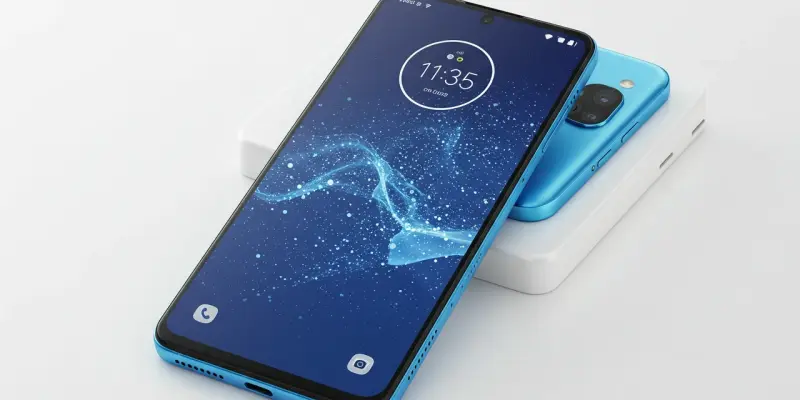
The rapid evolution of smartphone technology continues to captivate consumers and tech enthusiasts alike. Leading the charge, the Motorola Edge 2025 has officially debuted in the United States, promising to redefine both style and substance. This latest innovation from Lenovo’s Motorola brand brings to the table an impressive array of advanced features and specifications. Its centerpiece, the MediaTek Dimensity 7400 SoC, underscores the device’s performance superiority, pointing toward a bright future for mobile computing capabilities. Motorola’s strategic focus on harnessing new technologies reveals a determined effort to meet and exceed consumer expectations, making the Edge 2025 a potential game-changer in the smartphone arena.
Notable Features and Design
A standout aspect of the Motorola Edge 2025 is its triple rear camera configuration. Boasting a 50-megapixel main sensor coupled with a 50-megapixel ultrawide lens and a 10-megapixel telephoto camera, the device offers versatile photographic options to users. This refined camera setup is further enhanced by a specialized Photo Enhancement Engine aimed at elevating image quality to new heights. Such enhancements enable users to capture detailed photos even in challenging conditions. Beyond imaging, the smartphone integrates an AI Key feature, allowing direct access to Moto AI capabilities such as Next Move, Catch Me Up, Pay Attention, and Remember This. These AI functionalities are crafted to optimize user interaction and streamline everyday tasks, positioning the Edge 2025 as a model of efficient design.
The smartphone’s design ethos extends to practical durability, as demonstrated by its IP68 and IP69 ratings. This certification guarantees comprehensive protection against dust and water ingress, while its military-grade (MIL-STD-810H) certification underscores toughness against physical stress. Users can take comfort in using their devices across varied environments without constant worry about potential damage. Complementing this robustness is a sleek, 6.7-inch Super HD pOLED screen with a 120Hz refresh rate. This display is fortified by Corning’s Gorilla Glass 7i, providing not only stunning visuals but also enhanced resilience to everyday wear. With such features, the Edge 2025 embodies an appealing combination of futuristic technology and timeless build quality.
Performance and Connectivity
Performance-wise, the Edge 2025 stands out with its effective combination of hardware and software. The device comes preloaded with Android 15 overlaid with Motorola’s Hello UI, offering an intuitive user experience. With a powerful 5,200mAh battery, users can enjoy up to two days of seamless operation from a single charge, greatly minimizing downtime. This battery longevity is supported by rapid charging options, namely 68W TurboPower wired and 15W wireless charging, ensuring that power is available when most needed. This promising battery life allows users to remain connected and productive across various scenarios, reaffirming the device’s reliability across multiple uses.
Connectivity is equally comprehensive on the Edge 2025, featuring support for advanced 5G networks. In addition, the device is equipped with a variety of sensors, including an accelerometer, barometer, and magnetometer, broadening its range of interactive functionalities. Such capabilities make it easier for users to exploit the device’s full potential, whether navigating unfamiliar terrains or recording precise movement data for fitness activities. These features position the device as a formidable contender in the smartphone market. With a competitive price point of $549, the Edge 2025 strikes a balance between high performance and affordability, making it particularly appealing to a tech-savvy audience eager to adopt cutting-edge technology.
The Path Forward
The swift progression of smartphone technology continues to mesmerize both consumers and tech aficionados. Motorola’s latest creation, the Edge 2025, has made its grand entrance in the United States, setting the stage to revolutionize the balance between aesthetics and functionality. This new offering from Lenovo’s Motorola line showcases an impressive assortment of cutting-edge features and specifications designed to elevate the user experience. Central to its improved capabilities is the MediaTek Dimensity 7400 system on a chip (SoC), illustrating the device’s superior performance and hinting at exciting advancements in mobile computing. Motorola is clearly intent on leveraging emerging technologies to not just meet but surpass consumer expectations, positioning the Edge 2025 as a serious contender and potential game-changer in the world of smartphones. This strategic focus highlights an ambition that could pave the way for future innovations, leaving a significant mark in the ever-evolving smartphone landscape.