

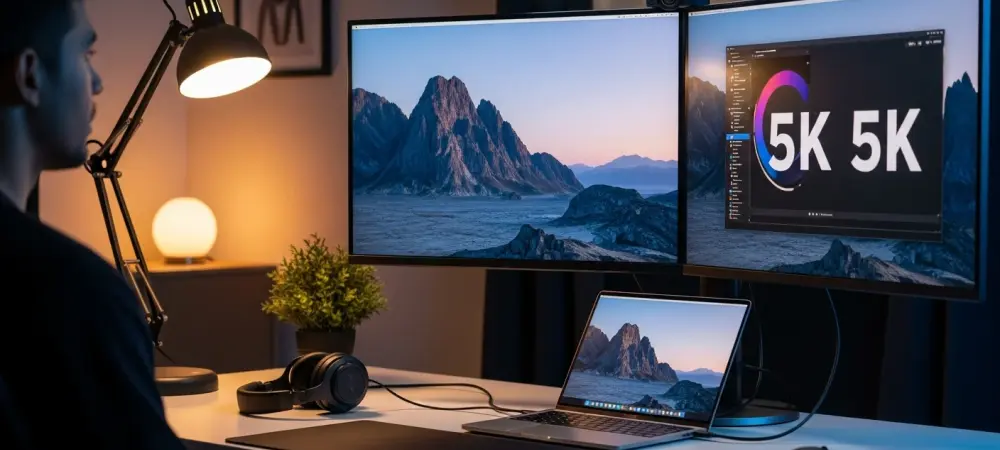
The arrival of the 2025 MacBook Air 13-inch equipped with the M5 silicon has fundamentally altered how professionals and students perceive the boundaries between portability and desktop-class performance. This generation represents a pivotal shift because it addresses historical bottlenecks in storage and memory while doubling down on the fanless architecture that made the series a cultural phenomenon. By integrating the refined 3-nanometer M5 chip, the device does not merely offer a spec bump; it provides a comprehensive overhaul of the user experience that feels remarkably attuned to the demands of the current year. The strategic decision to move away from the restrictive 256GB base storage model signals a new era of value for the consumer, ensuring that the machine remains a viable long-term investment rather than a temporary solution for light tasks.
The Evolution of Design: Form Meets Functionality
Maintaining a legacy of excellence in industrial design, the current MacBook Air utilizes a precision-milled aluminum unibody that has become the benchmark for structural integrity in the laptop industry. The chassis measures a mere 0.44 inches in thickness and weighs only 2.7 pounds, making it an effortless companion for users who find themselves constantly moving between remote offices, university lecture halls, or transatlantic flights. This physical footprint is achieved without sacrificing the tactile quality that users have come to expect from premium hardware. The rigidity of the frame ensures that there is no noticeable flex when typing or carrying the device by a single corner, a common failing in lesser ultraportables that prioritize weight over durability. The selection of finishes, including the deep Midnight and the versatile Starlight, provides a professional aesthetic that resists the mundane look of silver plastic while maintaining a high level of scratch resistance. Specifically, the Starlight finish has gained a reputation for its ability to mask fingerprints and minor blemishes, ensuring the laptop looks as pristine after months of heavy use as it did upon its initial unboxing.
The interaction points of the device remain a masterclass in ergonomic engineering, particularly the inclusion of the Magic Keyboard and the industry-leading Force Touch trackpad. Long-form writers and coders will find the scissor-switch mechanism provides exactly the right amount of travel and resistance to prevent fatigue during extended sessions. This keyboard is complemented by a trackpad that uses electromagnetic haptic feedback rather than a mechanical diving-board mechanism, allowing for consistent click feel across the entire surface. Furthermore, the integration of the Touch ID sensor into the power button offers a seamless bridge between security and convenience, allowing for near-instantaneous authentication for system access and financial transactions. This level of hardware synergy is difficult for competitors to replicate because it relies on the deep integration of proprietary components that Apple has refined over the last several hardware cycles. The result is a machine that feels like a singular, cohesive tool rather than a collection of disparate parts, reinforcing the idea that the best technology should disappear into the background and allow the user to focus entirely on their creative or professional output.
Visual and Auditory Excellence: The Liquid Retina Experience
At the heart of the user experience lies the 13.6-inch Liquid Retina Display, a panel that continues to push the boundaries of what is possible in a fanless portable device. With a native resolution of 2560 x 1664, the screen provides a high pixel density that makes text appear as though it were printed on paper, significantly reducing eye strain for those who spend hours reviewing documents or lines of code. The peak brightness of 500 nits ensures that the display remains legible even in challenging lighting conditions, such as near a bright window or in an outdoor cafe setting. Color accuracy is another area where the Air excels, supporting the P3 wide color gamut to deliver vibrant, lifelike hues that are essential for photographers and digital illustrators. The inclusion of True Tone technology further enhances this experience by using multichannel sensors to adjust the color and intensity of the display to match the ambient light, resulting in images that appear more natural and less jarring to the human eye as the day progresses into the evening.
Multimedia capabilities have seen a significant enhancement with the introduction of the 12MP Center Stage camera housed within the familiar display notch. This camera utilizes sophisticated machine learning algorithms to track the user’s movement, ensuring they remain the focal point of the frame during video conferences or family calls. This is particularly useful in the current era of hybrid work, where virtual presence is just as important as physical attendance. Complementing the visual upgrade is a sophisticated four-speaker sound system integrated into the hinge area, which utilizes spatial audio and Dolby Atmos to create an immersive soundstage that belies the laptop’s thin profile. While it may not possess the booming low-end frequencies of a dedicated studio monitor, the clarity and separation of instruments in music and the crispness of dialogue in films are exceptional for this form factor. This audio-visual combination makes the MacBook Air an incredibly versatile tool, capable of transitioning from a high-stakes business presentation to a private cinematic experience with remarkable ease and without the need for external peripherals.
Architectural Breakthroughs: Unleashing the M5 Silicon
The transition to the M5 chip represents a major milestone in the journey of Apple silicon, leveraging a refined 3-nanometer fabrication process to maximize transistor density and energy efficiency. This chip architecture is designed to deliver substantial gains in both single-core and multi-core performance, allowing the MacBook Air to tackle workflows that were once the exclusive domain of active-cooled workstations. Because the M5 operates so efficiently, it generates very little heat during standard operation, allowing Apple to maintain a completely fanless design that remains silent even under heavy loads. This silence is not just a luxury; it is a functional benefit for professionals working in quiet environments like libraries, recording studios, or shared office spaces. The internal thermal management system uses a series of heat spreaders and a high-efficiency graphite sheet to dissipate warmth across the aluminum casing, ensuring that performance remains stable during long periods of sustained CPU usage without the risk of immediate thermal throttling. Graphical performance has seen a particularly impressive leap with the 10-core GPU variant of the M5, which brings a level of gaming and rendering capability that was previously unheard of in the Air lineup. Modern titles that utilize Metal 3, such as the visually demanding Lies of P or complex open-world simulations, run with surprising fluidity and high-resolution textures. Beyond gaming, this GPU power is leveraged by creative applications like Final Cut Pro and Adobe Lightroom, where 8K video timelines and massive RAW image libraries are handled with near-instantaneous responsiveness. The unified memory architecture of the M5 chip plays a critical role here, allowing the CPU and GPU to share a single pool of high-bandwidth, low-latency memory. This eliminates the need for data to be copied between separate memory pools, drastically reducing the time required for complex rendering tasks. As a result, the M5 MacBook Air is no longer just a “browsing machine” but a legitimate creative engine that can keep pace with the increasingly demanding software used by modern digital nomads and content creators.
Storage and Memory: Addressing Long-Standing Criticisms
One of the most consequential changes in the 2025 hardware refresh is the doubling of the entry-level storage capacity to 512GB, a move that effectively silences one of the most persistent criticisms of the MacBook Air line. For years, the 256GB base model was seen as a limiting factor for users who deal with large media files or extensive software suites, often forcing them into expensive upgrades or a reliance on external drives. By establishing 512GB as the new standard, Apple has significantly increased the out-of-the-box utility of the device for the average consumer. Furthermore, the move to a more advanced SSD architecture has resulted in dramatic improvements in data transfer speeds, with read and write performance reaching levels that make file management feel instantaneous. Whether moving a 50GB video project or searching through thousands of indexed documents, the storage system operates with a level of snappiness that defines the high-end computing experience in the current year. Memory configurations have also been strategically adjusted to meet the needs of an increasingly AI-focused software landscape, with 16GB of unified memory now serving as the baseline for the M5 models. This shift ensures that the operating system has ample headroom to handle multiple demanding applications simultaneously without resorting to swap space on the SSD. For power users who require even more overhead for virtual machines, large-scale code compilation, or high-resolution video editing, the option to configure the machine with 32GB of memory provides a level of future-proofing that was once reserved for the Pro series. This increase in memory capacity is particularly important given the current trend toward local execution of large language models and complex generative AI tools, which are notoriously memory-hungry. By providing more substantial memory and storage at the base level, Apple has positioned the MacBook Air as a more capable and enduring tool that can easily handle the evolving requirements of professional software over the next several years.
Wireless Connectivity: Preparing for a High-Speed Future
The inclusion of the Apple N1 chip brings a suite of cutting-edge wireless capabilities to the MacBook Air, most notably the transition to Wi-Fi 7 and Bluetooth 6. While the rollout of Wi-Fi 7 infrastructure is still in its early stages for many residential users, its presence in the M5 Air ensures that the device is ready to take advantage of significantly higher throughput and lower latency as public and private networks are upgraded. This standard is particularly important for tasks like high-definition cloud gaming, massive file uploads to remote servers, and seamless 8K video streaming, all of which benefit from the increased bandwidth and improved interference management of the new protocol. Bluetooth 6 further enhances the wireless experience by providing more stable connections for peripherals like mice, keyboards, and headphones, while also improving energy efficiency for audio streaming. These incremental improvements in wireless technology are essential for maintaining the “untethered” lifestyle that the MacBook Air encourages, allowing users to remain productive without being bound by physical cables.
Physical connectivity remains a study in minimalist efficiency, centered around two Thunderbolt 4 ports and the highly popular MagSafe 3 charging interface. The MagSafe port continues to be a standout feature, providing a secure magnetic connection that safely detaches if the cable is accidentally snagged, preventing the laptop from being pulled off a desk or table. This dedicated charging port is crucial because it leaves both Thunderbolt ports free for high-speed data transfer, external displays, or docking stations. The 3.5mm headphone jack on the right side of the device also deserves mention for its support for high-impedance headphones, a small but significant detail for audiophiles and video editors who prefer wired monitoring. This combination of advanced wireless standards and versatile physical ports ensures that the MacBook Air can act as a central hub in a complex workstation setup while remaining incredibly simple to disconnect and carry away. The focus here is on reducing friction, ensuring that the transition between different work environments is as fast and as painless as possible.
Intelligence and Ecosystem: The Role of macOS Tahoe
The software experience on the M5 MacBook Air is defined by macOS Tahoe, an operating system that represents the most significant integration of artificial intelligence and cross-device synergy in the history of the platform. One of the most transformative features is iPhone Mirroring, which allows users to view and interact with their iPhone screen directly on the Mac desktop, complete with the ability to drag and drop files between devices seamlessly. This level of continuity extends to Universal Control, where a single keyboard and mouse can navigate across multiple Macs and iPads, blurring the lines between different hardware categories. These features are not just gimmicks; they are essential productivity boosters that allow a user to maintain their focus on a single screen while still having full access to their entire digital ecosystem. The operating system is designed to take full advantage of the M5’s Neural Engine, ensuring that these background tasks and animations run with absolute smoothness without impacting the performance of foreground applications.
The integration of Apple Intelligence brings a new layer of utility to everyday tasks, offering tools that can rewrite professional emails for better tone, summarize long meeting transcripts, and even remove distracting objects from photographs with a single click. While some of these AI features are geared toward creative expression, others are deeply practical, acting as a digital assistant that anticipates the user’s needs based on their habits and calendar. For example, the system can automatically prioritize notifications that it deems urgent, ensuring that important work communications are not lost in a sea of less relevant alerts. While the digital assistant Siri continues to evolve, the current implementation in macOS Tahoe feels more contextually aware than ever before, capable of performing complex actions across multiple apps with simple natural language commands. This software environment creates a feedback loop where the hardware and software work in perfect tandem, reinforcing the idea that the MacBook Air is more than just a piece of hardware; it is an intelligent companion that scales its capabilities to match the user’s ambition.
Endurance and Thermal Logic: Redefining Mobile Productivity
Battery longevity remains the most compelling reason for the continued dominance of the MacBook Air in the ultraportable market, with the M5 model pushing the boundaries of what is possible on a single charge. In real-world testing involving continuous web browsing and document editing at medium brightness, the 13-inch model consistently delivers over 15 hours of use, effectively eliminating the need for a power adapter during a typical workday. This level of endurance is a direct result of the efficiency-first design of the M5 silicon, which allows the system to perform routine tasks using only a fraction of its total power budget. For video streaming and playback, the numbers are even more impressive, often exceeding 18 hours, making the device an ideal companion for long-haul travel. This battery performance is consistent whether the laptop is plugged into a wall or running on internal power, a contrast to many competing laptops that significantly throttle their performance when disconnected from a power source to preserve battery life.
The thermal logic of the M5 MacBook Air is equally impressive, as it maintains a comfortable surface temperature without the need for active cooling fans. During intensive tasks like 4K video rendering or high-end gaming, the aluminum chassis acts as a giant heat sink, distributing warmth evenly across the bottom and keyboard areas. While the device can become warm to the touch during these peak periods, it rarely reaches temperatures that would be considered uncomfortable for lap use. This fanless approach not only ensures total silence but also eliminates a common point of mechanical failure and prevents the internal accumulation of dust over time. When the battery does eventually run low, the fast-charging capability allows users to regain 50% of their power in approximately 30 minutes using a 70W adapter, providing a quick burst of energy that can last for several more hours of work. This combination of extreme longevity, silent operation, and rapid recovery makes the M5 Air the ultimate tool for those who value reliability and freedom from the power outlet.
Strategic Market Positioning: Final Thoughts and Implementation
The competitive landscape for ultraportables has shifted significantly, yet the MacBook Air 13-inch remains a uniquely positioned device that balances price, performance, and prestige with unrivaled precision. When compared to the Dell XPS 13 or other high-end Windows machines utilizing Lunar Lake architecture, the MacBook Air often wins on the strength of its trackpad, the consistency of its battery life, and the stability of the macOS environment. While some competitors may offer higher refresh rate screens or touchscreen capabilities, the holistic experience of using a Mac remains a powerful draw for those who prioritize a frictionless workflow. The recent price adjustment to $1,099 for the base model is justified by the significant increase in base storage and memory, moving the Air away from the “budget” category and firmly into the “premium value” segment. For users currently operating on Intel-based Macs or even the original M1 models, the jump to the M5 represents a transformative upgrade in speed, display quality, and overall capability.
In conclusion, the MacBook Air 13-inch (M5) solidified its status as a leader by focusing on the core elements that define a superior mobile computing experience. The transition to the M5 silicon provided the necessary power to handle professional-grade applications in a fanless chassis, while the strategic doubling of base storage addressed the most common pain points for long-term owners. This laptop was designed for those who required a machine that could perform flawlessly in any environment without the bulk of a traditional workstation. Organizations and individuals seeking to maximize their productivity looked toward this device as a primary tool for creative and administrative tasks alike. By refining the display, camera, and connectivity standards, Apple ensured that the Air was prepared for the technical demands of the future. Ultimately, the M5 MacBook Air represented the pinnacle of ultraportable design, offering a level of polish and performance that remained unmatched in its weight class, proving that incremental refinement can lead to a truly definitive product.