

The smartphone industry often maintains a relentless focus on breakthrough performance benchmarks, yet the true health of the market is frequently dictated by the logistical necessity of manufacturing efficiency rather than raw power. MediaTek’s Helio G99 series has served as the backbone of the budget and mid-range segment since its debut in 2022, offering a reliable balance of power and cost. However, the recent emergence of the Helio G99 Plus has sparked a debate among enthusiasts and industry analysts alike. This article explores whether this latest iteration represents a genuine leap forward or if it is a calculated maneuver designed to navigate the shifting sands of the global supply chain. By examining the transition from the original G99 to the G99 Plus, the way manufacturers manage component lifecycles in an era of rapid technological obsolescence becomes clear.
The Evolution of a Mid-Range Mainstay
The market for affordable smartphones frequently relies on logistical necessity over breakthrough performance. Since 2022, the Helio G99 has provided a reliable balance of power and cost for the mid-range segment. The debut of the Helio G99 Plus has now raised questions about its true purpose. This iteration may be less about speed and more about navigating a shifting semiconductor supply chain. Examining this transition reveals how manufacturers manage hardware lifecycles to avoid premature obsolescence.
A Chronological Journey Through the G99 Architecture
The lifecycle of the G99 platform reveals a pattern of iterative refinement and strategic adaptation to global market demands.
2022: The Launch of the Original Helio G99
MediaTek introduced the Helio G99 as a step forward for 4G chipsets, using the TSMC 6nm process. This foundation featured Arm Cortex-A76 and A55 cores with a Mali-G57 MC2 GPU. It provided a cost-effective way for brands to offer high-refresh-rate displays and decent gaming performance. At this stage, the chipset relied on the then-standard LPDDR4X memory for affordable devices.
2023 to Early 2024: Diversification Into the G100 and G200 Series
MediaTek expanded the family to maximize return on investment. The G100 focused on camera processing, while the G200 offered minor clock speed adjustments. These variants allowed the company to market “new” hardware without massive research and development costs. These chips utilized the same mask production, keeping manufacturing expenses low.
Late 2024: The Sudden Shift in the DRAM Supply Chain
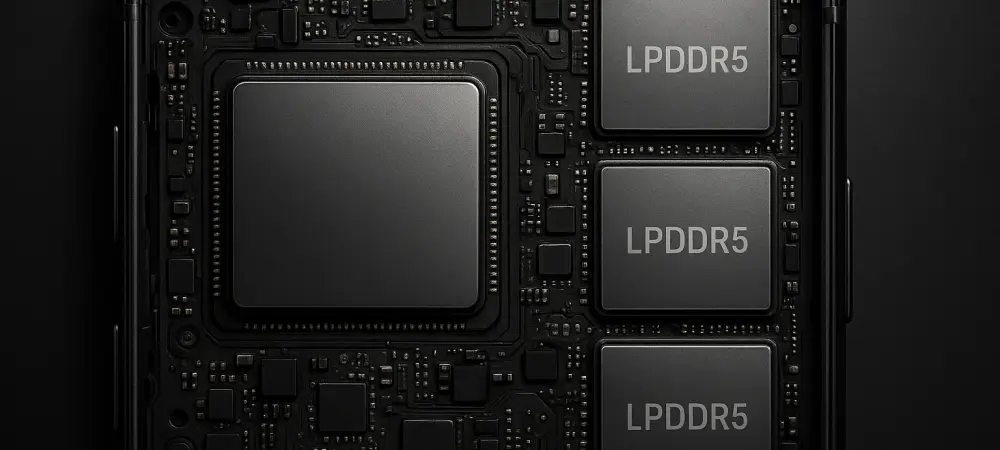
The trajectory changed when DRAM manufacturers accelerated the sunsetting of LPDDR4X production. This industry-wide move prioritized more efficient LPDDR5 standards. Suddenly, the primary memory component for the G99 platform faced an expiration date. This forced MediaTek to revisit the design not for speed, but for logistical survival.
Present Day: The Debut of the Helio G99 Plus
The Helio G99 Plus arrived as a direct response to the memory crisis. While it maintains the core specifications of its predecessors, it introduces a memory controller supporting LPDDR5X at 5,500 MT/s. This change ensures compatibility with modern components. The G99 Plus serves as a bridge, allowing the 6nm platform to persist for several more years.
Key Turning Points and the Impact of Component Obsolescence
The most significant turning point was a logistical mandate rather than a technological breakthrough. The phase-out of LPDDR4X acted as a catalyst for a platform update that was otherwise unnecessary. This highlights the “re-skinning” of legacy hardware to save tens of millions in redesign costs. The G99 Plus proves that industry standards, rather than consumer demand for speed, often dictate the release cycle of modern mobile hardware.
Nuances of the Strategic Rebrand and Future Outlook
Regional dynamics played a role in this update, as 4G remains dominant in many developing markets. By keeping the platform alive, MediaTek provided manufacturers with a validated environment, reducing time-to-market. However, performance gains from LPDDR5X remained marginal due to the older CPU cores. This strategic fix suggested a future where “Plus” variants of other series became common to match modern standards. Ultimately, the G99 Plus was a masterclass in pragmatism. Stakeholders moved to adopt hardware that prioritized supply chain stability over raw innovation.