

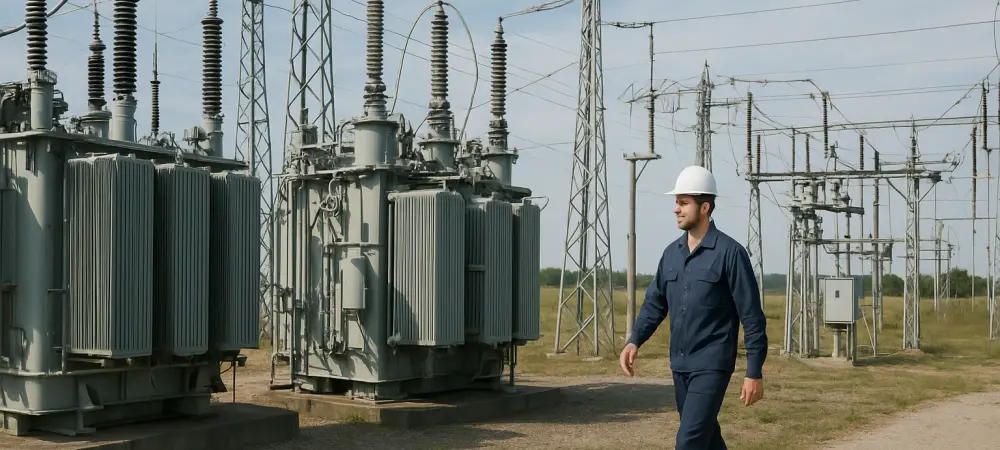
The physical architecture of the global internet is currently undergoing a massive and permanent migration away from traditional metropolitan centers toward remote regions where power grids can actually support the weight of modern artificial intelligence. While the industry once prized proximity to the “FLAP-D” hubs—Frankfurt, London, Amsterdam, Paris, and Dublin—above all else, the gravity of the digital economy is shifting toward the periphery. This transition is not merely a change in preference but a response to an era where the shortest path to a power socket has become more valuable than the shortest path to a city center.
The Great Migration Away from the European Core
Data center developers are fundamentally redefining the boundaries of infrastructure as they look for untapped resources. New projects scheduled for the 2026–2028 period are moving an average of 175 kilometers away from these traditional centers, representing a nearly fourfold increase in distance compared to previous years. This radical departure from the status quo signals that the industry is willing to sacrifice urban proximity for the sake of survival and scalability.
This outward migration is driven by a necessity to bypass the increasingly congested environments of major financial districts. As the digital economy expands, the sheer physical footprint required for next-generation storage and processing can no longer be contained within historical metropolitan limits. Consequently, regions that were once considered too remote are now becoming the central focal points for the next decade of infrastructure development.
Why the Traditional Powerhouses Are Reaching a Breaking Point
The dominance of Frankfurt, London, Amsterdam, Paris, and Dublin was built on connectivity and commerce, but it is currently being undermined by physical limits. Vacancy rates across these core markets have plummeted to record lows, reaching a negligible 3.1% in Frankfurt, leaving virtually no room for corporate growth. This vacancy crisis has turned the hunt for available white space into an impossible task for hyperscalers looking to expand their footprints.
Moreover, the primary bottleneck for deployment has shifted from capital availability to a severe lack of grid power. Hyperscalers are finding that even with billions of euros ready for investment, national grids in mature urban environments simply cannot accommodate the massive loads required by modern hardware. This gridlock reality is forcing developers to abandon the slow path of navigating urban grids in favor of “greenfield” opportunities in regions where energy is abundant and land is readily available.
The Rise of Spain and the Mediterranean Frontiers
As the old guard stalls, Spain is positioning itself as the new primary pillar of European digital infrastructure through massive capital injections and land availability. The Aragón phenomenon is a prime example, where tech giants like Amazon and Microsoft are committing tens of billions of euros to the Teruel-Huesca-Zaragoza corridor. Amazon alone has designated €33.7 billion through 2035 for cloud expansion in this region, while Blackstone has increased its commitment to local projects to nearly $14 billion.
Industrial transformation is also fueling this Spanish surge, as former chemical sites and regional hubs in Catalonia and Alcobendas are being repurposed into billion-euro AI campuses. The Iberian Peninsula offers a unique strategic advantage by combining vast renewable energy access with the high power density required for contemporary workloads. These factors make Spain the clear frontrunner for developers who need to secure massive capacity without the regulatory hurdles found in Northern Europe.
AI as the Catalyst for Regional Diversification
The shift in geography is being accelerated by the unique physical demands of artificial intelligence, which prioritizes power volume over urban proximity. In the Nordics, this is manifesting through Pure Data Centres’ €1.5 billion Finnish project and the emergence of massive 550MW campuses in Norway. These regions offer the cooling efficiency and energy scale that traditional FLAP-D markets can no longer provide, making them ideal for high-density AI training clusters.
Meanwhile, regions like Lombardy in Italy and the Topusko region in Croatia are offering unorthodox solutions to meet southern European demand. The Pantheon Atlas project in Croatia aims to bypass grid limits entirely with 500MW of on-site solar and battery storage. In contrast, Paris remains the only traditional hub keeping pace with this growth, largely due to France’s nuclear-heavy energy mix and proactive grid management by state utilities, which has allowed it to avoid the freezes seen in Dublin and Denmark.
Strategies for Navigating the New Power-Centric Landscape
To succeed in an era of resource scarcity, developers and investors shifted their focus from urban permits to energy self-sufficiency and infrastructure innovation. They prioritized grid readiness, evaluating potential sites based on immediate power availability rather than historical market tier status. This change in perspective allowed the most agile firms to secure first-mover advantages in emerging markets like Portugal and the Nordics, effectively bypassing the regulatory freezes that stalled traditional hub growth. Implementing microgrid solutions became a standard practice for those seeking to bypass national grid delays through on-site generation and storage. Leading firms integrated local wind and solar assets into their project timelines to ensure that power needs and sustainability mandates were met simultaneously. By diversifying geographic risk and moving away from over-saturated urban centers, the industry successfully transitioned into a more resilient and distributed model. These strategies proved that digital growth was no longer tethered to a handful of cities, but was instead limited only by the availability of renewable power.